Korea and Japan · Volume 53, The Grill, the Broth and the Sealed Port
Nagasaki champon
Nagasaki, Kyushu
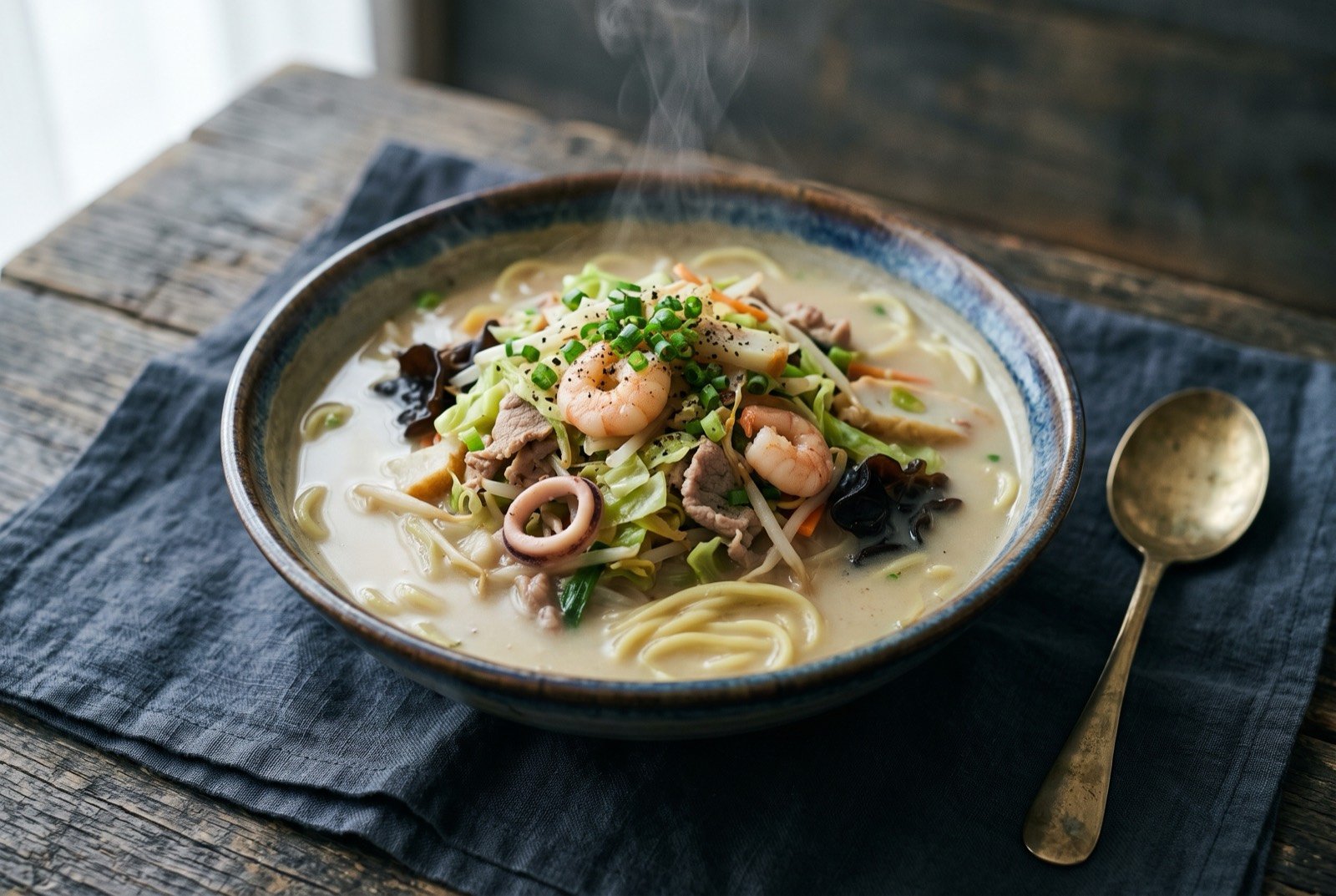
Illustration
- Time
- 20 minutes
- Researched
- Researched from 87 sources in the brief
Credited directly to Chen Heishun, a Fujianese immigrant who opened the restaurant Shikairo in 1899 and devised the dish specifically as a filling, affordable meal for Nagasaki's Chinese students. Sara udon, its dry cousin, is really two separate dishes locals do not conflate: an original thick noodle version, essentially fried champon noodles reduced until the broth disappears, and a later, thinner, crisp fried version finished with a thickened sauce.
As tradition built it
Serves two. About 20 minutes.
Ingredients
- 150g pork belly, sliced
- 4 to 6 prawns
- 4 to 6 pieces, sliced squid
- roughly 300 to 400g in total mixed vegetables: cabbage, bean sprouts, carrot, wood ear mushroom
- enough to cover chicken and pork stock, enough to cover
- to taste salt
- to taste amakuchi soy, to taste
- 2 portions, about 400g thick, fresh, slightly yellow wheat noodles, uncooked
Method
- Stir fry the pork belly in lard until coloured.
- Add the prawns, squid and mixed vegetables, and cook over high heat for two minutes.
- Add a generous splash of the chicken and pork stock, enough to cover, and bring to a simmer.
- Season with salt and amakuchi soy, and simmer for five minutes so the vegetables soften but keep bite.
- Add the thick, fresh, slightly yellow wheat noodles directly to the pot, uncooked, and simmer a further two to three minutes until they absorb the broth's flavour and finish cooking in it, rather than being boiled separately and added at the end.
What a modern chef changes
A two stage stock, ember seared protein and a Kagoshima finish
Rung 2
Method
- Build the stock itself as a two stage hot then cool extraction, a two hour hard simmer followed by a full two hour rest before reheating, the same method documented at Suigetsu's mizutaki, for a rounder, more gelatinous base than a single continuous simmer gives.
- Sear the pork belly and seafood separately at high heat on the Big Green Egg before they join the broth, rather than stir fried together in one pan, so each retains its own distinct char rather than steaming together.
- Finish with a few drops of kurozu at the table rather than folded into the pot.
Notes
Kurozu is a genuinely Kagoshima addition Nagasaki's own tradition does not use, offered here as a deliberate elevation rather than presented as historically authentic.