Melanesia, Micronesia and Polynesia · Volume 13, One Reef, Two Flags
Māʻa tinitō
Tahiti
Illustration
- Time
- 2 hours 30
- Researched
- 17 sources cited
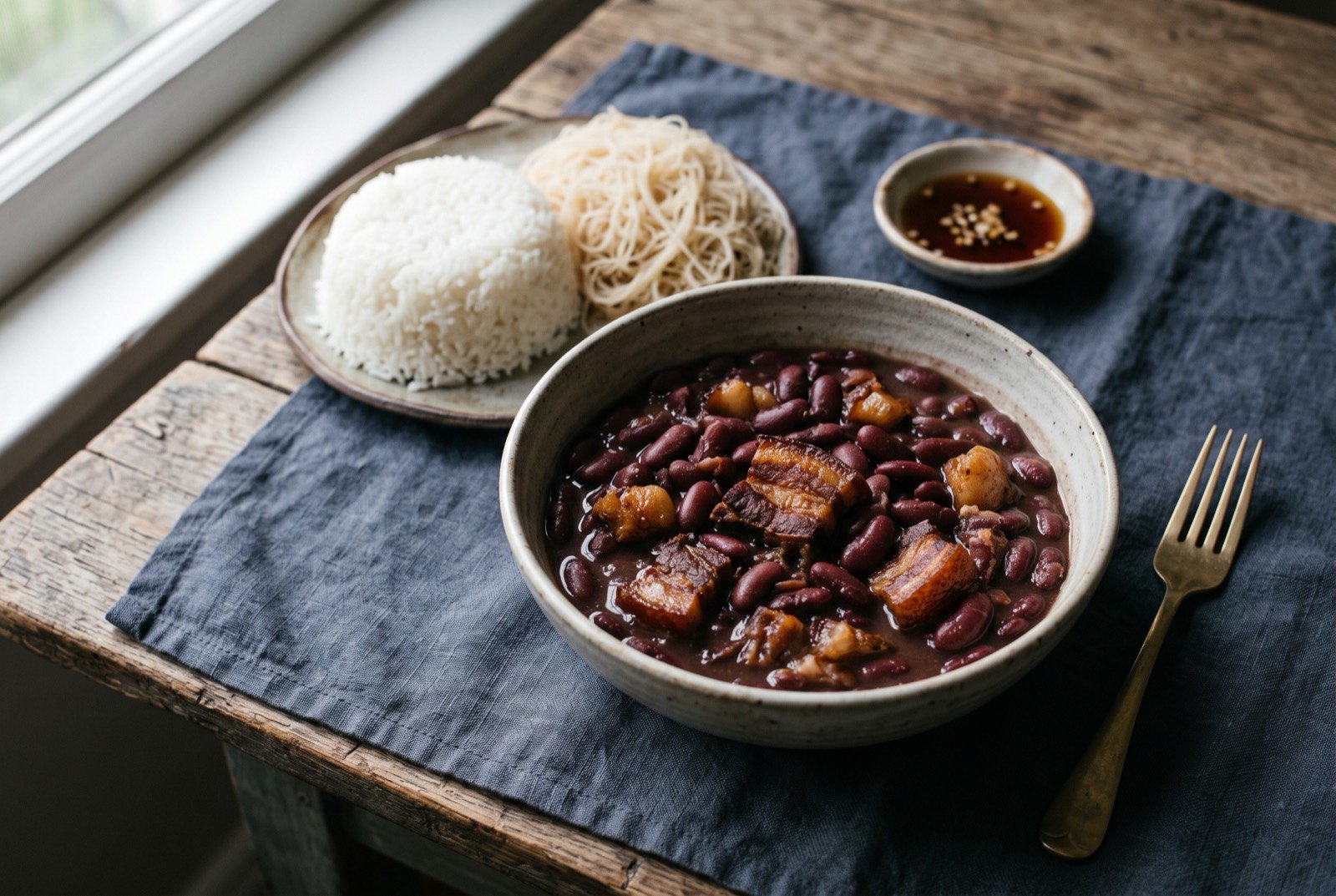
Dried red kidney beans soaked overnight then simmered roughly 2.5 hours, pork belly cut small and fried with sliced onion and soy sauce, served with Chinese cabbage (pota), rice vermicelli or macaroni, white rice, white vinegar and brown sugar to taste. Described by multiple sources as one of the most popular everyday dishes in French Polynesia today. [750g.com; recettestahitiennes.com]
As tradition built it
Beans simmered roughly 2.5 hours.
Ingredients
- 300g dried red kidney beans, soaked overnight
- 500g pork belly, cut small
- 1 onion, sliced
- a splash soy sauce
- to serve Chinese cabbage (pota)
- 150g rice vermicelli, or 200g macaroni rice vermicelli or macaroni
- to serve white rice
- to taste white vinegar and brown sugar, to taste at the table
Method
- Soak dried red kidney beans overnight. Simmer roughly 2.5 hours until tender.
- Fry pork belly, cut small, with sliced onion and soy sauce until well coloured.
- Combine the beans and pork. Serve with Chinese cabbage, rice vermicelli or macaroni and white rice, white vinegar and brown sugar offered at the table.
Notes
Described by multiple sources as one of the most popular everyday dishes in French Polynesia today.
What a modern chef changes
The beans and the pork given the separate, correct cooking each actually needs, then combined, rather than the pork simmered into the beans from the start.
No single named rung, a straightforward two-component separation.
Method
- Cook the pork belly sous vide low and slow, then finish it hard on the Big Green Egg for a rendered, properly tender result with a real seared crust, rather than fried-through pieces alone.
- Cook the beans separately to a controlled, still-holding-shape texture, seasoning the cooking liquor itself with the soy and onion rather than adding them only at the frying stage.
- Offer the vinegar and sugar as a proper table condiment, spice-ground where relevant, keeping the diner's own seasoning choice, which is genuinely how the dish is eaten, rather than pre-deciding the balance in the kitchen.