Melanesia, Micronesia and Polynesia · Volume 13, One Reef, Two Flags
Umukai
The Cook Islands
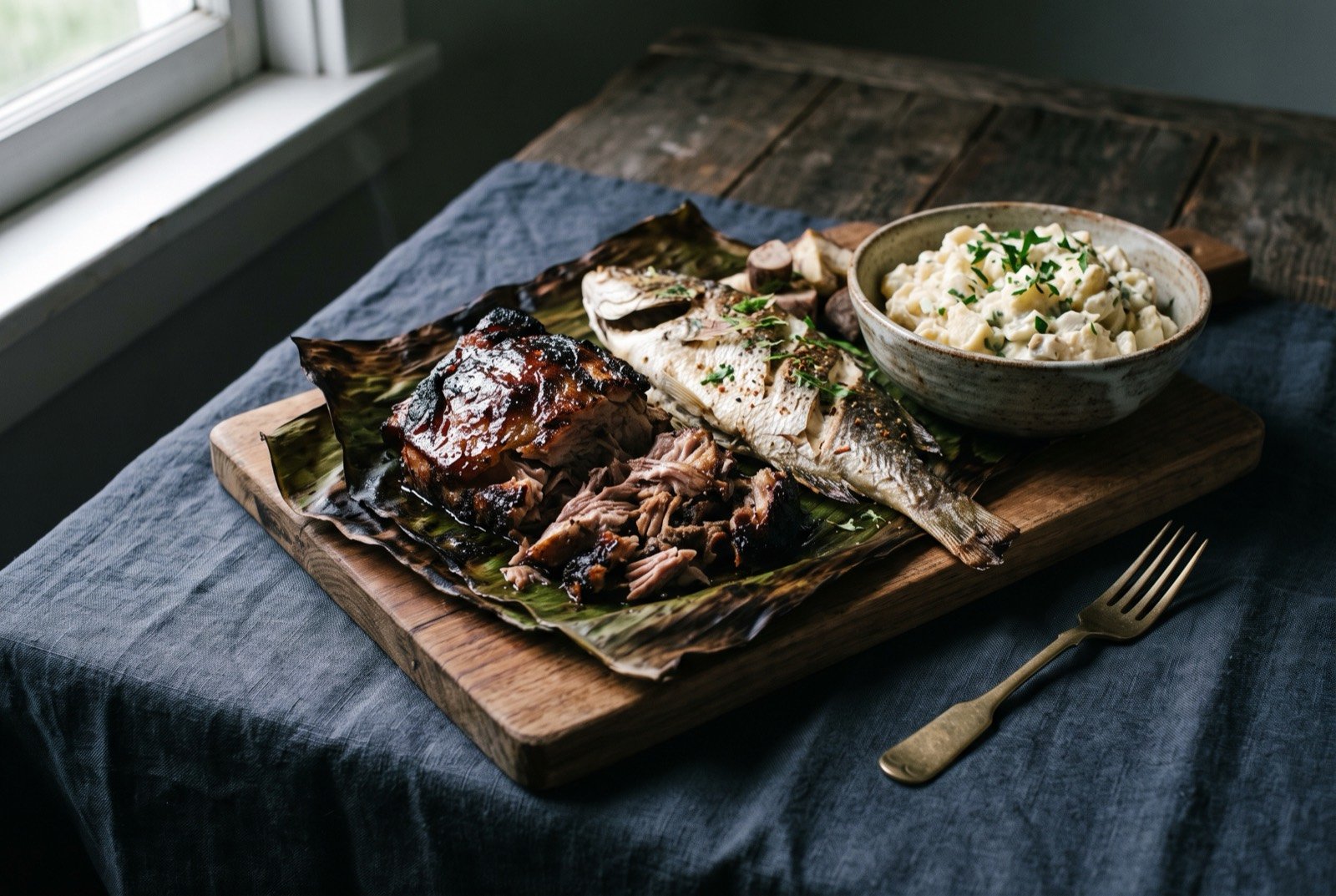
An illustration of the dish, not a photograph of it cooked.
- Time
- 3 hours
- Researched
- 17 sources cited
- Reviewed
- Not yet reviewed from inside the tradition
- Cooked
- Not yet cooked and reported
Meat, typically pork, chicken or both, plus fish, wrapped in banana leaf and cooked over heated stones in a dug pit, commonly cited at roughly three hours. What makes this dish worth pairing rather than merging with the ahimaʻa entry above is one specific, well-documented detail: potato salad now appears as a conventional accompaniment to the umukai feast, a European-introduced dish folded permanently into the ceremony over generations, exactly the kind of honest layering this atlas prefers to name rather than hide. [SOAS Library Special Collections blog]
As tradition built it
Roughly 3 hours in the pit.
Ingredients
- as available pork, chicken, or both
- as available fish
- as needed banana leaf, for wrapping
- to serve potato salad, to serve
Method
- Dig a pit and heat stones as described for the ahimaʻa (Rung 1).
- Wrap the pork, chicken or both, and the fish, in banana leaf and lay them over the heated stones.
- Seal under leaf and earth and leave to cook for roughly three hours.
- Serve with potato salad as the now-standard accompaniment.
Notes
Potato salad now appears as a conventional accompaniment to the umukai feast, a European-introduced dish folded permanently into the ceremony over generations.
What a modern chef changes
The potato salad taken as seriously as the earth-oven meat itself, rather than treated as an afterthought, since it is the honest present-day layer of this dish.
Rung 1
Method
- Cook the umukai meat and fish on a Big Green Egg in indirect mode, exactly as Rung 1 describes for the ahimaʻa entry above.
- Make the potato salad properly, with a real emulsified dressing rather than a bought jar, treating it as a genuine component of the dish rather than a colonial-era intrusion to be quietly dropped.
- Serve both together on one plate rather than separately, honouring the accompaniment's now-real place in the feast.