The Andes · Volume 18, Peru, the Coastal Creole, Chifa and Nikkei Kitchen
Causa rellena
Lima, Peru
Illustration
- Researched
- Researched from 64 sources in the brief
As tradition built it
Causa rellena
Per kilogram of potato
Ingredients
- 1kg papa amarilla (yellow potato), boiled in its skin in salted water, then peeled
- 30 to 45g ají amarillo paste
- 60 to 80ml lime juice
- 40 to 60ml vegetable oil
- 10 to 12g salt
- to taste chicken or tuna, bound in mayonnaise, for the filling
- as available avocado, sliced, often included
- for garnish hard-boiled egg or olive, to garnish
Method
- Boil the potato in its skin in salted water until a knife meets no resistance, then peel and press while still warm, ideally twice, to a lump-free purée.
- Mix warm with ají amarillo paste, lime juice, vegetable oil and salt, roughly per kilogram of potato: 30 to 45g ají paste, 60 to 80ml lime juice, 40 to 60ml oil and 10 to 12g salt, flexed by potato moisture and the heat of the ají and lime in hand.
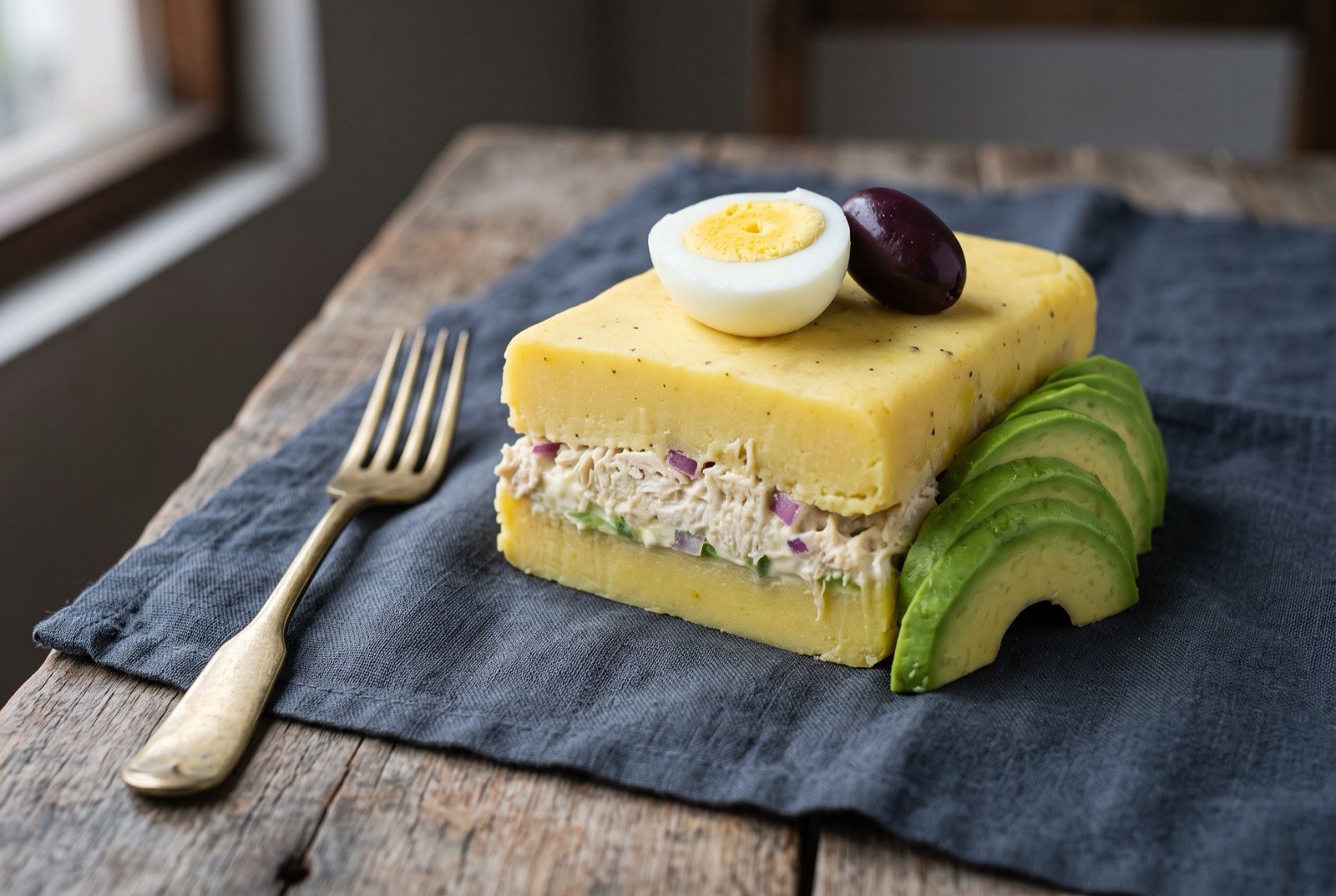
- Layer cold with a filling of chicken or tuna bound in mayonnaise, often with sliced avocado.
- Garnish with hard-boiled egg or olive.
Notes
The widely repeated story that causa's name and creation trace to women raising funds for soldiers during the War of the Pacific does not survive scrutiny: every source that repeats it frames it explicitly as legend. A better-attested, if still single-sourced, etymology traces "causa" to the Quechua kausay, life, an epithet for the potato as a life-giving food.
What a modern chef changes
A finer press, a bound emulsion
Rung 04
Method
- Pass the pressed potato through a chinois after ricing it, a second, finer pass than the traditional double-press achieves by hand.
- Mix the ají, lime and oil into the potato while it is still properly warm, exactly as tradition does, but emulsify a small portion of the oil and lime separately in the high-power blender first, so the fat binds evenly through the mash.
- Chill the assembled terrine under real weight, a tray and a can, rather than only in the mould, for cleaner, sharper-edged slices than the traditional dish typically holds.