The Andes · Volume 20, Pork, Potato and the Twelve Grain Feast
Llapingacho
Ambato, Ecuador
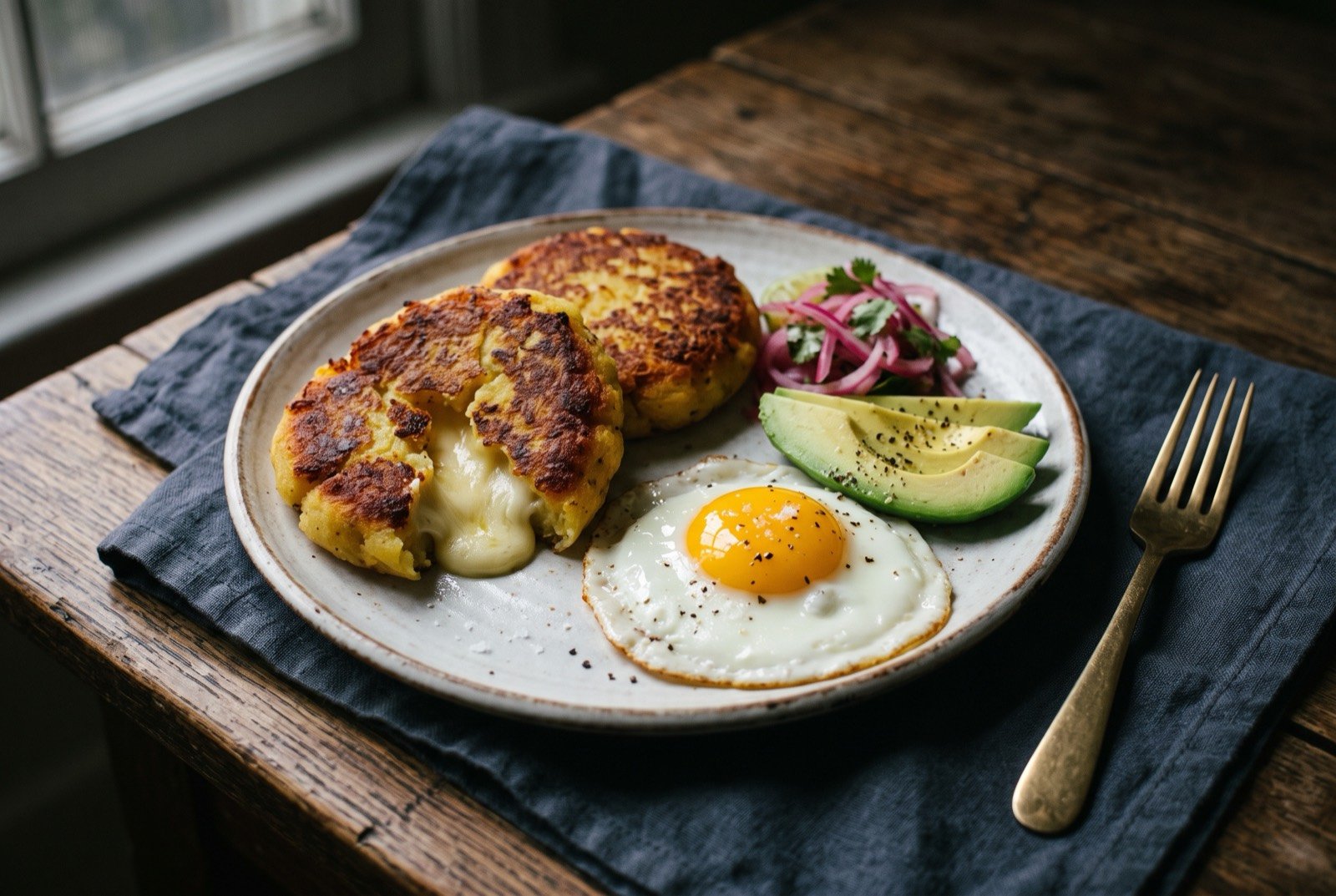
An illustration of the dish, not a photograph of it cooked.
- Time
- 2 hours
- Reviewed
- Not yet reviewed from inside the tradition
- Cooked
- Not yet cooked and reported
As tradition built it
Llapingacho
Makes about 12 patties . about 2 hours in total, including 1 hour resting the potato mixture
Ingredients
- 5 to 6 large potatoes (about 1kg) potatoes, peeled, ideally papa chola
- to taste salt, for the cooking water
- ½ cup white onion, finely diced
- 1 tbsp lard
- 2 tsp, ground achiote oil
- to taste salt and pepper
- 1 cup, crumbled fresh cheese, for the core of each patty
- for frying lard, a little more, for frying
- to serve chorizo, to serve
- to serve egg, fried, to serve
- to serve avocado, sliced, to serve
- to serve lettuce, to serve
- to serve encurtido (quick pickled onion), to serve
Method
- Boil peeled potatoes, ideally papa chola, in well salted water until they collapse at the touch of a fork, then mash them while still hot to a single, smooth mass; working them hot is not optional, since a cold mash never binds the same way.
- Make a refrito of finely diced white onion cooked slowly in lard and achiote oil, fold it through the mash with salt and pepper, then divide the mixture and stuff each portion with a core of fresh cheese before shaping into flat patties.
- Pan fry in a little more lard until golden and lightly crisp on both sides.
- Serve with chorizo, a fried egg, sliced avocado, lettuce and an encurtido, a quick pickled onion.
Notes
In Ambato, where the dish is said to have begun with a woman selling potato tortillas in the plaza, locals insist that only papa chola with chorizo counts as real llapingacho, and this chapter takes that regional insistence at face value rather than flattening it into a generic Ecuadorian potato cake.
What a modern chef changes
Piped potato discs, tomato false caviar, avocado foam
Method
- Rather than mashing by hand, pass the boiled potato through a fine drum sieve or ricer while hot for a perfectly smooth purée, then pipe and pan sear individual discs instead of hand shaping patties, giving a cleaner, more precise edge.
- Make a "false caviar" from processed paiteña tomato, a technique already used by at least one Quito chef working this exact dish: reduce the tomato to a concentrated purée, set it with a little agar, and pass it through a fine sieve or spherify it lightly, giving small, bright, acidic beads to scatter across the plate rather than a wedge of raw tomato.
- Finish with a light avocado foam, made in a whipping siphon or by hand with a stick blender and passed through a chinois, rather than sliced avocado, and reduce the chorizo to a single, thin, crisp shard rather than a whole link, so the plate reads as the same four elements, potato, cheese, onion and chorizo, radically concentrated rather than added to.