The Andes · Volume 20, Pork, Potato and the Twelve Grain Feast
Colada Morada and Guaguas de Pan
Ecuador, nationwide, Day of the Dead
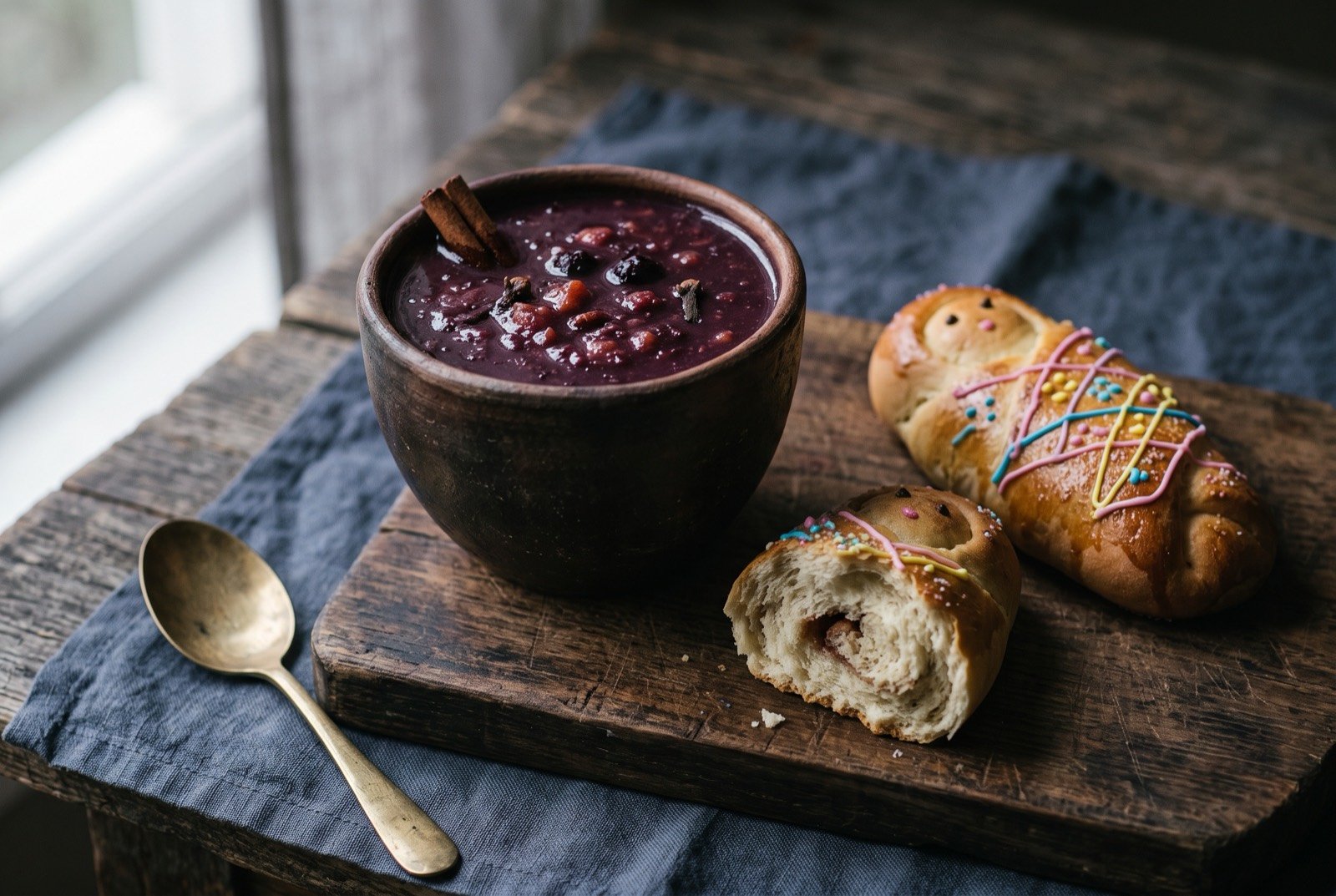
An illustration of the dish, not a photograph of it cooked.
- Time
- Not statedNo source states a time and the atlas has too few comparable dishes to estimate one.
- Reviewed
- Not yet reviewed from inside the tradition
- Cooked
- Not yet cooked and reported
As tradition built it
Colada Morada and Guaguas de Pan
Eaten on and around 2 November
Ingredients
An outline, not yet a recipe: the tradition's method with its ingredients named but not weighed. Quantities are being added from sources inside the tradition, lead dishes first.
- 1 cup purple or black maize flour
- 12 cups water
- 340g to 400g (12 to 14oz) panela, to sweeten
- 2 cups, fresh or frozen mortiño (Andean blueberry)
- 1 whole (skin and core for infusing, 2 cups flesh diced) pineapple
- 400g (14oz) pulp, thawed if frozen naranjilla
- to taste babaco or other available fruit
- 5 to 6 sticks cinnamon
- 4 to 5 clove
- orange leaf
- 500g flour, 115g butter sweet bread dough, enriched with butter
- as available jam, optional filling
- for garnish sugar glaze or coloured icing, to finish
Method
- Colada morada is a thick, spiced maize drink built around purple or black maize flour, cooked slowly with water, sweetened with panela, and layered with an infusion of fruit, traditionally mortiño, an Andean blueberry, along with pineapple, naranjilla, babaco or other available fruit, and spiced with cinnamon, clove and orange leaf, thickened until it coats a spoon rather than pours freely.
- It is drunk warm, on and around 2 November, alongside guaguas de pan, small child shaped sweet breads, enriched with butter and sometimes filled with jam, baked until golden and often finished with a simple sugar glaze or coloured icing detail.
- The two are eaten together specifically at gravesides and at home altars honouring the dead.
Notes
A continuation, on the strength of Ecuadorian sourcing though without a firmly dated archaeological citation, of an older pre-Hispanic funerary practice rather than a Catholic invention from nothing; a commonly repeated claim that the drink is five thousand years old could not be traced to a primary archaeological source and is not asserted here as fact.
What a modern chef changes
Reduced fruit concentrate, longer-proofed dough, freeze-dried mortiño dust
Method
- Build the fruit element as a proper reduction rather than a simple boiled infusion: cook the mortiño, pineapple and naranjilla down slowly to a concentrated syrup, strained through a chinois for total clarity, then stir that concentrate through the finished, thickened maize base at the end rather than boiling the fruit directly in the pot, preserving brighter, fresher fruit flavour against the deep, cooked maize body.
- Make the guaguas de pan dough with a longer, colder proof than the everyday household version allows for, giving a finer crumb, and pipe rather than hand shape the dough into cleaner, more precise figures.
- Finish a portion of the bread with a light dusting of freeze-dried, powdered mortiño, made in the dehydrator and ground fine on the spice grinder, in place of coloured icing, so the same fruit that flavours the drink also finishes the bread, and the pairing reads as one composed dessert rather than two separate traditional items served side by side.