The Andes · Volume 20, Pork, Potato and the Twelve Grain Feast
Chancho a la Barbosa
Cuenca, Ecuador
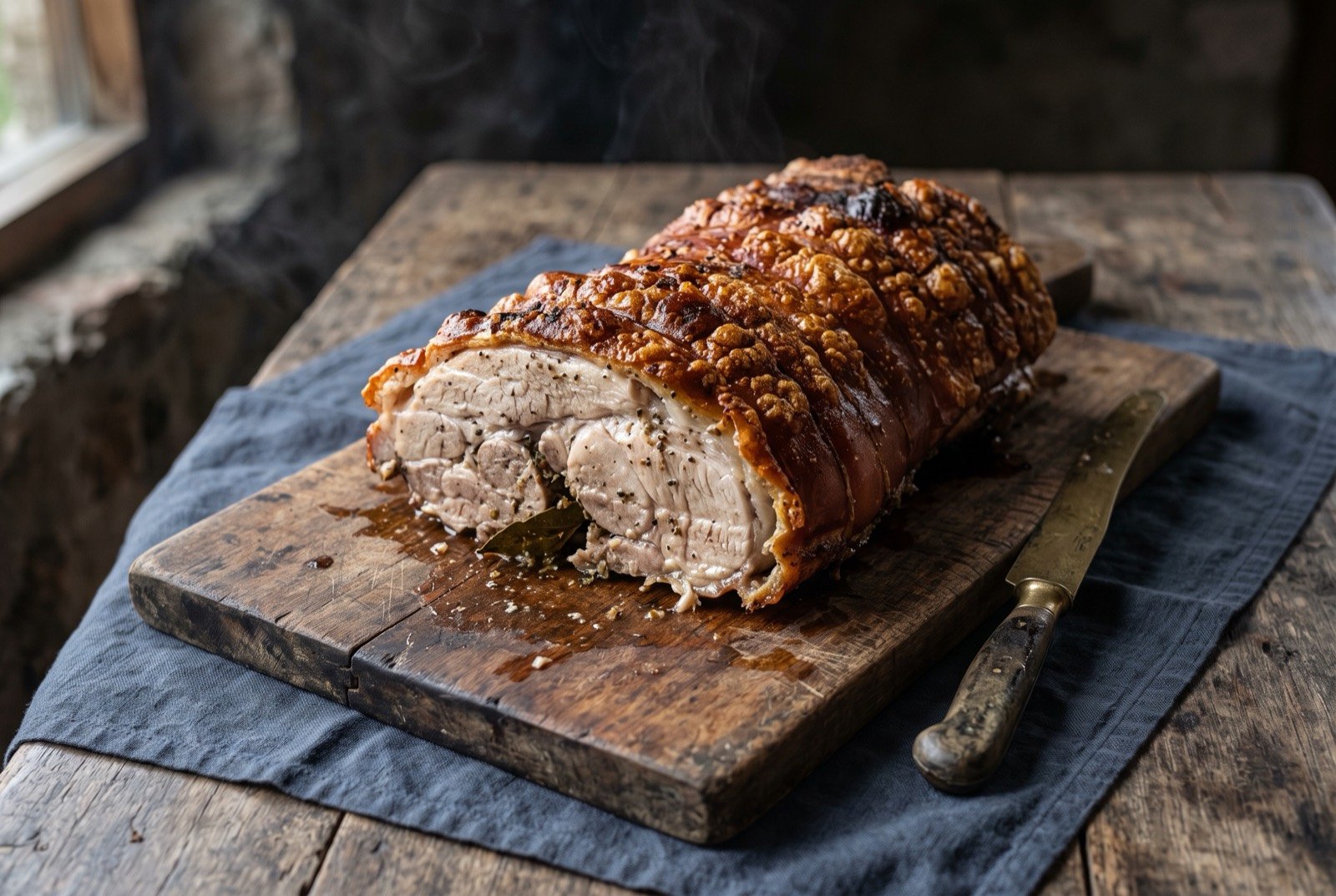
An illustration of the dish, not a photograph of it cooked.
- Time
- Not statedNo source states a time and the atlas has too few comparable dishes to estimate one.
- Reviewed
- Not yet reviewed from inside the tradition
- Cooked
- Not yet cooked and reported
As tradition built it
Chancho a la Barbosa
Spit-roasted 3 to 4 hours over coals
Ingredients
An outline, not yet a recipe: the tradition's method with its ingredients named but not weighed. Quantities are being added from sources inside the tradition, lead dishes first.
- 1 whole pig, butterflied, or as large a portion as your equipment allows
- cumin, crushed
- garlic, plenty
- bay leaf, a generous quantity
- to serve mote, to serve
- to serve ají cuencano, to serve
Method
- Butterfly a whole pig, or as large a portion of one as your equipment allows, and marinate it for at least a day, ideally two, in a paste of crushed cumin, plenty of garlic and a generous quantity of bay leaf, worked well into every surface.
- Mount the pig horizontally on a rotating spit or spit box roughly a metre above a bed of coals, replenished steadily rather than built up hot and left to die down, and turn it constantly, by hand or by motor, for three to four hours, so no single side sits directly over the heat long enough to burn while the rest stays raw.
- The skin should crisp gradually across the whole cook rather than only at the end, which is the real technical difference from hornado's enclosed, oven finished method.
- Serve simply, with mote and the region's own ají cuencano.
What a modern chef changes
Rotisserie over a Big Green Egg, dehydrated marinade dust
Rung 04
Method
- Where a whole pig is impractical, apply the same live fire logic to a large, butterflied shoulder or a full belly on the bone, mounted on a rotisserie attachment over a Big Green Egg's coals rather than an open pit, which gives much closer control over the burn without losing the constant turning that defines the dish.
- Rest the meat, once cooked, wrapped and warm, for a full 30 minutes before carving, longer than any household version would bother with, since the extended smoke exposure benefits from a proper redistribution of juices in a way a quick oven roast does not.
- Dehydrate a portion of the bay leaf and garlic from the marinade into a fine, dry seasoning dust and finish the carved meat with a scattering of it just before serving, so the marinade's aromatics are tasted twice, once cooked in and once fresh on top.
- Serve the ají cuencano made on a batán, oil based rather than water based as the region insists, alongside a single, precisely cut wedge of mote cake, pressed and pan seared rather than served loose, as the modern plate's starch element.