Mainland Brazil · Volume 40, Caatinga, Vaqueiro and the Salt-Cured Table
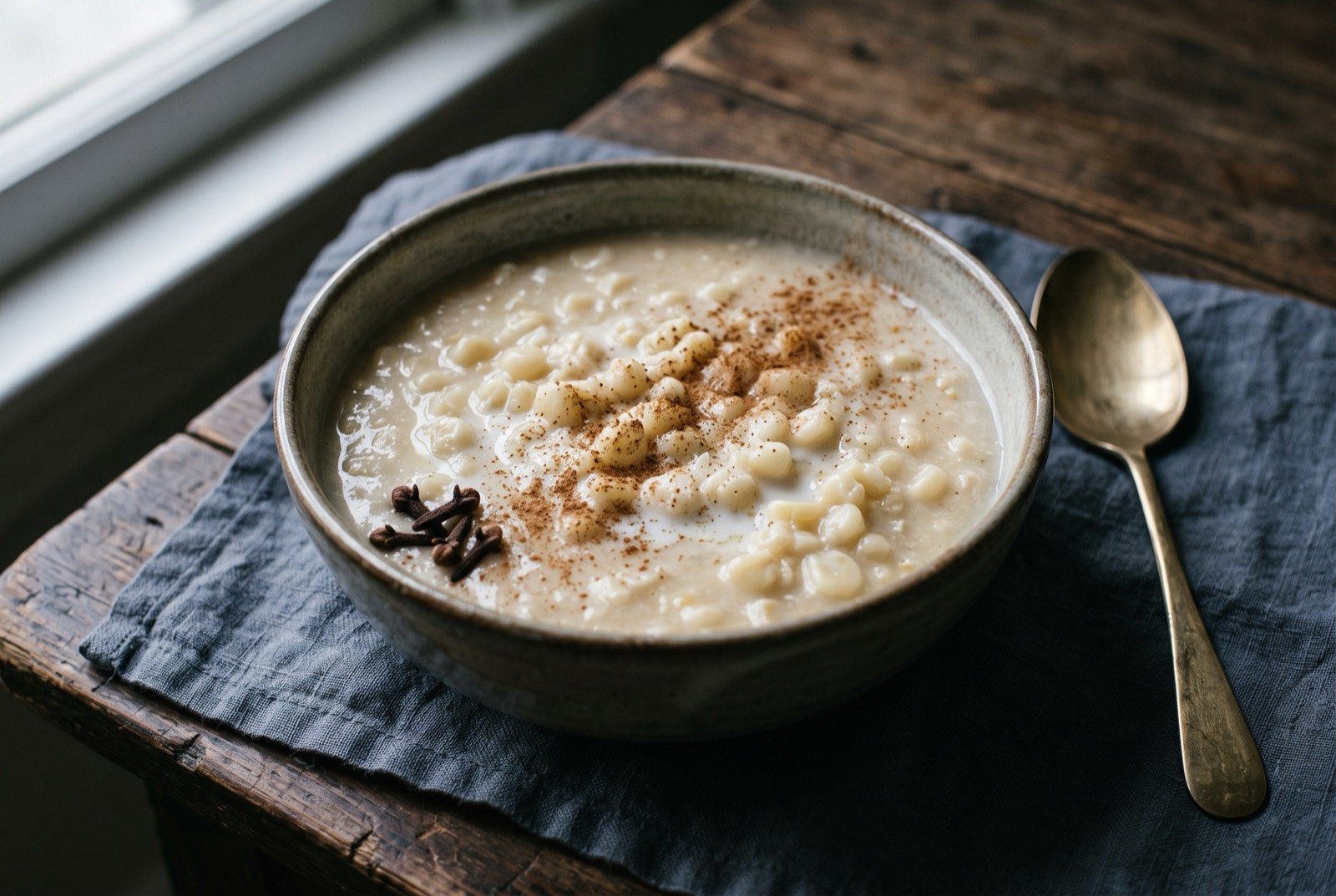
Canjica, in its sertão sense of mungunzá
Northeast Brazil, Brazil
Illustration
- Time
- 13 hours
- Researched
- Researched from 21 sources in the brief
As tradition built it
Canjica / mungunzá
Serves 6 . about 13 hours, mostly soaking the corn overnight
Ingredients
- 500g dried white hominy corn
- 1 litre whole milk
- 400ml coconut milk
- 1 cup (about 200g) sugar
- 2 sticks cinnamon
- a few, for garnish cloves
Method
- Soak the dried white hominy corn for twelve hours.
- Pressure-cook for around thirty minutes.
- Simmer uncovered a further hour with whole milk, coconut milk, sugar, cinnamon and cloves, stirring until creamy, sometimes thickened by blending a little of the cooked corn back into the pot.
Notes
In the Northeast the sweet corn porridge most of Brazil calls canjica is properly mungunzá; canjica more often names a different dish here, a fresh green corn cream closer to what São Paulo calls curau. This chapter treats the porridge under its correct sertão name.
Scholars are divided on whether the word itself has a Kimbundu, Bantu-language, root or a separate African etymology again, and this chapter presents both without resolving which is correct.
It sits, with pamonha and cuscuz, at the centre of the Northeastern São João table each June.
What a modern chef changes
Two textures kept distinct
Method
- Keep the long soak and simmer as tradition dictates, since they are doing real chemical work, hydrating and softening the hominy's tough pericarp, with no honest shortcut around that.
- Rather than crushing a portion of the whole corn back in to thicken the pot, which muddies the texture, blend a small measured portion to a completely smooth cream in a high-power blender.
- Swirl the blended cream through at the end, giving the dish both the whole kernel's bite and a genuinely silky base, the two textures kept distinct rather than folded into one average one.