The Indian subcontinent · Volume 22, The Coconut Coast, the Stone Grinder and the Chettiar’s Spice Road
Appam and stew
Kerala (Syrian Christian)
Illustration
- Time
- 10 hours
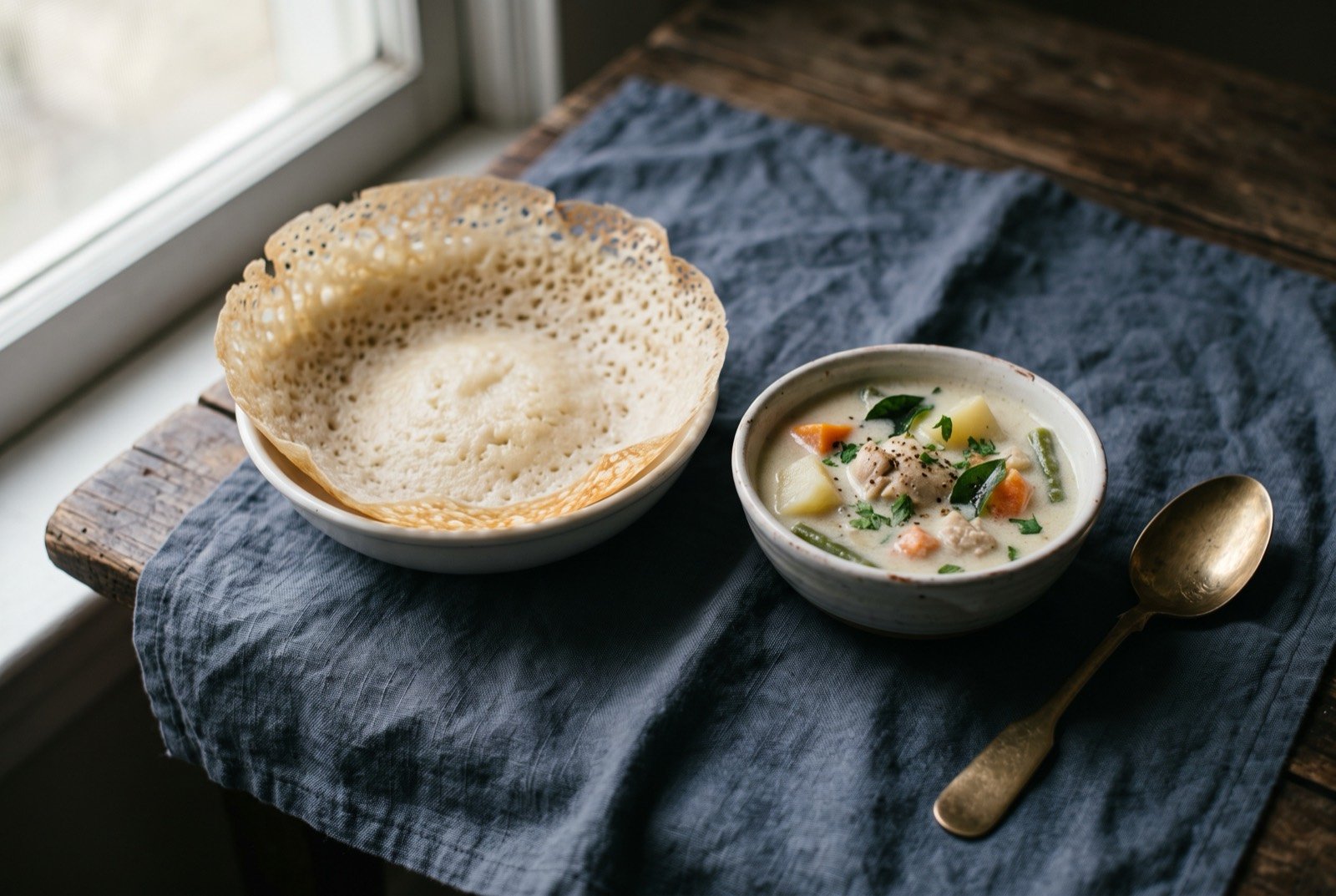
Kerala's Syrian Christian breakfast and festive table, a lacy, toddy-leavened bowl beside a mild coconut-milk stew.
As tradition built it
Makes 8 to 10 appam. Batter ferments 8 to 10 hours; 3 to 4 minutes to cook each. Stew takes about 30 minutes.
Ingredients
Appam
- 2 cups raw rice, soaked 4 hours
- ½ cup cooked rice
- 1 cup grated coconut
- 1 tsp sugar
- 1 tsp dried yeast, or 2 tbsp toddy where available
- to taste salt
Ishtu (stew)
- 500g chicken or vegetables, cut into pieces
- 2 onions, sliced
- 2 cups thin coconut milk
- ½ cup thick coconut milk
- 1 thumb ginger, 4 garlic cloves, 2 green chillies, a sprig curry leaves, 4 cloves, a 2.5cm cinnamon stick, 4 cardamom pods ginger, garlic, green chilli, curry leaf, whole spices (clove, cinnamon, cardamom)
- to taste salt
Method
Appam
- Blend the soaked raw rice, cooked rice and coconut with a little water to a smooth batter.
- Dissolve the yeast in a little warm water with the sugar, leave to foam, then stir into the batter with salt.
- Cover and ferment 8 to 10 hours, until visibly bubbled.
- Heat a rounded appachatti, swirl a ladle of batter to coat the sides thinly with a thicker pool at the centre, cover and cook 3 to 4 minutes until the edges are lacy and golden and the centre is set.
Ishtu (stew)
- Fry the onion, ginger, garlic and whole spices in a little coconut oil until soft.
- Add the chicken or vegetables and thin coconut milk, and simmer until cooked through.
- Stir in the thick coconut milk at the very end and warm through without boiling, to keep it from splitting.
What a modern chef changes
A yeast ferment slowed right down for real depth, and a stew finished in two coconut-milk stages rather than one
Rung 2
Method
- Ferment the appam batter overnight in a cool larder rather than a warm kitchen for a few hours, for a slower build of real acidity closer to toddy's own tang.
- Reduce the thin coconut milk separately before the chicken goes in, concentrating its flavour so the finished stew clings rather than pools.
- Finish with the thick coconut milk off the heat entirely, stirred through in the residual warmth of the pan, for the richest possible texture without any risk of splitting.