The Indian subcontinent · Volume 25, The Roasted Spice, the Palmyrah Coast and the Coral Atoll
Egg hoppers (appa)
Pan Sri Lankan
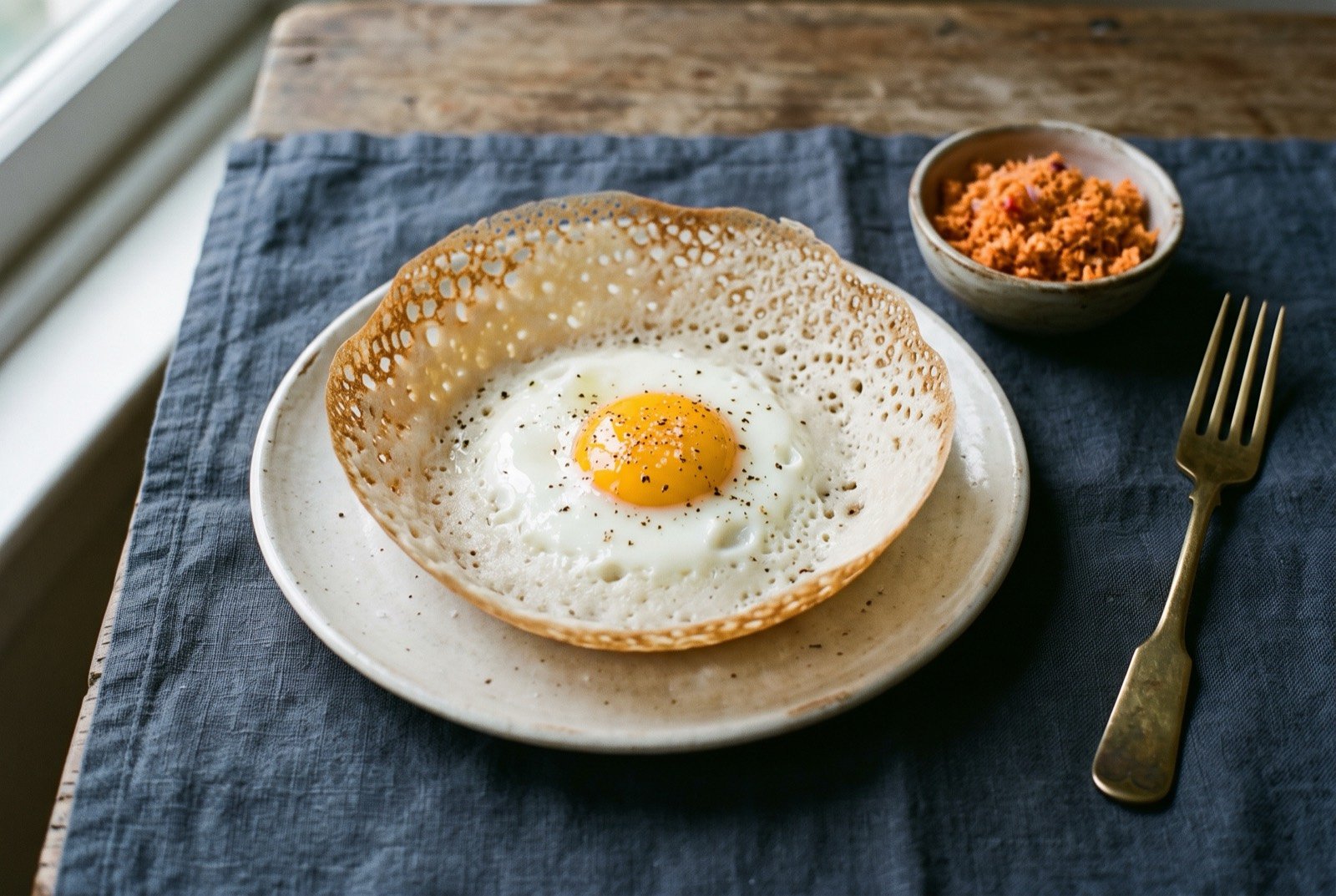
An illustration of the dish, not a photograph of it cooked.
- Time
- 4 hours
- Researched
- No outside sources linked
- Reviewed
- Not yet reviewed from inside the tradition
- Cooked
- Not yet cooked and reported
Pan Sri Lankan, claimed and cooked by every community on the island. A bowl shaped fermented rice and coconut milk pancake, crisp lace at the rim, soft at the centre, with an egg cracked into it as it cooks.
As tradition built it
Makes 8 to 10. Batter rests 4 hours minimum, ideally overnight; 3 to 4 minutes to cook each.
Ingredients
- 250 g rice flour
- 1 tsp fresh yeast, or 1 tbsp palm toddy where available
- 1 tsp sugar
- 400 ml thin coconut milk, plus extra to loosen
- A pinch salt
- 8 to 10 eggs
Method
- Whisk the rice flour, yeast, sugar and a pinch of salt with a little warm water into a smooth paste, then loosen gradually with the coconut milk to a batter the consistency of thin double cream.
- Cover and leave somewhere warm for at least 4 hours, or overnight in a cooler spot, until visibly bubbled and faintly sour smelling.
- Heat a curved hopper pan (appachatti) over medium heat and lightly oil it. Ladle in a portion of batter, immediately swirling and tilting the pan so the batter climbs the sides thinly, leaving a thicker pool at the centre.
- Crack an egg into the centre, cover with a lid, and cook for 3 to 4 minutes, until the edges are lacy and golden and the egg white is just set.
- Ease out with a flat spatula and serve immediately, with pol sambol or seeni sambol.
Notes
No source consulted for this chapter gave a fixed batter ratio as settled fact; the quantities above sit within the range this chapter's research found consistently, and the fermentation time in particular should be read by smell and bubble rather than the clock.
What a modern chef changes
A controlled, cool ferment, closer to toddy's own tang than a fast rise gives.
Rung 2
Method
- Ferment the batter in a covered container in a cool larder or the bottom of a fridge overnight, rather than a warm kitchen for a few hours, for a slower build of real acidity closer to toddy's own sourness.
- Strain the batter through a fine sieve before cooking, for a completely smooth, evenly lacy edge with no undissolved flour specks.
- Finish the pan under a very short blast of a kitchen blowtorch at the rim only, just enough to deepen the lace's colour a shade further without touching the soft centre.