The Indian subcontinent · Volume 21, The Convent Kitchen, the Temple Kitchen and the Toddy Tapper’s Coast
Sannas
Goa, cooked distinctly by both the Catholic and Hindu Saraswat tables
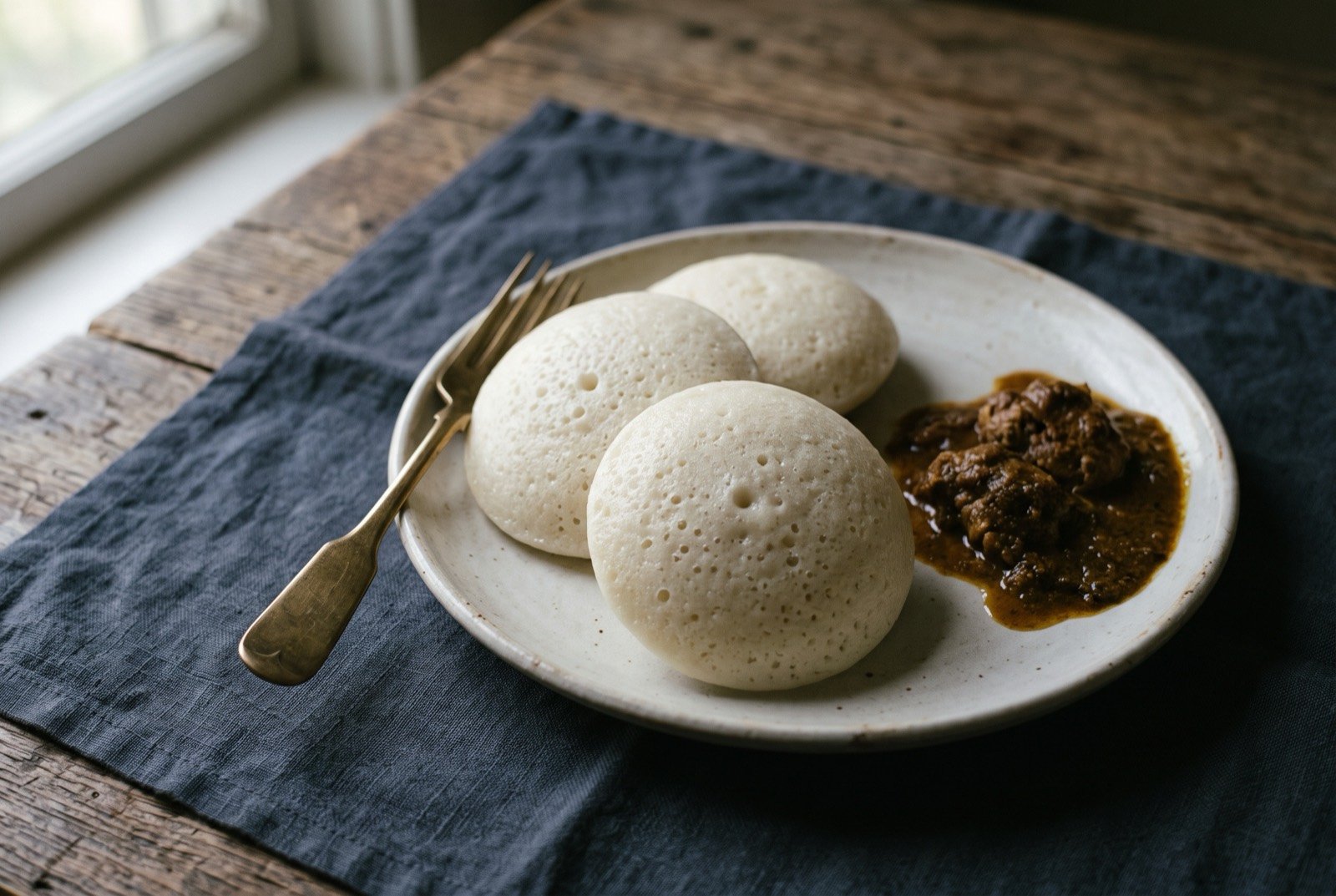
An illustration of the dish, not a photograph of it cooked.
- Time
- 6 hours
- Reviewed
- Not yet reviewed from inside the tradition
- Cooked
- Not yet cooked and reported
The chapter's clearest single case for its whole argument. Steamed rice cakes, ground from red rice and coconut, leavened one way in a Catholic kitchen and another way in a Hindu one.
As tradition built it
Two leavenings, one dish
Makes about 12. Ferments 4 to 6 hours or overnight; steams 20 to 25 minutes.
Ingredients
The Catholic table, toddy-leavened
- 300 g red (ukde) rice, soaked overnight
- 100 g fresh coconut, grated
- 150 ml fresh palm toddy (or see modernist version)
- 1 tsp sugar
- a pinch salt
The Hindu Saraswat table, urad dal-leavened
- 300 g red (ukde) rice, soaked overnight
- 2 tbsp urad dal (black gram), soaked separately
- 100 g fresh coconut, grated
- 150 ml, combined coconut water and coconut milk, in place of toddy
- a pinch salt
Method
The Catholic table, toddy-leavened
- Drain the soaked rice and blend with the coconut and toddy to a smooth, thick batter.
- Stir in the sugar and a pinch of salt, cover, and leave somewhere warm for 4 to 6 hours, or overnight in a cooler spot, until visibly bubbling with a characteristic fermented smell.
- Pour into greased small moulds or ramekins, filling halfway to allow for rise.
- Steam for 20 to 25 minutes, until a skewer comes out clean.
- Serve warm, traditionally alongside sorpotel or vindalho at Catholic feasts, weddings and Holy Communions.
The Hindu Saraswat table, urad dal-leavened
- Drain the soaked rice and the separately soaked urad dal, and grind together with the coconut, coconut water and coconut milk to a smooth, thick batter, in place of toddy.
- Ferment, mould and steam exactly as the toddy-leavened version above.
- The result is denser and coarser than the toddy version, closer in texture to idli, and carries none of toddy's faint sourness. This divergence, same name, same base method, a genuinely different leavening agent tied to which community is cooking it, is the cleanest technical fact either research pass for this volume found, and this chapter treats it as the dish's real subject rather than a footnote to the Catholic recipe.
Notes
Modern practice on both sides has largely shifted from red to white rice for speed and economy, and toddy substitutes now include commercial yeast, homemade fermented coconut water, and, per one Goan source, even Sprite, a real and acknowledged loss of the traditional method rather than a silent substitution.
What a modern chef changes
A controlled ferment that gets close to toddy's real tang without the ingredient itself
Rung 3.
Method
- Where toddy is unobtainable, use a small quantity of fresh yeast plus a longer, cooler overnight ferment in the bottom of a fridge, rather than a warm kitchen for a few hours, building real acidity rather than just gas.
- Steam in a single even layer with a tightly fitted lid, rather than stacking moulds, for a consistent rise across every piece.