The Indian subcontinent · Volume 21, The Convent Kitchen, the Temple Kitchen and the Toddy Tapper’s Coast
Khatkhate
Goa, Hindu Saraswat table
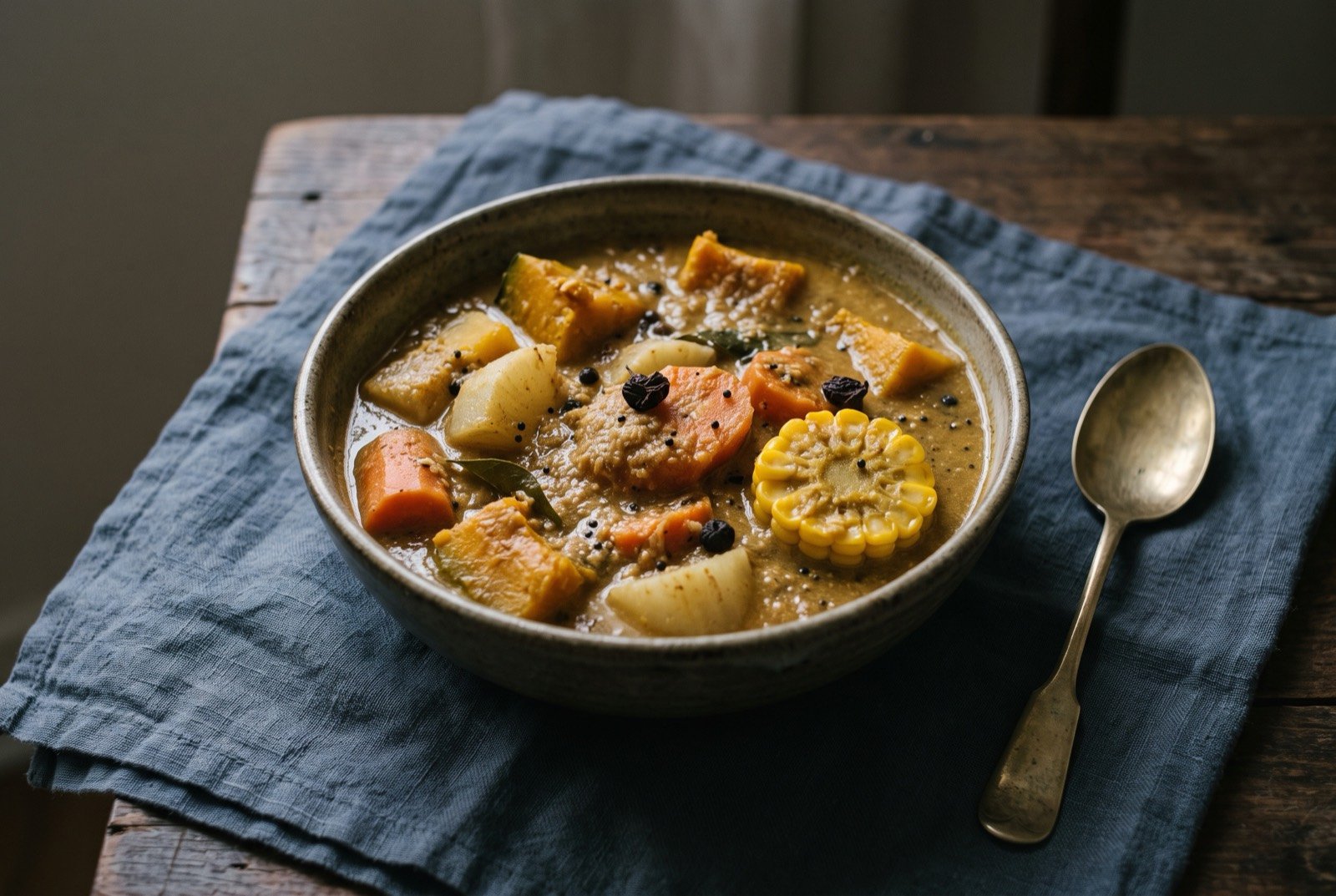
An illustration of the dish, not a photograph of it cooked.
- Time
- 1 hour
- Reviewed
- Not yet reviewed from inside the tradition
- Cooked
- Not yet cooked and reported
The Hindu Saraswat festive vegetable stew. No onion, no garlic, minimum five vegetables, and the name itself describes the sound of it boiling.
As tradition built it
Serves 6, as a festival dish. About 1 hour.
Ingredients
- 100 g toor dal
- 1 radish, chopped
- 1 potato, chopped
- 1 sweet potato, chopped
- 1 carrot, chopped
- 1 ear of corn, cut into rounds
- 200 g pumpkin, chopped
- plus any other seasonal vegetable to hand
- 100 g fresh coconut, grated
- 1 tsp dried red chilli, or to taste
- 1 tsp turmeric
- 1 tsp garam masala
- 4 to 6 tirphal (Zanthoxylum rhetsa)
- 2 tbsp jaggery
- to taste kokum or tamarind, to sour
- a little salt
- 1 tbsp coconut oil
- 1 tsp mustard seeds
Method
- Cook the toor dal until soft, then set aside.
- Boil the vegetables, the potato and sweet potato among them, together in a large pot with the turmeric and a little salt until just tender, starting with the firmest (radish, carrot) and adding softer ones (pumpkin, corn) later so nothing overcooks.
- Grind the coconut with the dried chilli to a coarse paste and stir into the vegetables along with the cooked dal.
- Add the garam masala, jaggery, and kokum or tamarind to taste, and simmer until the flavours come together, around 15 minutes.
- Temper: heat the coconut oil, add the mustard seeds and the tirphal, and pour, sizzling, over the finished stew.
- Specifically prepared for Goan Hindu weddings, religious ceremonies and Ganesh Chaturthi, where it sits alongside khatkhate's naivedya companions.
Notes
No Catholic-tradition source in either research pass names or describes a parallel "khatkhatem"; every source found describes khatkhate as specifically and consistently Goan Hindu. Present this as a Hindu dish some Catholic households also cook, not as belonging equally to both, a correction against this volume's own starting assumption.
What a modern chef changes
Individually textured vegetables against a single smoother sauce base
Rung 1 (applied to the coconut-chilli paste).
Method
- Roast the dried chilli briefly before grinding it with the coconut, the same roast-then-grind logic as xacuti, for a rounder, less raw heat.
- Cook each vegetable separately to its own correct doneness, then combine only at the final assembly, rather than boiling everything together, so the carrot is not mush by the time the pumpkin is ready.