The Indian subcontinent · Volume 23, The Court, the Chilli and the Temple Kitchen
Pandi curry
Kodagu, Coorg (Kodava)
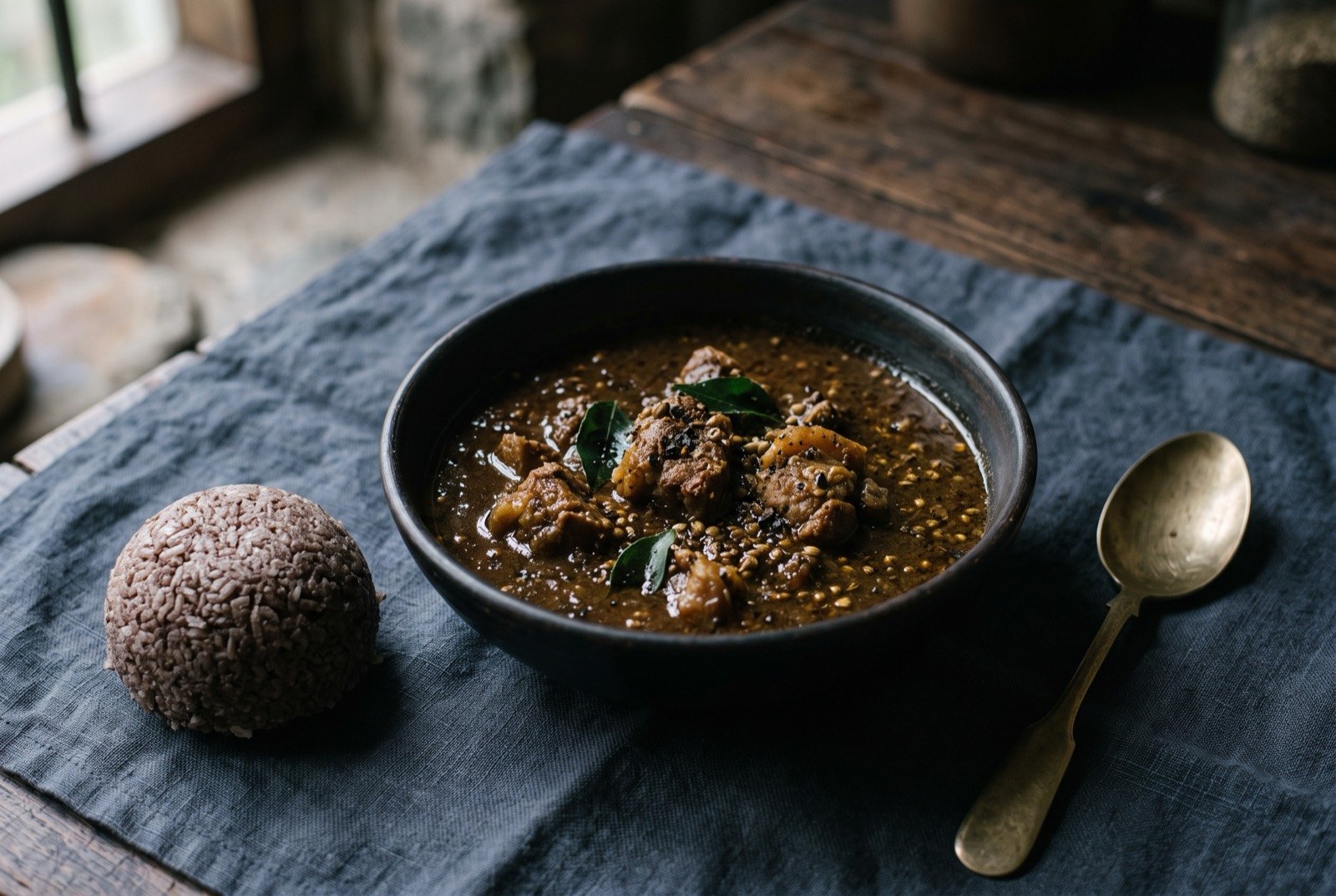
An illustration of the dish, not a photograph of it cooked.
- Time
- Hands on 1 hour · Waiting 8 hours
- Reviewed
- Not yet reviewed from inside the tradition
- Cooked
- Not yet cooked and reported
Kodagu, Coorg. Kodava pork curry, an entirely separate hill tradition from the coastal cuisines either side of it, souring on kachampuli rather than tamarind or kokum.
As tradition built it
Serves 4. About 1 hour, plus overnight marination.
Ingredients
- 800 g pork shoulder or belly, cut into cubes, with some fat left on
- 3 tbsp kachampuli
- 2 tbsp coriander seed, coarsely ground
- 1 tbsp black peppercorns, coarsely ground
- 1 tsp cumin seed
- 1 cinnamon stick
- 4 dried red chillies
- 2 onions, sliced
- 2 tbsp ginger-garlic paste
- A sprig curry leaves
- 3 tbsp oil
- to taste salt
Method
- Marinate the pork overnight in half the kachampuli, salt and half the ginger-garlic paste.
- Dry-roast the coriander seed, peppercorns, cumin, cinnamon and dried chillies, then grind coarsely, deliberately keeping some texture rather than a fine smooth powder.
- Heat oil in a heavy pan, temper with curry leaf, and fry the onion and remaining ginger-garlic paste until golden.
- Add the coarsely ground spice, cook briefly, then add the marinated pork and brown well.
- Add a little water, cover, and simmer for around 40 to 45 minutes, until the pork is tender and the fat has rendered into the gravy.
- Stir in the remaining kachampuli in the final few minutes, and adjust salt; the vinegar's sourness should sit clearly against the pork fat rather than disappear into it.
Notes
Kachampuli, not kokum or tamarind, is what makes this dish specifically Kodava rather than a generic South Indian pork curry; a cook substituting kokum, the closer of the two available alternatives, should expect a milder, less concentrated sourness and adjust quantity upward accordingly rather than assuming a straight swap.
What a modern chef changes
A pork rendered slowly and separately, and a coarse spice kept coarse on purpose.
Rung 2, applied to fat rather than to pounding
Method
- Render the pork's own fat separately at a very low heat before the main braise, sous vide at a low, controlled temperature if preferred, then finish the braise in that rendered fat rather than raw oil, for a rounder, more integrated richness.
- Grind the spice mix in short pulses in a dedicated spice grinder rather than to a fine powder, stopping deliberately short of smooth, since the coarse texture is part of this dish's actual technique, not an accident of a mortar and pestle.
- Finish with a few drops of kachampuli added raw at the very end, off the heat, alongside the cooked-in quantity, for a brighter top note the long braise alone cannot give back once it has cooked out.