The Indian subcontinent · Volume 23, The Court, the Chilli and the Temple Kitchen
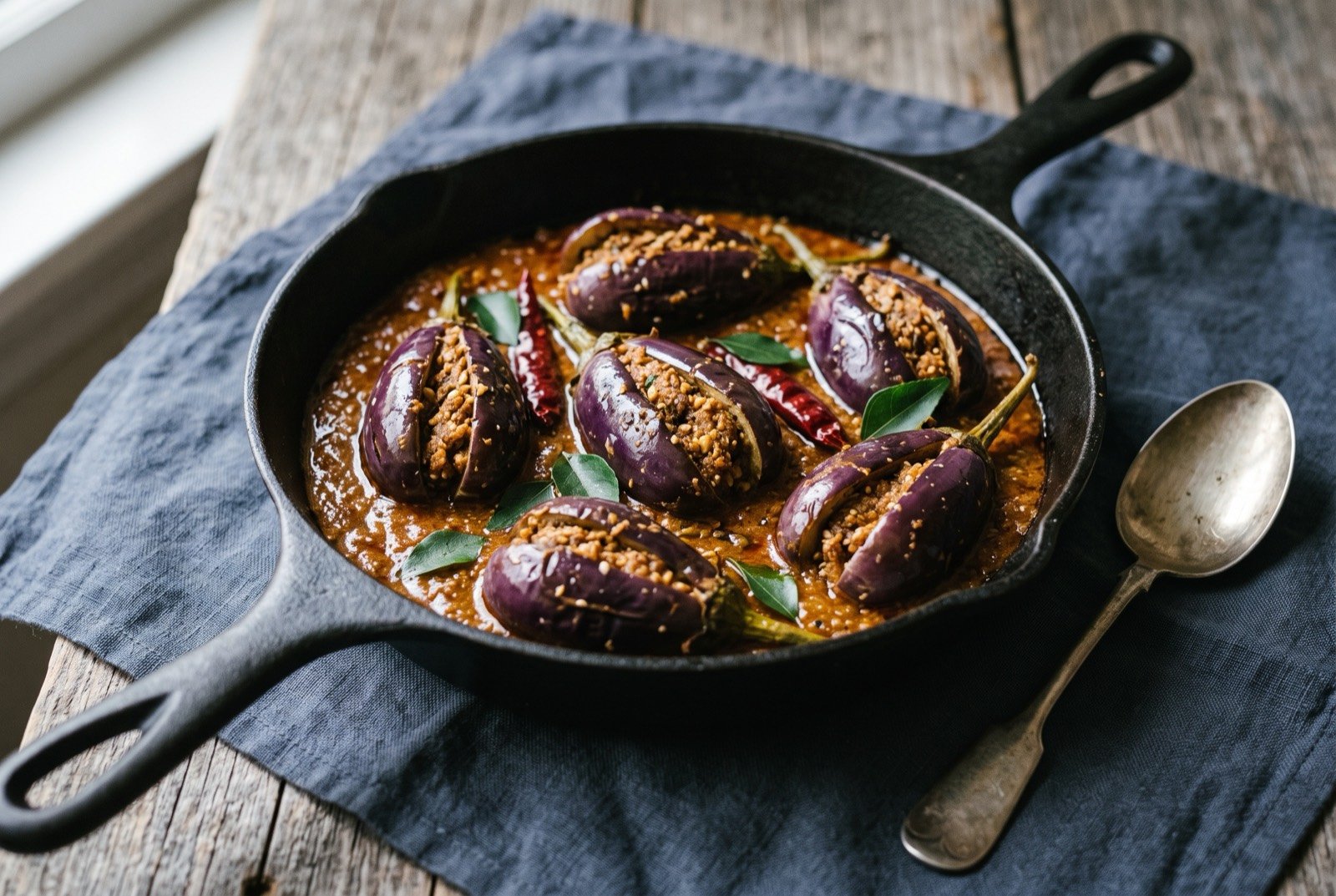
Gutti vankaya kura, also cooked as baghare baingan
Andhra household cooking and the Nizami table
Illustration
- Time
- 45 minutes
- Researched
- Researched from 18 sources in the brief
Andhra household cooking on one side, the Nizami table on the other, the same peanut-and-sesame stuffed aubergine wearing two names. Baghare baingan's Urdu name describes only its tempering technique; the dish itself is Telugu.
As tradition built it
Serves 4. About 45 minutes.
Ingredients
- 8 small aubergines, quartered from the base but left joined at the stem
- 3 tbsp roasted peanuts, ground
- 2 tbsp sesame seeds, roasted and ground
- 2 tbsp desiccated coconut
- 1 tbsp tamarind pulp
- 1 tsp red chilli powder
- 1 tsp coriander seed, roasted and ground
- 1 tsp; a sprig; 1 mustard seed, curry leaf and dried red chilli, for tempering
- 1 onion, finely chopped
- 3 tbsp oil
- to taste salt
Method
- Grind the peanut, sesame, coconut, tamarind, chilli powder and coriander together with a little water into a thick paste.
- Stuff each quartered aubergine generously with the paste, reserving any excess.
- Heat oil in a wide pan and temper with mustard seed, curry leaf and a whole dried chilli. Add the onion and fry until soft.
- Add the stuffed aubergines, any reserved paste, the salt and enough water to come partway up the sides. Cover and simmer for around 25 to 30 minutes, turning occasionally, until the aubergines are fully tender and the gravy has thickened around them.
Notes
This chapter gives one recipe for both names, since the underlying technique and larder, peanut, sesame, tamarind, no saffron, no dried fruit, are Telugu-region cooking regardless of which household or court table the dish is served at; no source found gives baghare baingan a documented Nizami court origin story distinct from the Telugu dish it structurally is.
What a modern chef changes
A stuffing roasted to order, and a gravy reduced separately for a cleaner finish.
Rung 3
Method
- Dry-roast the peanuts, sesame and coriander seed fresh that morning in a dedicated spice grinder rather than using a pre-ground stuffing, for the depth this dish depends on.
- Cook the tempering and gravy base separately from the aubergines, reducing it to a thick, clinging consistency before the aubergines go in, rather than adding water to the pan directly, for a sauce that coats rather than pools.
- Finish with a very short blast of a kitchen blowtorch on the aubergine skins just before serving, for a faint char note the stew method alone does not give.