The Indian subcontinent · Volume 23, The Court, the Chilli and the Temple Kitchen
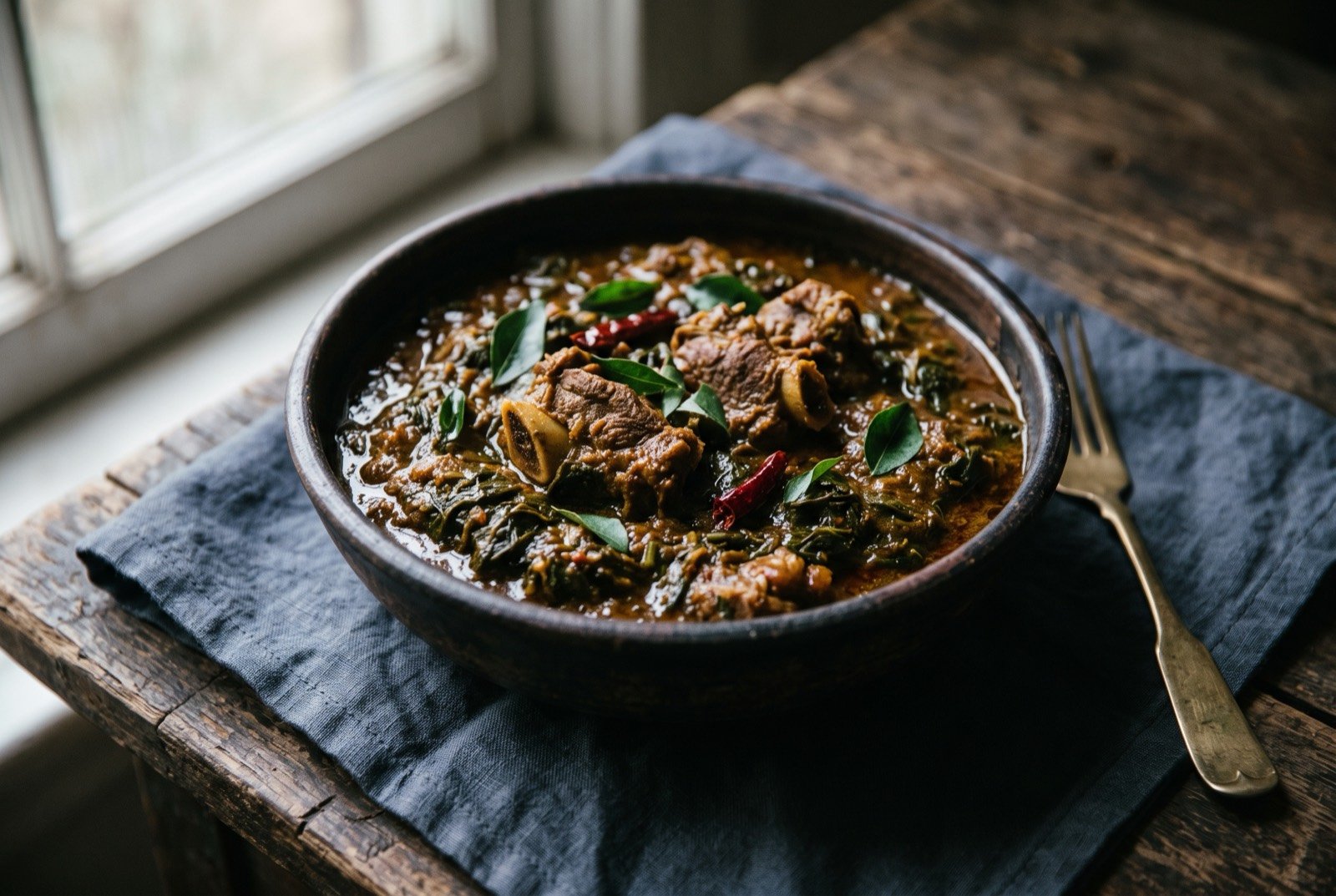
Gongura mamsam
Andhra, coastal and Rayalaseema
Illustration
- Time
- 1 hour
- Researched
- Researched from 18 sources in the brief
Andhra, coastal and Rayalaseema both. Mutton cooked down with sorrel leaf until the leaf's own sourness has entirely taken over the gravy, gongura's defining role as a souring agent that stacks with tamarind rather than replacing it.
As tradition built it
Serves 4. About 1 hour.
Ingredients
- 600 g mutton, on the bone, cut for curry
- 250 g fresh gongura leaves, washed and roughly chopped
- 2 onions, finely sliced
- 3 tbsp ginger-garlic paste
- 2 tsp red chilli powder
- 1 tsp turmeric
- 1 tsp; a sprig mustard seed and curry leaf, for tempering
- 3 tbsp oil
- to taste salt
Method
- Heat oil in a heavy pan, temper with mustard seed and curry leaf, then fry the onion until golden.
- Add the ginger-garlic paste, chilli powder and turmeric, cook briefly, then add the mutton and brown on all sides.
- Add enough water to just cover, cover the pan, and simmer for around 30 to 35 minutes, until the mutton is nearly tender.
- Add the chopped gongura leaves and continue simmering, uncovered, for a further 15 to 20 minutes, stirring occasionally, until the leaves have completely broken down into the gravy and the whole dish has taken on gongura's distinctive sour edge.
- Adjust salt; gongura's own sourness usually means little or no extra tamarind is needed.
What a modern chef changes
A leaf cooked down twice, once for body and once for a fresher final note.
Rung 3, applied to a leaf rather than a chilli
Method
- Reserve a third of the gongura, blanch it briefly and blend it to a bright, coarse purée, stirring this in at the very end rather than cooking all the leaf down together, for a sharper, fresher sourness on top of the long-cooked depth underneath.
- Pressure-cook the mutton separately with the aromatics before combining with the long-cooked gongura base, cutting the meat's own cooking time while keeping the leaf's cooking time as long as tradition asks.
- Finish with a small spoon of cold-pressed groundnut oil stirred through off the heat, echoing the region's own defining fat rather than the ghee more associated with the Nizami table across this same volume.