The Indian subcontinent · Volume 23, The Court, the Chilli and the Temple Kitchen
Pulihora
Andhra, temple and household
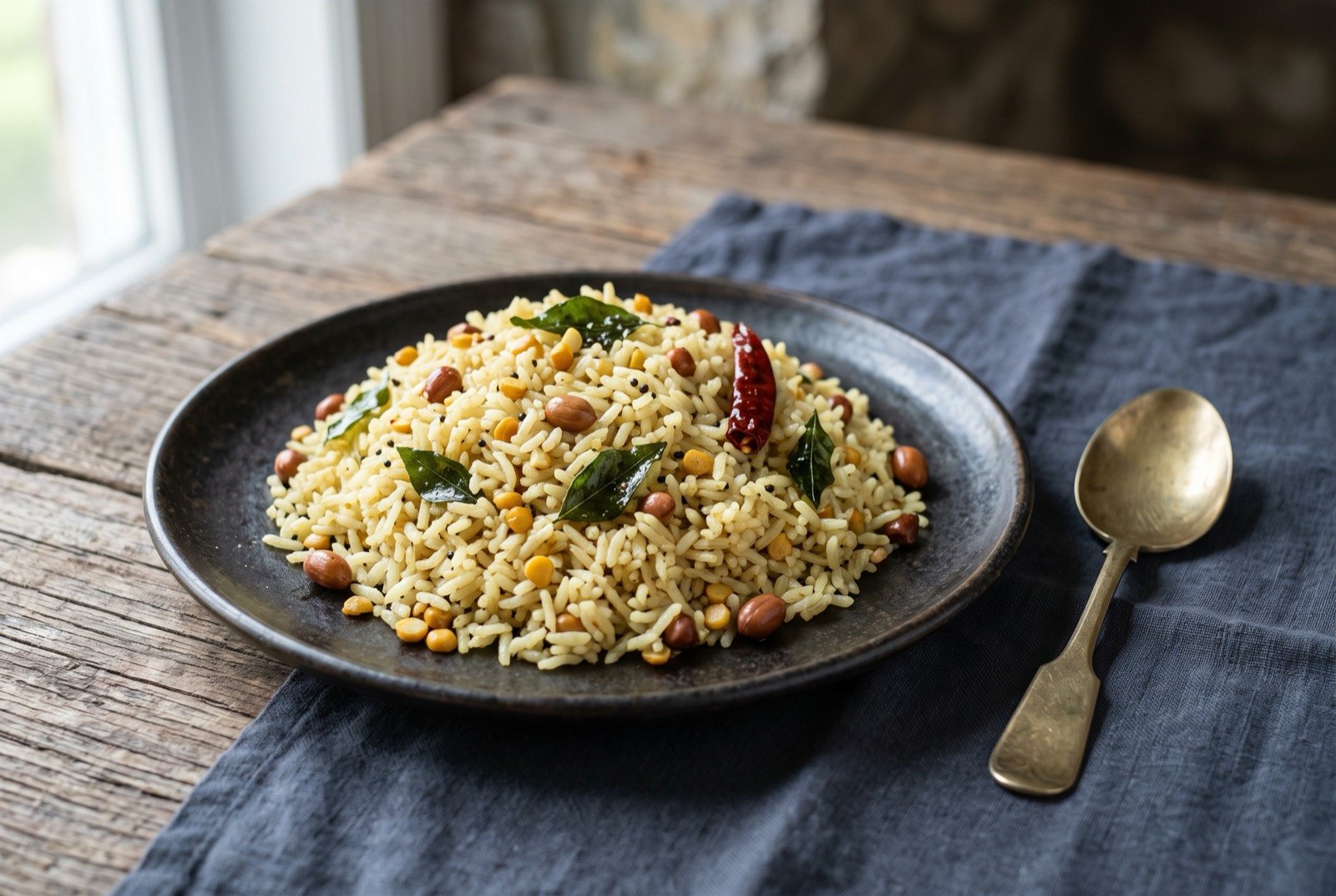
Illustration
- Time
- 30 minutes
- Researched
- Researched from 18 sources in the brief
Andhra, temple and household both. Tamarind-seasoned rice, a genuine claim across three languages, Telugu, Tamil and Kannada, and this chapter names all three rather than settling the argument.
As tradition built it
Serves 4. About 30 minutes.
Ingredients
- 300 g rice, cooked and cooled, grains kept separate
- 3 tbsp tamarind pulp, thick
- 2 tbsp peanuts
- 1 tbsp chana dal
- 1 tsp urad dal
- A sprig curry leaves
- 2 dried red chillies
- 1 tsp mustard seed
- ¼ tsp turmeric
- 3 tbsp sesame oil or groundnut oil
- to taste salt
Method
- Heat the oil in a wide pan. Add the mustard seed and let it splutter, then add the chana dal, urad dal and peanuts, and fry until golden.
- Add the dried red chillies and curry leaves, followed by the turmeric and tamarind pulp, and cook for 2 to 3 minutes, until the tamarind has lost its raw edge and thickened slightly.
- Add the cooked rice and salt, and toss thoroughly over low heat until every grain is evenly coated and warmed through, taking care not to mash the rice.
- Rest for 10 minutes before serving; the flavour settles and deepens as it sits.
Notes
A widely repeated claim, not asserted here as fact, traces this dish's earliest documented temple-kitchen appearance to Tamil Nadu around 1010 CE, which would make Andhra's pulihora, and Karnataka's own puliyogare and chitranna, later regional adoptions of a Tamil temple dish. This chapter states the claim and its thin sourcing rather than either repeating it as settled history or ignoring it.
What a modern chef changes
Rice cooked specifically for this dish rather than adapted from a general pot, and a tamarind reduced rather than merely stirred through.
Rung 3
Method
- Cook the rice specifically for this dish, slightly underdone and spread flat to cool and dry fully before tossing, rather than using leftover rice from an unrelated meal, for grains that hold their shape and take the tamarind coating evenly rather than clumping.
- Reduce the tamarind pulp separately over gentle heat until noticeably thickened before it meets the tempering, for a more concentrated, clinging sourness rather than a thin coating.
- Toast the peanuts and dals in a dedicated spice grinder's small jar just to crack them lightly before frying, rather than frying them whole, for a slightly more even, more consistently crunchy finish across every grain.