The Indian subcontinent · Volume 17, The Sealed Pot, the Ember and the Roasted Flour
Dhuska
Jharkhand, associated with the Munda community
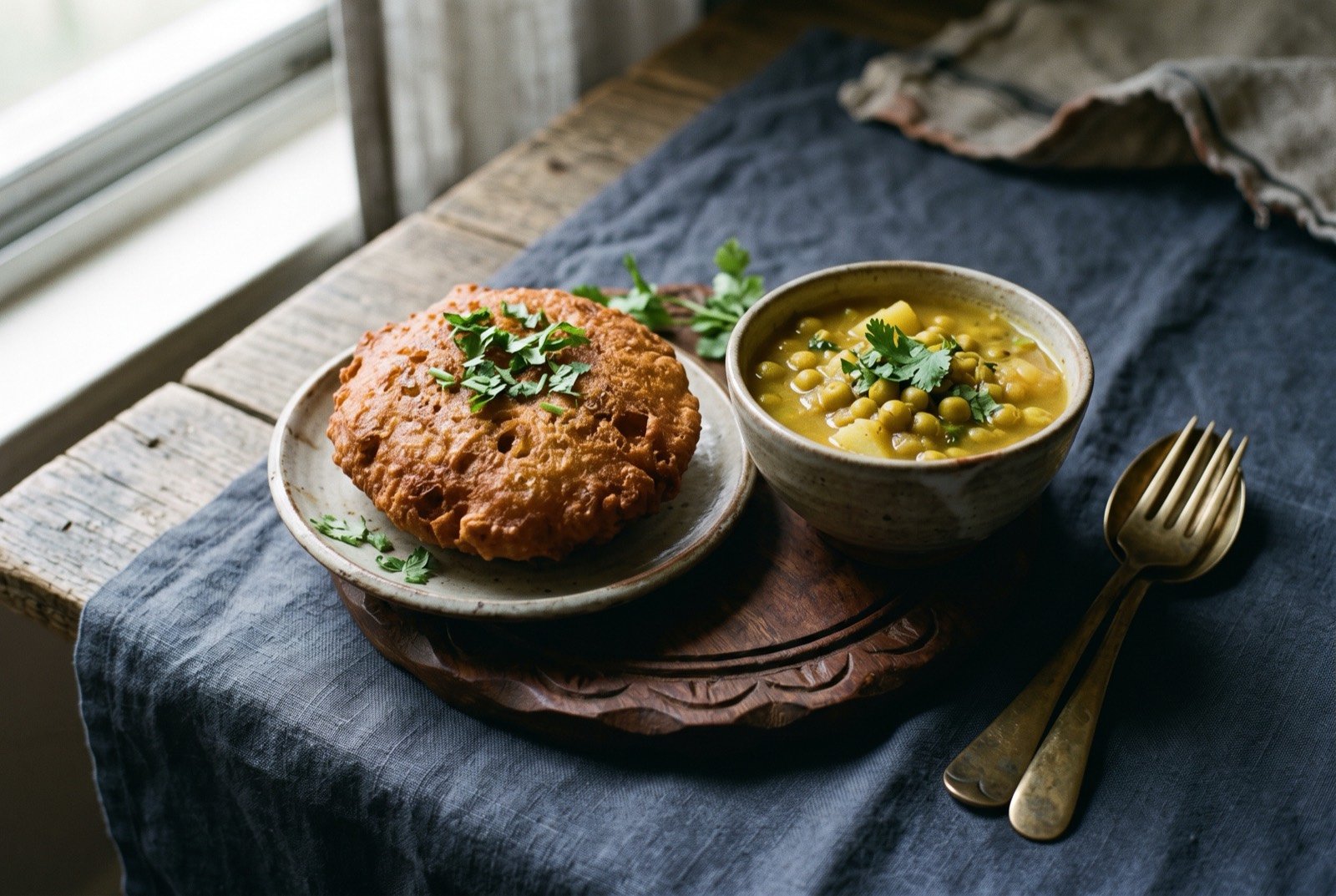
An illustration of the dish, not a photograph of it cooked.
- Time
- 30 minutes
- Reviewed
- Not yet reviewed from inside the tradition
- Cooked
- Not yet cooked and reported
Soaked, coarsely ground rice is combined with chana dal and urad dal, seasoned with green chilli, ginger, cumin, asafoetida, turmeric and salt, given a brief ferment or lift, and deep-fried into a thick, golden disc, typically served with ghugni or an aloo curry. It is documented as a dish specifically associated with the Munda community, though it is eaten much more widely across Jharkhand today, and its natural home is the weekly market and the festival ground rather than the everyday table, giving it a celebratory rather than a plain-daily character.
As tradition built it
Serves 4. About 30 minutes, plus soaking.
Ingredients
- 300g rice, soaked 4 to 6 hours
- 60g chana dal, soaked with the rice
- 30g urad dal, soaked with the rice
- 2 green chillies
- 1 tbsp ginger, grated
- 1 tsp cumin seeds
- 0.25 tsp asafoetida
- 0.5 tsp turmeric
- to taste salt
- enough for deep-frying oil, for deep-frying
Method
- Drain the soaked rice and dals, and grind coarsely, with a little water, to a thick, slightly grainy batter, not a smooth paste.
- Stir in the chilli, ginger, cumin, asafoetida, turmeric and salt. Rest 30 minutes to allow a light lift.
- Heat oil for deep-frying. Ladle portions of batter directly into the hot oil, spreading gently into a thick disc.
- Fry, turning once, until deeply golden and cooked through, 4 to 5 minutes.
- Serve hot, with ghugni or a simple aloo curry.
What a modern chef changes
A lighter batter, a cleaner fry
Rung 5, adapted
Method
- Rest the ground batter a full two hours rather than thirty minutes, covered, for a genuinely lighter, more aerated lift before frying, closer to what a longer traditional ferment would achieve.
- Fry at a monitored, steady 170°C, checked with a thermometer, for a crisp exterior without excess oil absorption.
- Serve the accompanying ghugni gently rewarmed rather than freshly boiled hard, so its own flavour has had time to round out, exactly the same principle this chapter has already applied to Yemen's own stews elsewhere in this atlas.