The Indian subcontinent · Volume 17, The Sealed Pot, the Ember and the Roasted Flour
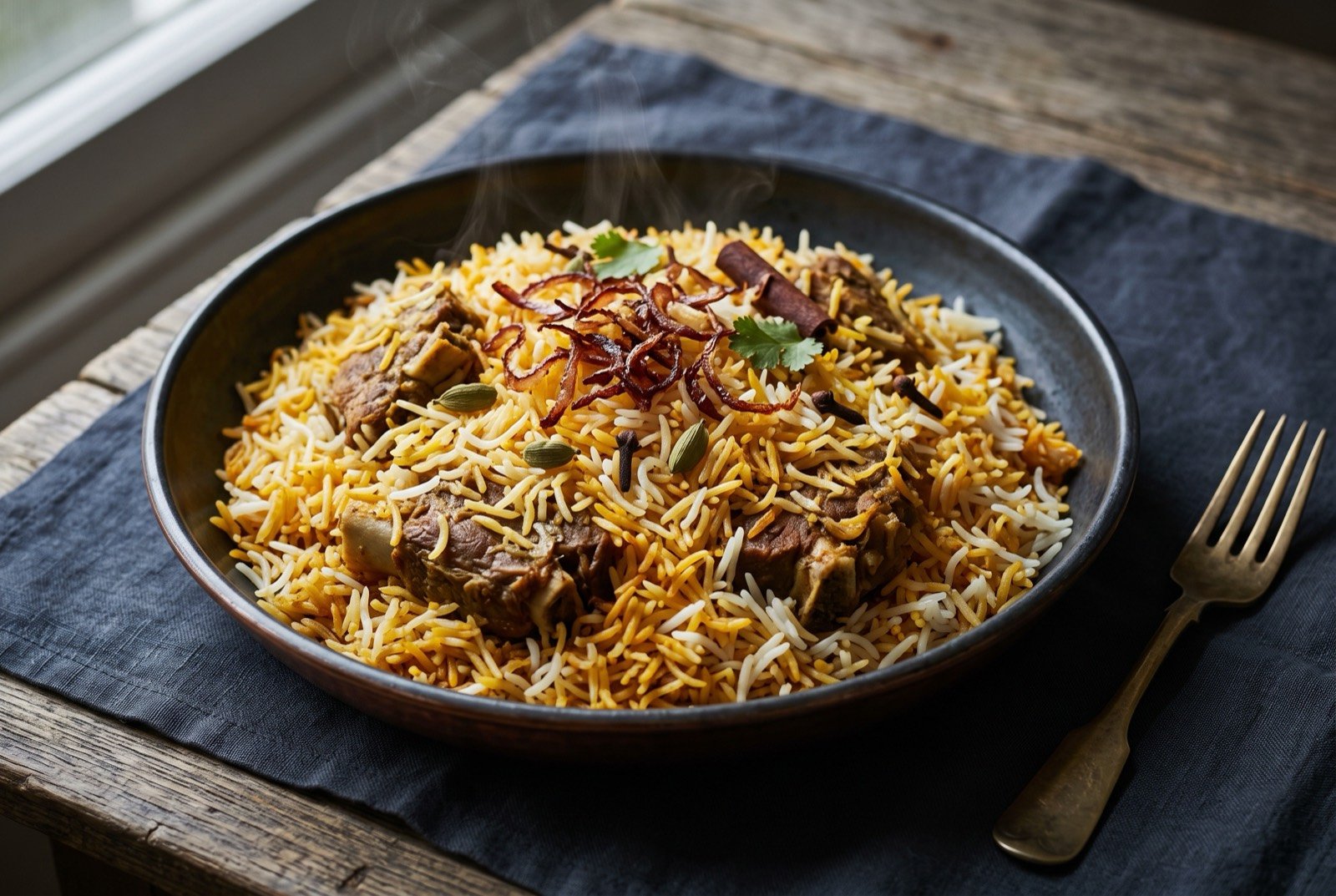
Awadhi dum biryani
Lucknow
Illustration
- Time
- 1 hour 30
- Researched
- Researched from 106 sources in the brief
Basmati rice is parboiled separately from the meat, which is browned and part-cooked in its own spiced gravy before the two are layered together, finished with saffron dissolved in milk or rosewater and fried onion, then sealed with a rope of wheat-flour dough and cooked gently so the rice finishes on the meat's own rising vapour rather than direct heat.
This pakki, cooked, method, both components substantially cooked before they ever meet, is Lucknow's own clear technical signature against Hyderabad's kacchi, raw, method, where raw meat and raw rice cook for the first time together under dum. This chapter does not adjudicate biryani's wider, contested origin across the subcontinent; it asserts only this specific, well-corroborated technical distinction.
As tradition built it
Serves 6. About 1.5 hours, plus marinating.
Ingredients
- 1kg mutton or chicken, jointed
- 300g natural yoghurt
- 2 tbsp ginger-garlic paste
- 3 onions, thinly sliced and deep-fried until dark golden
- 500g aged basmati rice
- 1 bay leaf, 4 green cardamom, 4 cloves, a 2.5cm cinnamon stick whole spices for the rice water: bay leaf, green cardamom, cloves, cinnamon
- 1 pinch a pinch of saffron, dissolved in 3 tbsp warm milk
- 1 tbsp kewra water
- to taste salt
Method
- Marinate the meat in yoghurt, ginger-garlic paste and half the fried onion, at least 2 hours.
- Cook the marinated meat gently in its own marinade until roughly two-thirds cooked, 20 minutes for chicken, up to 40 minutes for mutton.
- Parboil the rice in well-salted water carrying the whole spices, until roughly 70 to 90 per cent done, then drain.
- Layer the part-cooked meat and its gravy at the base of a heavy pot, top with the parboiled rice, scatter the remaining fried onion, and pour over the saffron milk and kewra water.
- Seal the pot tightly, with a rope of wheat-flour dough or doubled foil pressed under the lid, and cook on very low heat, 25 to 45 minutes.
- Rest, still sealed, 15 minutes before opening.
Notes
No heritage source gave a single fixed dum time; the range above is cross-checked across contemporary recipe sources rather than a documented traditional standard, and should be treated as broadly representative modern practice.
What a modern chef changes
The seal trusted, the rice chosen properly
Rung 3
Method
- Use a genuinely aged basmati, at least a year old, checked on the pack for an explicit ageing claim rather than assumed from the word "basmati" alone; this is the single ingredient decision that most affects whether the finished rice holds distinct grains.
- Seal a heavy Dutch oven with doubled foil under the lid, or run a Big Green Egg indirect as a kamado substitute for the sealed vessel's function, understood as this atlas's own extrapolation rather than sourced Awadhi practice.
- Rest the full fifteen minutes without exception, resisting the urge to open the pot early to check; the rice finishes on trapped vapour in that final rest as much as during the active dum itself.