The Indian subcontinent · Volume 17, The Sealed Pot, the Ember and the Roasted Flour
Sattu paratha
Bihar
Illustration
- Time
- 40 minutes
- Researched
- Researched from 106 sources in the brief
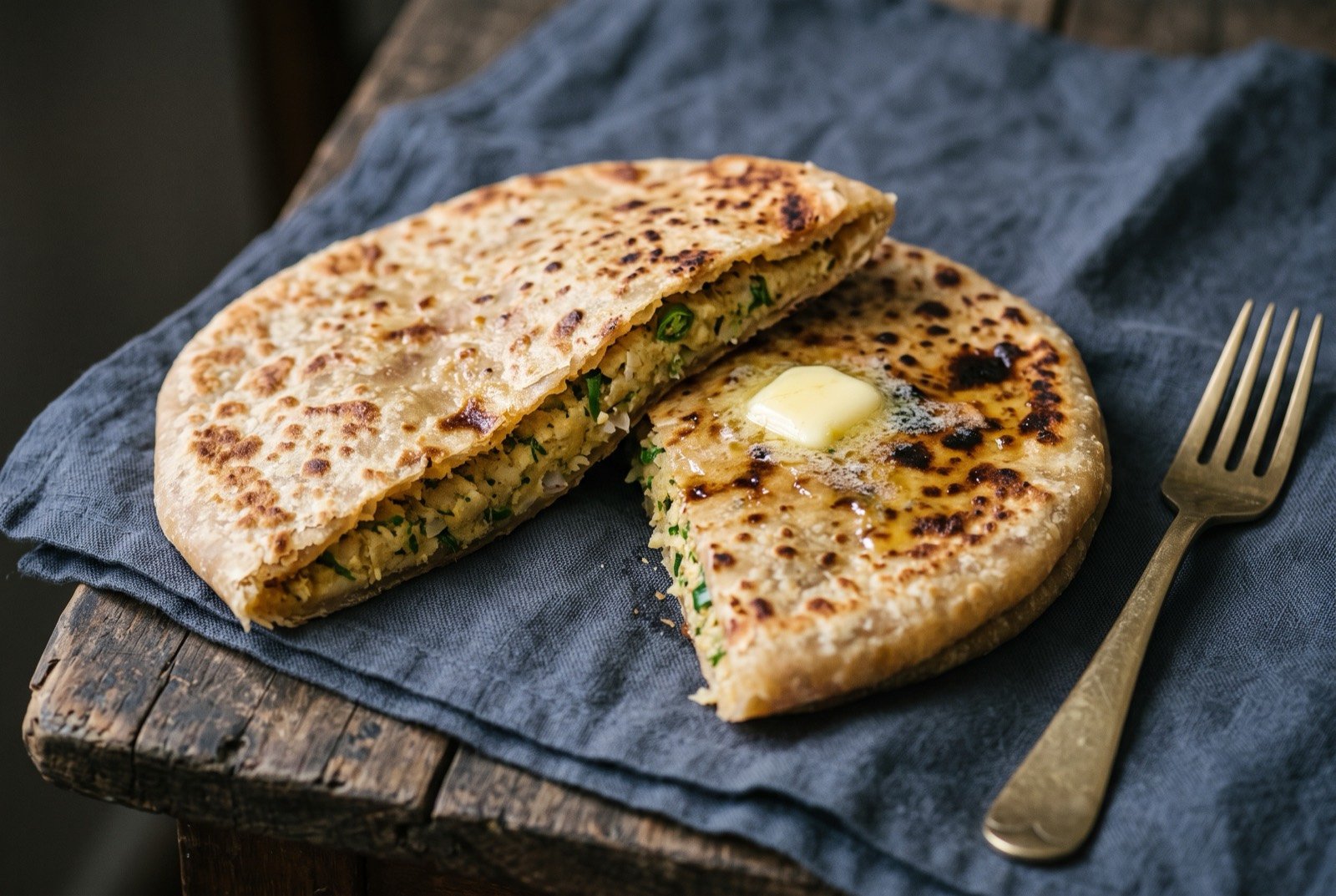
Sattu, dry-roasted and ground Bengal gram flour, needs no cooking at all to become food, which is precisely why it has always been the region's cheapest, most portable source of protein. For paratha, it is worked, raw, with finely chopped onion, green chilli, garlic, coriander, ajwain, kalonji, lemon juice, pickle masala and mustard oil into a moist, cohesive filling, then stuffed into a plain wheat dough, rolled flat and shallow-fried.
As tradition built it
Serves 4. About 40 minutes.
Ingredients
- 300g whole wheat flour, for the outer dough
- 0.5 tsp salt, water as needed to bind salt, water
- 150g sattu
- 1 small onion, finely chopped
- 2 green chillies, chopped
- 2 tsp garlic, minced
- 3 tbsp coriander, chopped
- 0.25 tsp ajwain
- 0.25 tsp kalonji
- 2 tsp lemon juice
- 1 tbsp pickle masala
- 1 tbsp mustard oil
- enough for shallow-frying ghee, for frying
Method
- Make a plain wheat dough with the flour, salt and water. Rest, covered, 20 minutes.
- Combine the sattu, onion, chillies, garlic, coriander, ajwain, kalonji, lemon juice, pickle masala and mustard oil with roughly 1.5 tablespoons of water, to a moist but firm filling.
- Roll a portion of dough into a small disc, place a generous spoonful of filling in the centre, and gather the edges up and seal.
- Roll the stuffed ball out gently into a flat paratha, taking care not to burst the seal.
- Shallow-fry in ghee on a hot griddle, 2 to 3 minutes a side, until golden and cooked through.
What a modern chef changes
The gram flour, roasted the same day
Rung 5, adapted
Method
- Roast and grind chana yourself in a dedicated spice grinder, in small batches, sand-free but otherwise following the traditional even-heat logic, for a noticeably fresher, nuttier sattu than most bought flour, which can sit on a shelf for months.
- Process the filling briefly in a food processor rather than mixing by hand, for a more even texture that holds together better under the rolling pin without tearing the dough.
- Fry on a well-seasoned cast-iron tawa rather than a non-stick pan, for better browning and a crisper crust.