East Africa and the Islands · Volume 16, Two Cuisines, One Volume
Urojo
Serves 4
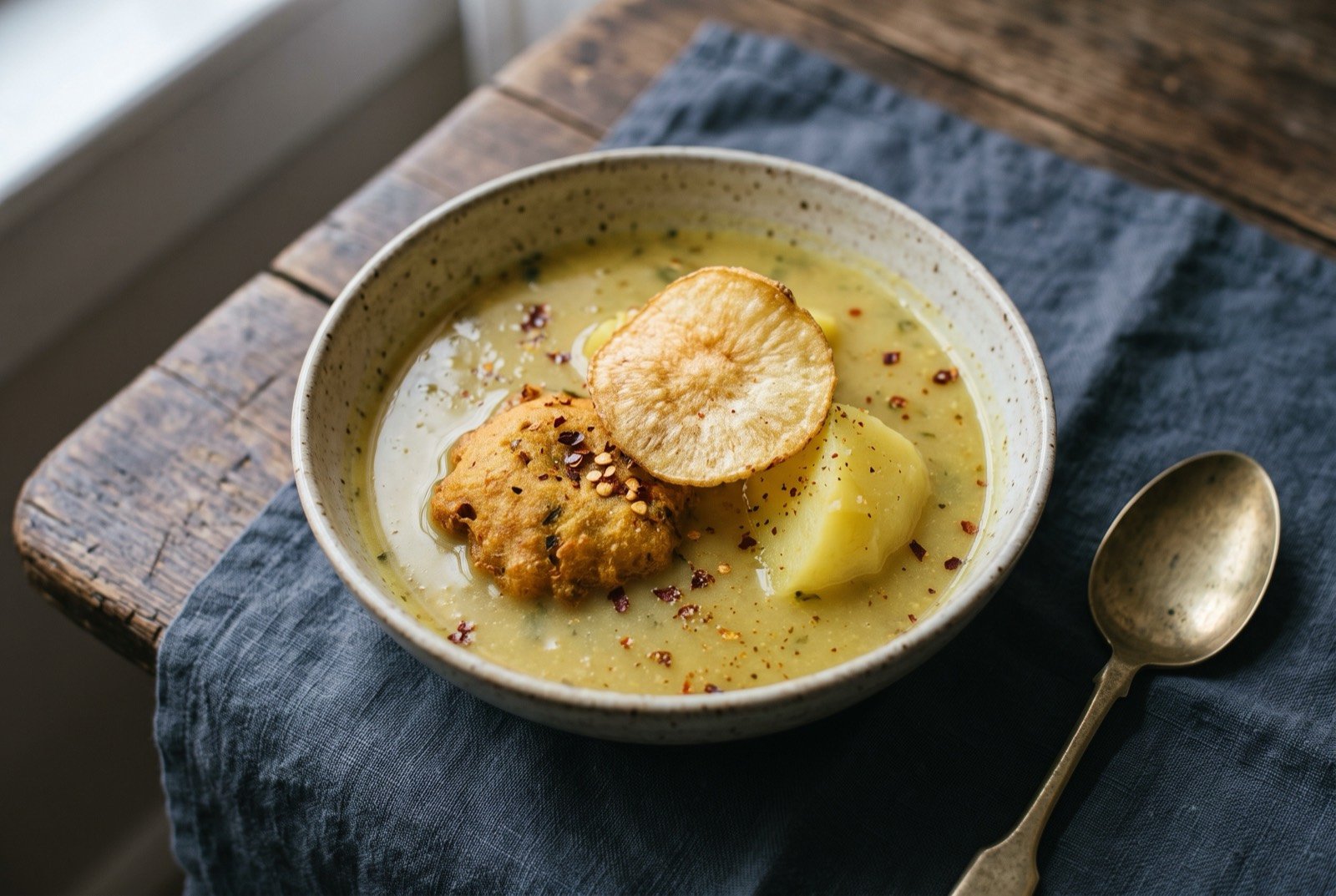
An illustration of the dish, not a photograph of it cooked.
- Time
- 23 minutes
- Researched
- 6 sources cited
- Reviewed
- Not yet reviewed from inside the tradition
- Cooked
- Not yet cooked and reported
As tradition built it
Serves 4 · 19 to 23 minutes
Ingredients
- 60g gram flour (besan)
- 1.2 litres water
- 2 tsp ground turmeric
- 1 tsp ground cumin
- 3 cloves garlic, crushed
- 20g fresh ginger, grated
- 40g wet tamarind pulp, steeped in 150ml hot water for 20 minutes and pushed through a sieve
- 300g potatoes, boiled and cut into 2cm cubes
- 10g salt
- 200g Potato bhajia (200g potato sliced 4mm, dipped in a batter of 100g gram flour, 1/2 tsp turmeric, a pinch of bicarbonate and enough water to coat, fried at 175 degrees for 3 to 4 minutes)
- to serve Cassava or potato crisps
- 2 boiled eggs, quartered
- to serve Green mango slices, coriander, lime wedges, chilli sauce
Method
- Toast the gram flour in a dry pan over medium heat, 4 to 5 minutes, stirring constantly, until it smells of digestive biscuit and has gone one shade darker. This step is not optional; raw besan tastes of raw bean.
- Whisk it into 300ml cold water until completely smooth.
- Bring the remaining 900ml water to the boil with the turmeric, cumin, garlic and ginger. Whisk in the slurry.
- Simmer, whisking often, 12 to 15 minutes. Doneness cues: the soup coats the back of a spoon thinly, the raw flour smell has gone, and there is no graininess on the tongue.
- Add the tamarind liquid and the salt, then the potato cubes, and simmer 3 minutes more. It should taste aggressively sour and savoury; it is a dressing as much as a soup.
- Ladle into bowls over the hot fried things and finish with egg, mango, coriander, lime and chilli. Assemble at the last possible second.
Notes
The broth
To serve
What a modern chef changes
Method
- Grind your own gram flour and toast it dark (rung 6). Toast 80g of whole chana dal in a dry pan for 6 minutes until nutty and lightly coloured, cool, then grind fine in the spice grinder and sift. Freshly ground toasted dal has a roasted-legume aroma that supermarket besan, milled months ago from untoasted split peas, simply does not carry.
- Blender hydration (rung 4). Make the slurry in the high-power blender at full speed for 60 seconds rather than whisking it. Complete dispersion before any heat arrives means the starch and protein hydrate uniformly, and the soup will not go grainy or split however long it sits on the pass.
- A tamarind reduction (rung 6). Steep 100g wet tamarind pulp in 300ml hot water, work it through the chinois, and reduce to 100ml. You get the same total acidity in a third of the volume, with the tamarind's sugars and pectin concentrated alongside it, so the broth is more sour and has more body without any additional flour.
- Dehydrate before you fry (rung 2). Sliced potatoes for the bhajia go in the dehydrator at 50 degrees for 40 minutes first, then batter, then a double fry at 150 degrees for 3 minutes and 190 degrees for 90 seconds. Surface water is the enemy of crust: removing it before the batter goes on means the oil spends its energy browning rather than boiling, and the bhajia survive contact with the broth for a good two minutes instead of collapsing on impact.
Notes
Four named changes.