East Africa and the Islands · Volume 16, Two Cuisines, One Volume
Pilau ya Nyama
Serves 6
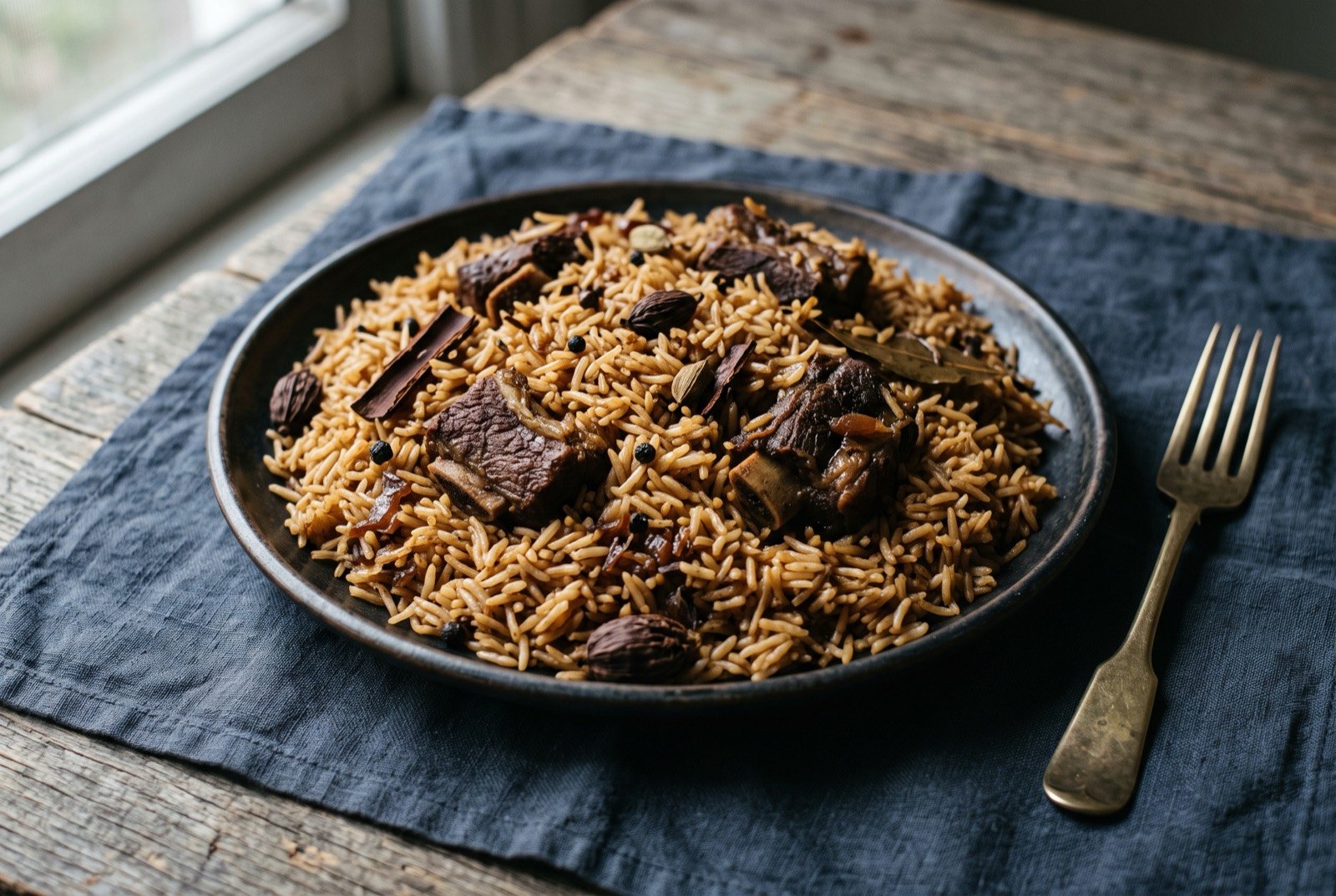
An illustration of the dish, not a photograph of it cooked.
- Time
- 2 hours 5
- Researched
- 6 sources cited
- Reviewed
- Not yet reviewed from inside the tradition
- Cooked
- Not yet cooked and reported
As tradition built it
Serves 6 · 2 hours 5 to 2 hours 30, plus soaking the rice
Ingredients
- 2 tsp cumin seed
- 2 tsp coriander seed
- 1 tsp black peppercorns
- 10 Seeds from 10 green cardamom pods
- 8 cloves
- 1 A 5cm piece of cassia bark
- 500g aged basmati rice, rinsed and then soaked 30 minutes, drained
- 700g goat shoulder or beef shin, 3cm dice, on the bone if possible
- 60ml ghee
- 3 onions (400g), sliced thinly and evenly
- 4 cloves garlic and 30g fresh ginger, pounded to a paste
- 3 tbsp of the pilau masala
- 1 tbsp tomato purée
- 4 small waxy potatoes, halved (optional, and very Mombasa)
- 750ml water or light stock
- 12g salt
Method
- Toast the whole spices in a dry pan over medium heat for 90 seconds, until the cumin darkens a shade and the cardamom smells sharp. Cool completely, then grind fine.
- Heat the ghee in a heavy casserole. Add the onions and cook over medium heat, stirring often, 20 to 25 minutes, until deep mahogany. This is the colour of the finished dish. Do not rush it, and do not let them blacken.
- Garlic and ginger paste, 60 seconds. Then the meat, and let it seal and colour, 8 minutes.
- Add the ground masala and the tomato purée and stir in the fat for 60 to 90 seconds until the whole pan smells of spice rather than of raw powder.
- Add 400ml of the water, cover, and simmer 60 to 75 minutes until the meat yields easily to a fork. Add the potatoes for the last 15 minutes.
- Add the remaining water to bring the total liquid in the pot to roughly 750ml, add the salt, and bring to a hard boil. Add the drained rice and stir once, gently.
- Boil uncovered until the liquid has fallen to the level of the rice, 5 to 7 minutes. Then cover tightly, drop to the lowest possible heat, and steam 20 minutes.
- Off the heat, undisturbed, 10 minutes. Fork through from the edges inward.
- Doneness cues: grains separate cleanly, no wet patch at the base, and a faint pale crust on the bottom of the pot that everyone will fight over.
Notes
Pilau masala (makes more than you need; keep it a fortnight, no longer)
The pilau
What a modern chef changes
Method
- Dehydrated onions (rung 3). Slice the onions 2mm on a mandoline and dry them in the dehydrator at 60 degrees for 3 to 4 hours, until they have lost about 60 per cent of their weight and are leathery but not crisp. Fry these in the ghee and they reach full mahogany in 6 to 8 minutes instead of 25, because you are no longer spending twenty minutes boiling off water. Less time in the pan means the thin edges never scorch, so you get deeper colour with none of the burnt bitterness that spoils most home pilau.
- Sous vide the goat (rung 5). Goat shoulder, 1.5 per cent salt, 1 tbsp of the masala, bagged and held at 68 degrees for 24 hours. Collagen converts completely at that temperature given the time, and the meat comes out sliceable and moist rather than shredded. Add it, with every drop of the bag juice, at step 6 rather than step 3, so the rice phase does not overcook it and the gelatin from the bag enriches the cooking liquid.
- Masala ground to order, cardamom last (rung 3). Grind the masala within an hour of cooking in the dedicated spice grinder, and hold the cardamom and cloves back: bloom cumin, coriander, pepper and cassia in the ghee at around 140 degrees for 60 seconds, then add the cardamom and cloves for the last 20 seconds only. Cardamom's 1,8-cineole and the eugenol in cloves are the most volatile and most heat-labile things in the blend, and thirty extra seconds in hot fat costs you most of them.
- The steam phase in the Egg (rung 3). Do steps 1 to 7 on the hob, then move the covered casserole into the Big Green Egg, set up indirect and stabilised at 150 degrees, for the 20-minute steam. Radiant heat all around the pot means no hotspot on the base, no scorching, and an even bottom crust rather than a burnt centre and a raw rim.
Notes
Four named changes.