East Africa and the Islands · Volume 16, Two Cuisines, One Volume
Ugali
Serves 4
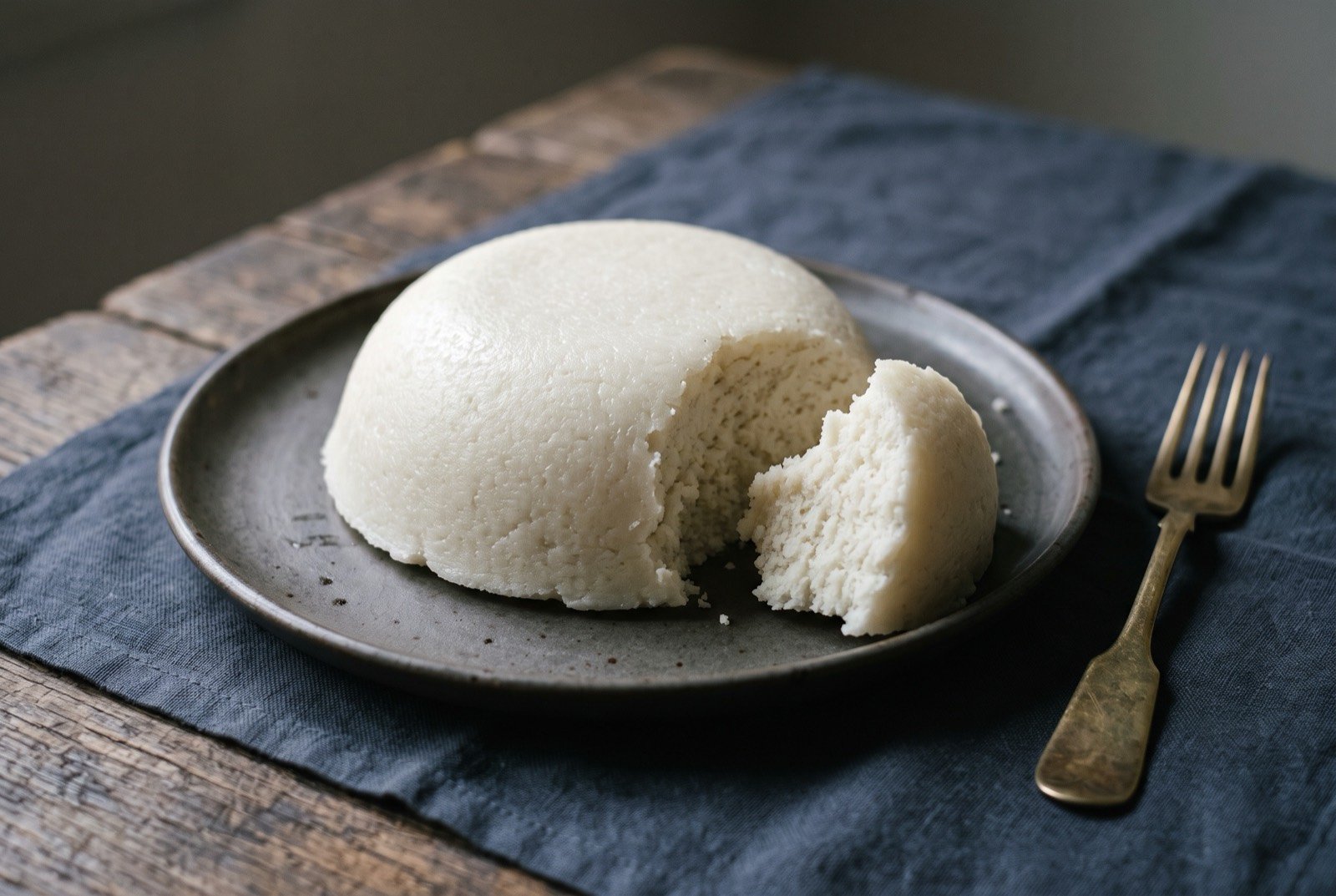
An illustration of the dish, not a photograph of it cooked.
- Time
- 17 minutes
- Researched
- 6 sources cited
- Reviewed
- Not yet reviewed from inside the tradition
- Cooked
- Not yet cooked and reported
As tradition built it
Serves 4 · 15 to 17 minutes
Ingredients
- 750ml water
- 250g white maize meal, medium or coarse grind (unga wa dona if you can get it)
- 3g fine salt (optional; many Kenyan cooks use none at all)
Method
- Bring 600ml of the water to a rolling boil in a heavy pan. Add the salt if using.
- Whisk 80g of the meal into the remaining 150ml cold water to a smooth slurry. Pour it into the boiling water, whisking. Cook 3 minutes; it will look like a thin porridge.
- Add the remaining 170g of meal in three additions, working each in with a flat wooden paddle before adding the next. The mass will come together and start to pull away from the pan.
- Now work it. Press the mass against the side of the pan, fold it back on itself, turn the pan, repeat. Keep the heat at a steady medium so the base hisses but does not scorch. 10 to 12 minutes.
- Doneness cues: the mass pulls cleanly from the sides in one piece, the surface is glossy rather than matt, it smells sweetly of cooked maize with no raw floury note, and a pinched piece is smooth on the tongue rather than gritty.
- Shape into a dome with the wet paddle, invert onto a plate, rest 2 minutes and serve hot. It is inedible cold and does not reheat.
What a modern chef changes
Method
- The grain (rung 4). Use 200g stone-ground white maize meal plus 50g finger millet flour (wimbi). Millet brings a dark, mineral bitterness and its own aroma, and it is what the interior actually ate before maize. The result is greyer, tastier and closer to the historical dish.
- Hydration and shear time (rung 4). Raise the water to 800ml and extend the working phase to a full 15 minutes on a diffuser at a gentle 85 to 90 degrees. More water means more granules fully hydrate; more paddle time means more amylose is sheared free. The mass will look too wet at 8 minutes and correct itself by 13.
- The covered rest (rung 4). Off the heat, cover the pan and leave it 10 minutes before shaping. Residual heat finishes hydrating any granules the paddle missed, and the amylose starts retrograding evenly rather than only at the surface. The difference in texture is not subtle.
Notes
Three changes, all of them rung 4, and there is no fourth. Ugali does not want garnish, butter, stock or seasoning; it wants to be made properly.