East Africa and the Islands · Volume 16, Two Cuisines, One Volume
Mishkaki
Serves 4
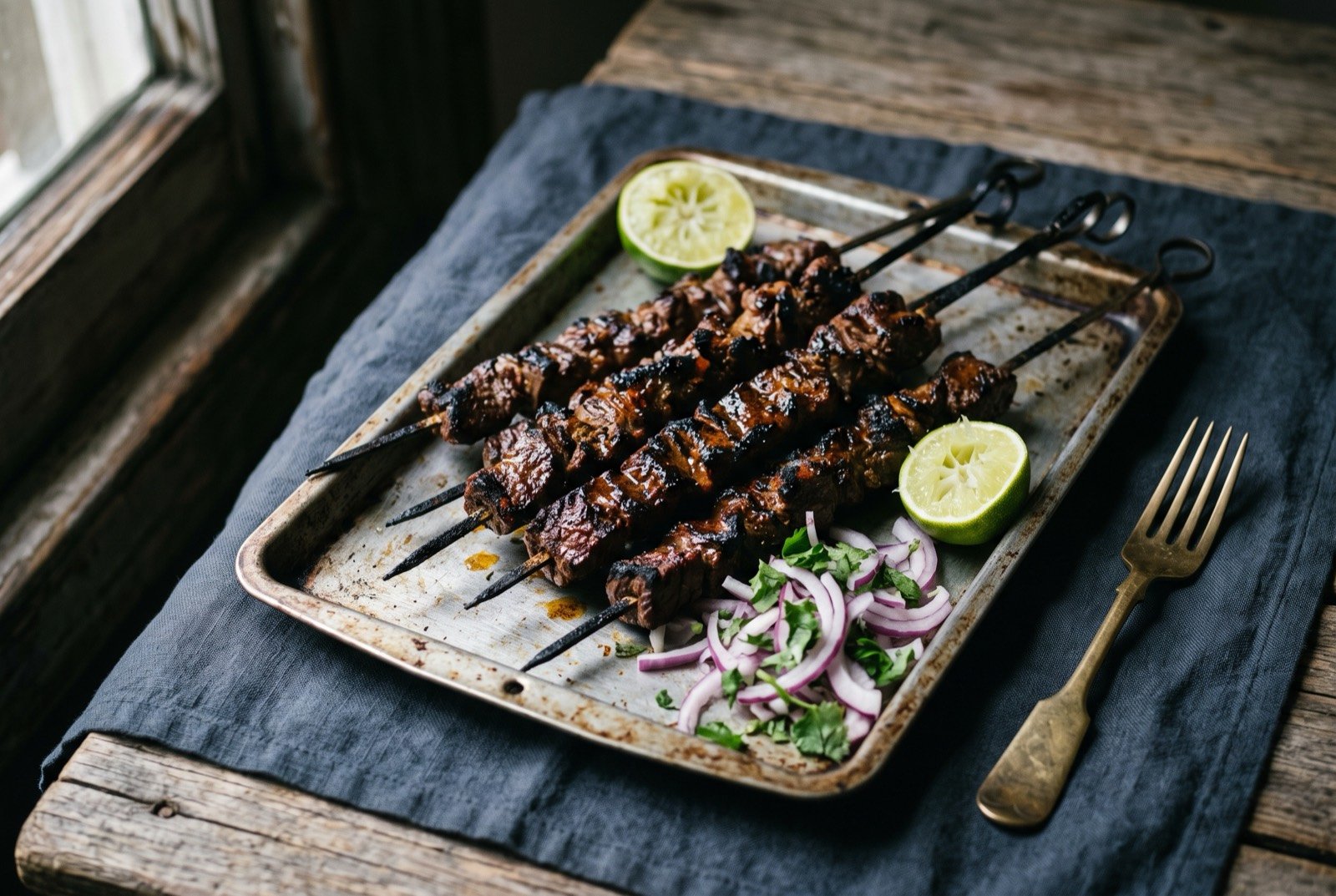
An illustration of the dish, not a photograph of it cooked.
- Time
- 4 hours 15
- Researched
- 6 sources cited
- Reviewed
- Not yet reviewed from inside the tradition
- Cooked
- Not yet cooked and reported
As tradition built it
Serves 4 · 15 minutes, plus up to 4 hours marinating
Ingredients
- 700g beef rump or goat leg, cut into 2.5cm cubes
- 6 cloves garlic and 30g ginger, pounded to a paste
- 2 limes Juice of 2 limes
- 2 tsp ground cumin
- 1 tsp ground black pepper
- 1 tsp paprika, for colour
- 1 tbsp finely grated green (unripe) papaya
- 45ml vegetable oil
- 8g salt
- 6 Scotch bonnets, stemmed
- 3 cloves garlic
- 1 tomato
- 30ml lime juice
- 5g salt
- 30ml oil
Method
- Mix the meat with the garlic and ginger paste, lime juice, cumin, black pepper, paprika, papaya, oil and salt, and marinate. 4 hours maximum if the papaya is in there, and this is not a suggestion: papain is an aggressive protease and by hour eight it will have turned the surface of the meat to mush. Without papaya, marinate up to 12 hours.
- Thread onto skewers, 4 to 5 pieces each, pushed close together.
- Grill over hot charcoal, the grid 8 to 10cm above the coals, 8 to 10 minutes, turning every 90 seconds and brushing with the leftover marinade slackened with a little oil.
- Doneness cues: charred at the edges, the interior just past pink for beef, fully cooked for goat, and the fat between the cubes rendering and dripping.
- For the pilipili, blitz the Scotch bonnets, garlic, tomato, lime juice and salt to a coarse paste, then simmer in the oil for 5 minutes. It keeps a fortnight in the fridge.
Notes
Pilipili
What a modern chef changes
Method
- Replace the enzyme with temperature (rung 5). Drop the papaya entirely. Bag the cubed rump at 1.2 per cent salt with 1 tbsp of the marinade and hold at 54 degrees for 2 hours, then chill hard in iced water. You get the tenderising from controlled collagen and myofibrillar change instead of from an enzyme that cannot tell the difference between connective tissue and the meat you want to keep. The texture is even; papain's never is.
- Fire built for crust, not for cooking (rung 5). Skewer the chilled cubes and cook on the Big Green Egg with the cast-iron grid at 320 to 350 degrees, direct, for 90 seconds a side. The meat is already at its final internal temperature, so the entire purpose of the fire is Maillard on the surface. Anything longer and you are simply drying it out.
- Split the pilipili in two (rung 6). Make the cooked base as above, but hold back half the lime and all the aromatics: at service, stir into each portion a spoonful of raw chopped chilli, coriander and fresh lime juice with its zest. The cooked half brings depth and keeps; the raw half brings the volatile top notes that a five-minute simmer destroys.
Notes
Three named changes.