East Africa and the Islands · Volume 16, Two Cuisines, One Volume
Sukuma Wiki
Serves 4
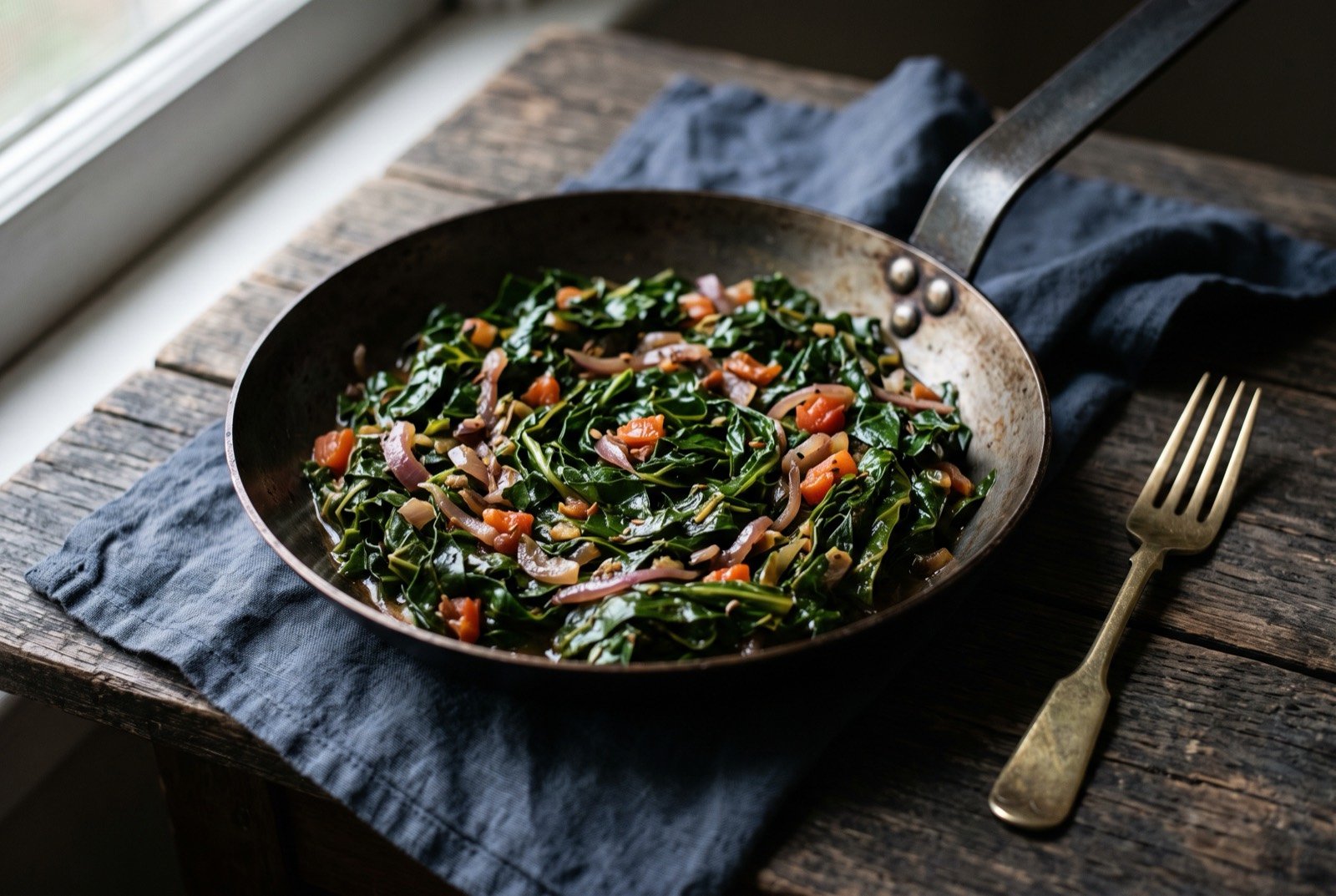
Illustration
- Time
- 28 minutes
- Researched
- 6 sources cited
As tradition built it
Serves 4 · 22 to 28 minutes
Ingredients
- 500g collard greens or spring greens, thick stems removed, rolled into cigars and sliced 3 to 4mm
- 45ml vegetable oil
- 1 large onion (150g), finely diced
- 2 cloves garlic, finely chopped
- 2 ripe tomatoes (200g), chopped
- 100ml water
- 5g salt
Method
- Heat the oil in a wide pan over medium heat. Add the onion and cook 6 to 8 minutes until translucent and just turning gold at the edges.
- Garlic, 30 seconds.
- Tomatoes and a pinch of salt. Cook 6 to 8 minutes, pressing them down, until they collapse into a paste and you can see oil separating at the edge of the pan. That oil is the cue; do not move on before it appears.
- Add the greens and the water, raise the heat, cover and cook 6 to 8 minutes, stirring twice.
- Uncover, add the salt, and cook a further 3 minutes to drive off free liquid. Doneness cues: the greens are tender with a little chew left, there is no liquid pooling in the pan, and the oil has come back to the surface.
Notes
Many Kenyan cooks add a teaspoon of mchuzi mix or Royco at step 3. It is salt, MSG, starch and mild curry powder, it is genuinely part of how this dish is cooked today, and there is no point pretending otherwise.
What a modern chef changes
Method
- Take the base to a full oil split (rung 2). Add 15g tomato purée with the fresh tomatoes and cook the base 15 to 18 minutes rather than 8, until the mixture darkens to brick and the oil pools clearly and cleanly. You are moving the pan out of the 100 degree water phase and into the fat phase, where the onion and tomato actually brown. This alone is most of the difference between a good and a dull sukuma wiki.
- Blanch, shock and squeeze the greens (rung 2). Drop the sliced greens into 2 per cent salted boiling water for 90 seconds, straight into iced water, then squeeze hard in a tea towel. They then go into the pan already cooked and already dry, so they finish in fat rather than steaming in their own water. The brief blast also inactivates chlorophyllase before it has time to strip magnesium out of the chlorophyll, so they stay green instead of going olive.
- Move the acid to the end (rung 6). No tomato acid beyond what the base carries, and 10ml of lime juice stirred in off the heat at the last moment. Acid present during the braise accelerates the conversion of chlorophyll to pheophytin and dulls both the colour and the flavour; acid added at the end does the seasoning job without the cost.
Notes
Three named changes.