West Africa · Volume 05, The Sahel Interior
Babenda
Burkina Faso, the Mossi plateau
Illustration
- Time
- 1 hour 30
- Researched
- Researched from 106 sources in the brief
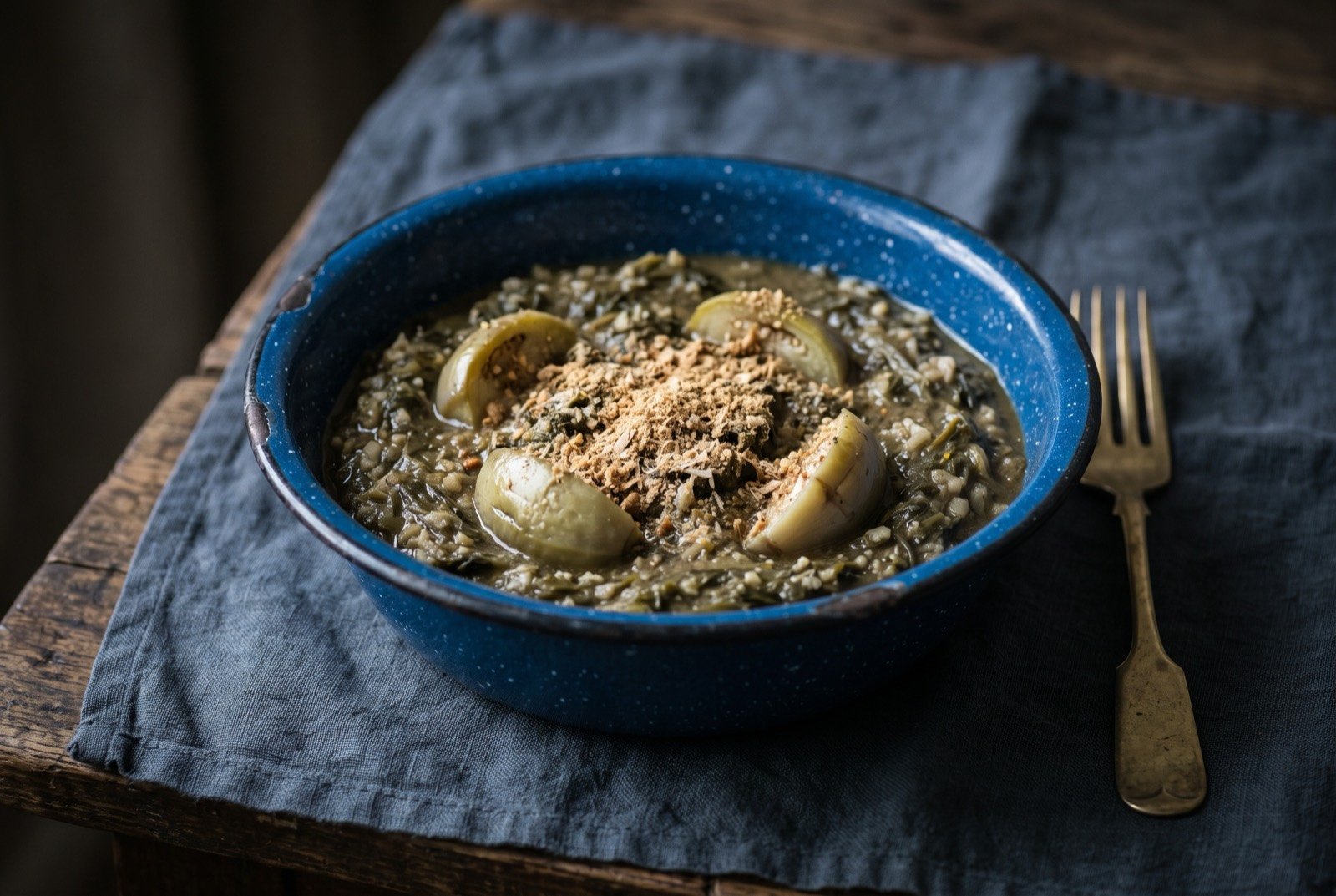
Babenda is a pottage of mixed wild and cultivated leaves with coarsely cracked rice and groundnut powder. It comes out of the 1930s and 1940s droughts, when Mossi households lived on gathered leaves, a little grain and water, and for decades afterwards it carried unflattering nicknames, the kind people give a food that reminds them of being hungry. It is now a restaurant dish and a national emblem. Two caveats sit in the final section. What is not in doubt is the construction, which is the dish: coarsely ground rice, not whole grain, and groundnut powder, not paste.
As tradition built it
Serves 4 to 6. About 1 hour 30.
Ingredients
- 400 g amaranth leaves (burumbura)
- 200 g cleome leaves (kennedbo), or more amaranth
- 300 g roselle leaves (bito)
- 100 g onion leaf (keeba vaado), chopped
- 250 g coarsely cracked rice
- 100 g groundnut powder, not paste
- 60 g dried fish
- 40 g soumbala
- 1 onion, chopped
- 2 tomatoes, chopped
- 200 g wild aubergine, quartered
- 1 tsp potash, or bicarbonate of soda
- to taste salt
Method
- Wash and chop the leaves, then wash them again. Grit in a pottage is unfixable.
- Bring about 1.5 litres of water to the boil with the tomato, onion, onion leaf, dried fish, soumbala and salt.
- Add the amaranth and cleome. Simmer 30 to 40 minutes, up to an hour, until fully collapsed.
- Add the roselle. Cook 20 minutes until soft. It goes in second because it is the sour one and collapses faster.
- Add the cracked rice and the aubergine. Cook until the rice is done.
- Stir in the groundnut powder.
- Stir hard, crushing the rice into the leaves, until the pot goes homogeneous and thick.
- Taste. If it is too sour, add potash. That instruction is in the source verbatim, and it is the alkali and acid lever appearing as household common sense.
- Finish a few minutes on low.
Notes
After a Burkinabè recipe sheet giving the leaf set and the sequence.
What a modern chef changes
The greens staged by structure, the alkali dosed early, the groundnut toasted
Rungs 3, 4 and 1
Method
- Stage the leaves by how they collapse, not by recipe order. Amaranth and cleome want their 30 to 40 minutes. Roselle is fast and sour, so add it in the last 12 minutes and its acid stays away from everyone else's chlorophyll.
- Dose the potash before you need it. Correcting sourness at the end works, but it corrects a colour problem you have already caused. Half a teaspoon in with the amaranth, the rest reserved for the taste correction.
- Toast the groundnut powder. Thirty seconds in a dry pan, until it smells of roasted nut rather than raw legume: pyrazines generated, hexanal driven off.
- Build it on stock. The 1.5 litres of water is the largest single ingredient in the dish and the least interesting one.