West Africa · Volume 05, The Sahel Interior
Taguella
Tuareg, northern Niger and Mali
Illustration
- Time
- 1 hour 30
- Researched
- Researched from 106 sources in the brief
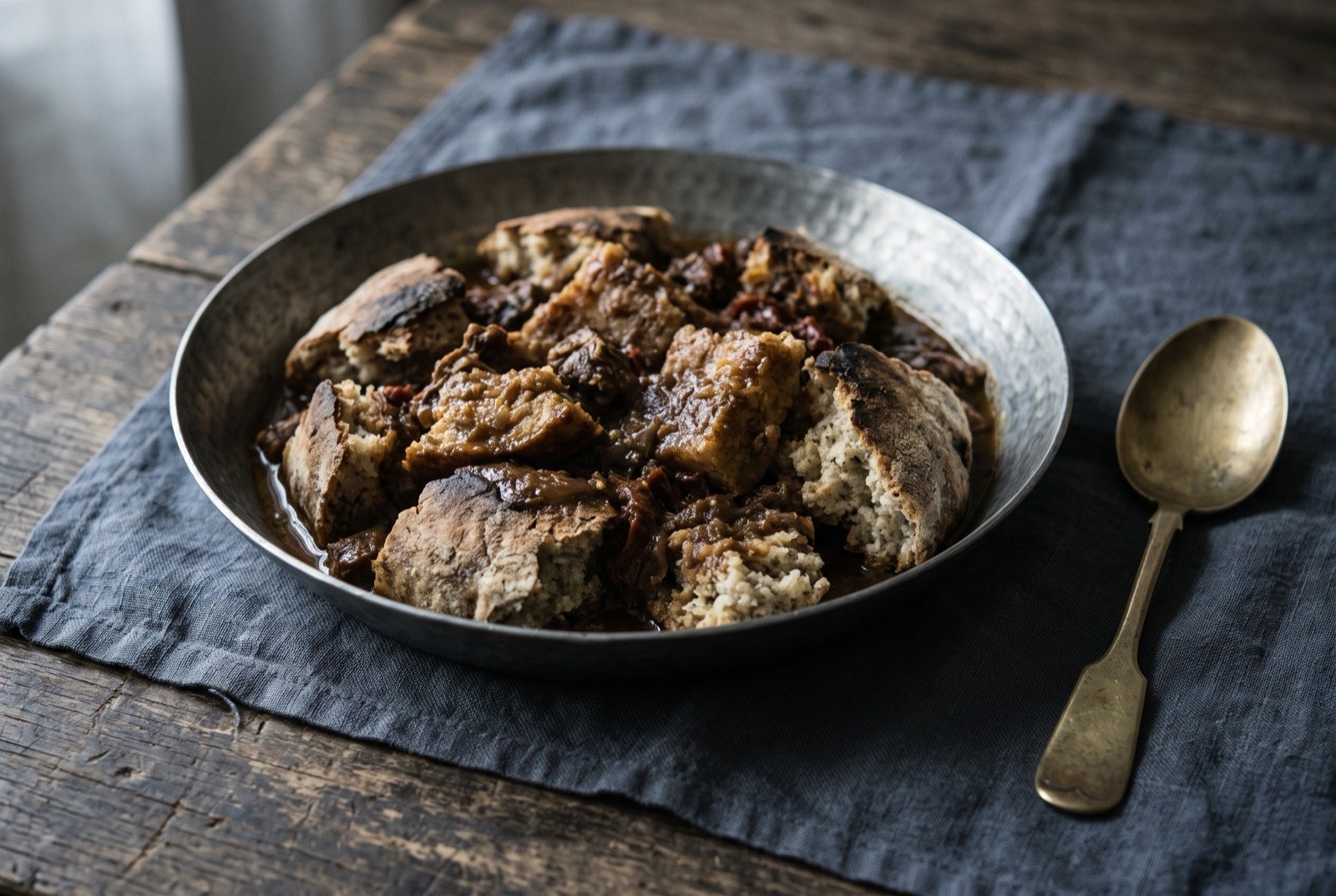
Taguella, Tamasheq tagǝlla, is the Tuareg hearth bread: a thick wheat or millet semolina dough baked directly in hot sand and ash beside the fire, then brushed clean, broken into pieces and dropped into a meat sauce. It is eaten with goat, camel or sheep, with butter, onion and dried tomato, sometimes with a sauce scented with wild fennel, and followed by three rounds of sugared green tea. The technique deserves respect rather than romance. Sand and ash are excellent thermal ballast: they hold a low, even, dry heat for a long time with no vessel and very little fuel, which in a treeless landscape is the whole design constraint. It is a hearthstone you do not have to carry. And there is a real engineering fix built in: before the loaf is buried, the surface is dried briefly over the flames so it will not take up sand. The obvious objection to the whole idea was solved a long time ago.
As tradition built it
Serves 4. About 1 hour 30.
Ingredients
- 600 g wheat or millet semolina, or a blend with plain flour
- 380 ml water
- 2 tsp salt
- enough ash and embers to bury the loaf a wood or charcoal fire with a deep bed of ash and sand
Method
- Work the semolina, water and salt together and knead about twenty minutes, to something between a thick batter and a dough. It should hold a shape without being tight.
- Scoop a hollow in the hot sand and ash beside the embers.
- Shape the dough into a thick disc, lay it in, and dry the surface briefly over the flames.
- Cover with ash, then bank a bed of embers on top.
- Turn it halfway through so both faces bake.
- Lift it out and brush and knock off the ash thoroughly.
- Break the loaf into pieces into a meat sauce and let them drink it. That is how it is eaten.
What a modern chef changes
The sand replaced honestly, the crumb hydrated properly, the sauce treated as the point
Rungs 5, 1 and 6
Method
- On a Big Green Egg this is closer than any oven gets. Bury the shaped disc in clean dry coarse sand in a cast iron pan, in the Egg at 200°C with the lid down, about 35 minutes, turned halfway, after drying the surface over direct heat for 90 seconds. It is not the desert floor and I am not claiming it is, but the mechanism, low even radiant heat through a granular ballast, is the same.
- Hydrate at 63 per cent and knead the full twenty minutes. Semolina hydrates slowly and the long knead is doing hydration as much as gluten development. Short-cut it and you get a dense chalky crumb that will not drink the sauce, which is the dish's entire function.
- Make the sauce a braise and reduce it. The bread absorbs it, so a thin sauce gives you wet bread and nothing else. Braise the goat or lamb sealed, as Volume Four's Rung 4 sets out, reduce the liquor by a third, then break the bread in.
Notes
Part Four