North Africa · Volume 15, Harissa and the Ottoman Line
Rechta algéroise
Algiers
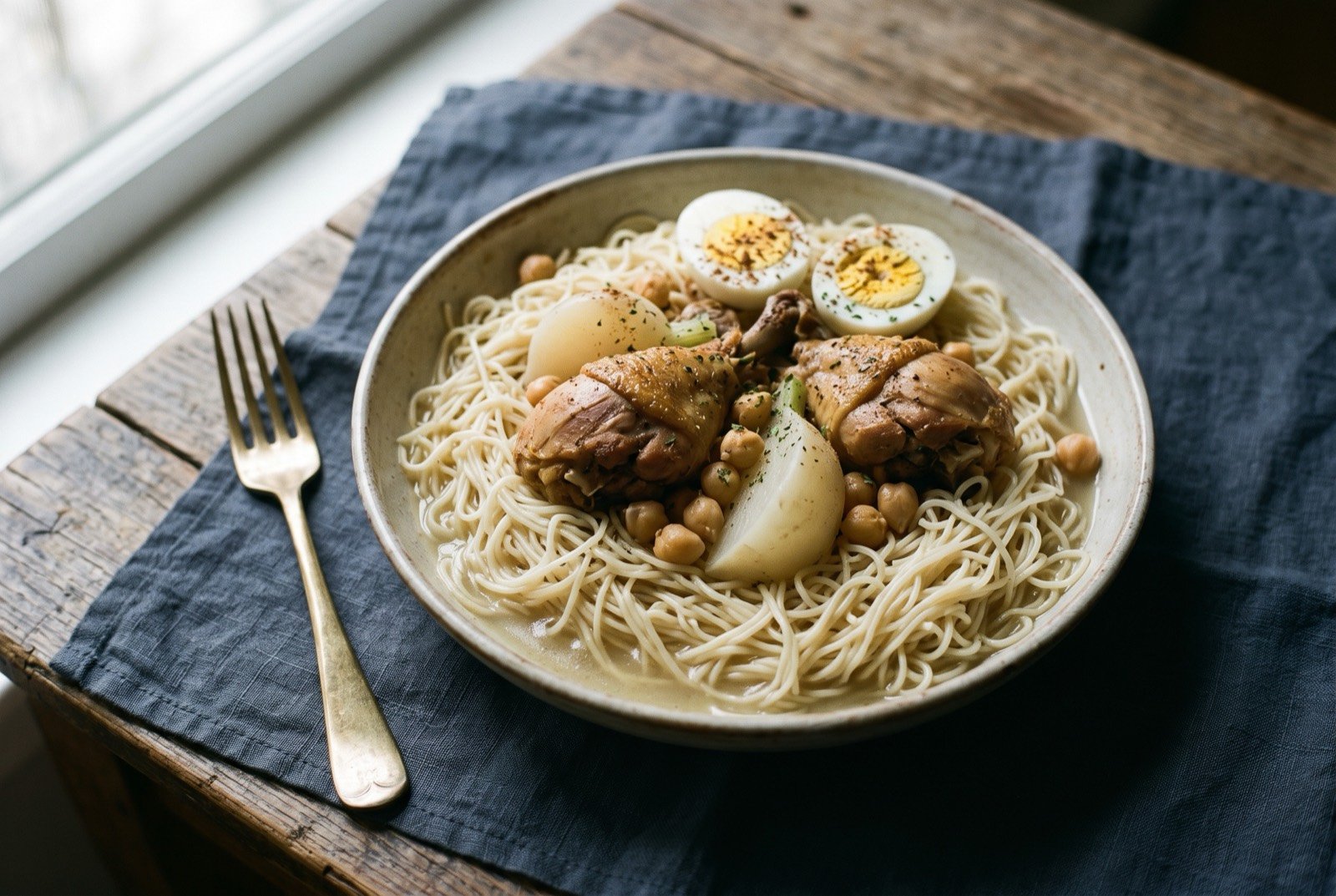
An illustration of the dish, not a photograph of it cooked.
- Time
- 2 hours
- Reviewed
- Not yet reviewed from inside the tradition
- Cooked
- Not yet cooked and reported
Rechta is a fresh cut noodle of durum semolina, flour and egg, and it is steamed rather than boiled. That single decision makes it Maghrebi rather than Italian, and it is why one vessel in an Algerian kitchen does both the grain and the pasta. It is a Mawlid dish and it sits squarely in the white repertoire: turnip, chickpea, cinnamon stick, smen, and no tomato and no chilli anywhere near it.
As tradition built it
Serves 6. About 2 hours.
Ingredients
- 1 kg rechta, rolled and cut fine
- 1 farm chicken, jointed, and 2 pieces of lamb
- 1 bowl chickpeas, soaked overnight
- 4 to 5 turnips, peeled and quartered
- 2 onions
- 50 g butter, plus oil or smen
- 1 cinnamon stick
- 1.5 L water; salt, pepper
- to serve hard-boiled eggs and ground cinnamon, to serve
Method
- Brown the chicken and lamb with the onion, the butter and your chosen fat, with salt, pepper and the cinnamon stick.
- Add the water and the soaked chickpeas and bring to a simmer. Add the turnips once the meat is close to done, so they hold their shape.
- Set the rechta in the top of the couscoussier, over the simmering sauce. First pass: 10 to 15 minutes, timed from the moment steam breaks through.
- Turn out. Sprinkle over half a glass of water and 2 tablespoons of oil, and lift and separate the strands by hand.
- Second pass: about 10 minutes. Repeat the sprinkle and the separation. Third pass: 10 minutes from steam.
- Serve with the sauce and the meat, garnished with halved hard-boiled egg and a dusting of ground cinnamon.
Notes
After a published Algerian source.
Steam hydrates the starch without ever putting the noodle into free water, so nothing leaches and the strands stay separate. The water-and-oil sprinkle is the couscous technique exactly: each application is absorbed during the following steam, so hydration is stepped rather than dumped.
What a modern chef changes
The joint sealed, the sprinkle weighed, and the cinnamon in two positions
Rungs 1, 6 and 3
Method
- Seal the joint. Rung 1. Flour-and-water paste around the rim forces all the steam up through the strands rather than out sideways, which shortens the passes and means the noodle really is cooked in the aroma of the sauce below. In a dish with no tomato and no chilli to hide behind, that transfer is a large fraction of the finished flavour.
- Weigh the sprinkle and write the number down. Half a glass is a real instruction in a kitchen where the same glass sits on the same shelf, and useless anywhere else. Note the total across all three passes as a percentage of the dry weight of the rechta and you will hit the same texture every time after.
- Put the cinnamon in twice, and mount the sauce with smen. Rung 6 applied to aroma. The stick goes in at the start, where its cinnamaldehyde extracts slowly into the fat and reads as warmth; the ground dusting goes on at the end, where it is unmistakably cinnamon and reaches the nose before the spoon reaches the mouth. Then a tablespoon of smen whisked into the strained hot sauce at the last moment, for gloss without the long cooking that would flatten it.