North Africa · Volume 15, Harissa and the Ottoman Line
Lablabi
Tunis
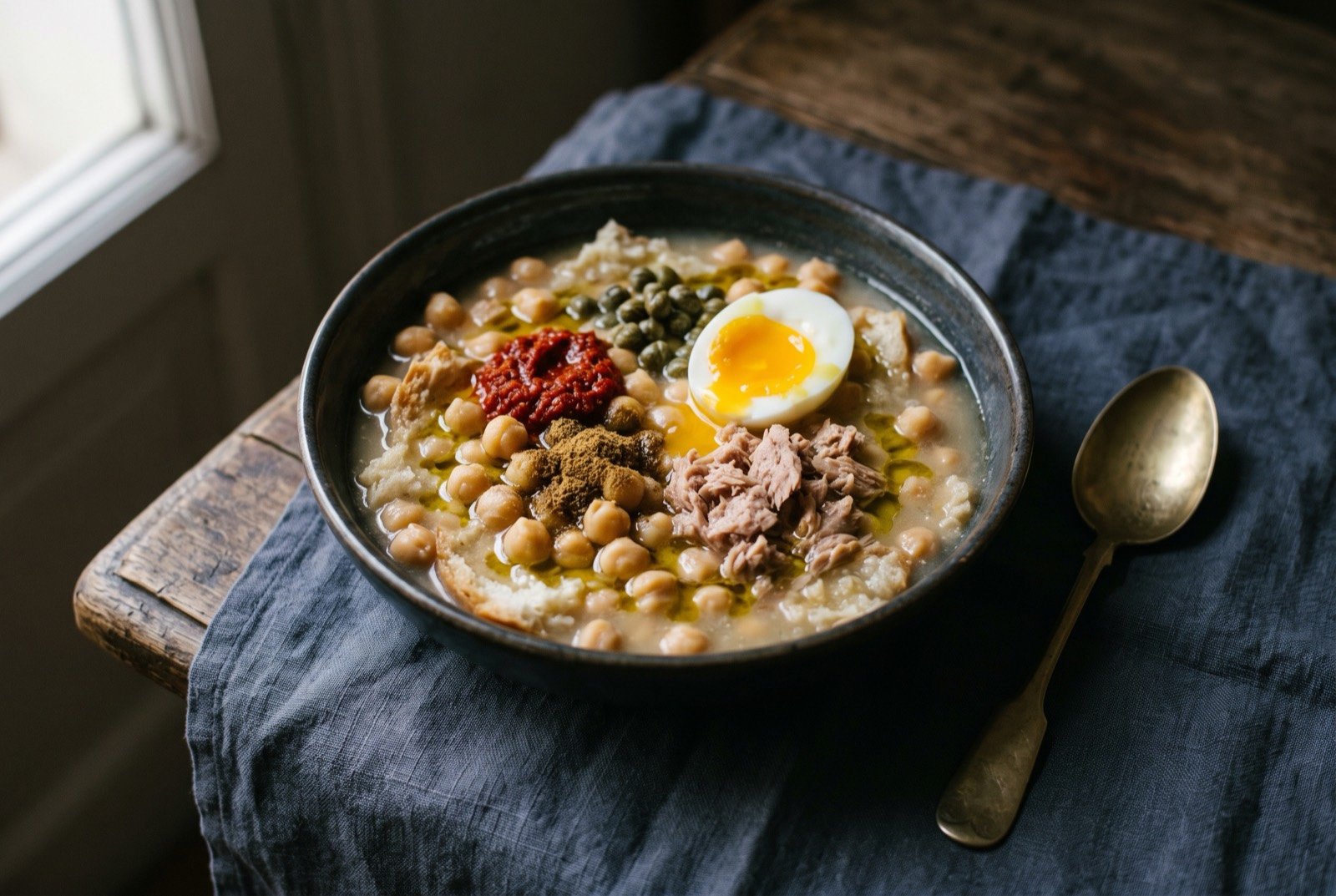
An illustration of the dish, not a photograph of it cooked.
- Time
- Hands on 45 minutes · Waiting 8 hours
- Reviewed
- Not yet reviewed from inside the tradition
- Cooked
- Not yet cooked and reported
Stale bread, chickpeas, their liquor, harissa, cumin, garlic, olive oil, tuna, capers and a soft egg, stirred through at the moment of eating. The broth is not a vehicle for the chickpeas, it is the dish, which is why tinned chickpeas cannot make it: a tin gives you brine, not broth. A contrast worth drawing. The most-circulated English-language lablabi, from Joe Yonan's Cool Beans, credited to Anissa Helou, adds kombu, bay and lemon juice, oven-toasts the bread, blends two cups of the chickpeas to a purée, and has no egg at all. The Tunisian version is assembled in the bowl by the eater, in a fixed order, and its soul is the runny yolk. One is a blended soup with croutons. The other is a construction.
As tradition built it
Serves 4. About 45 minutes, plus overnight soaking.
Ingredients
- 300 g dried chickpeas, soaked overnight
- 150 g dried fava beans and lentils, mixed
- 2 L hot water
- 3 garlic cloves, minced, plus more raw to serve
- 50 g harissa
- 1 soft-boiled egg per person
- to taste; to taste; 1 tbsp tinned tuna in oil, drained; capers; ground cumin
- as available; to taste stale bread, torn; olive oil, salt, cayenne
Method
- Cook the soaked chickpeas, fava beans and lentils with the garlic and salt in the hot water until fully soft, about 35 minutes. Do not drain them.
- Tear stale bread into the bottom of each bowl, enough to cover the base generously.
- Ladle the legumes and their broth over the bread.
- Now the assembly, on top, in this order: harissa, cumin, raw garlic, tuna, capers, the egg, and a drizzle of olive oil.
- Stir it through and eat it hot, immediately.
Notes
After a Tunisian household version.
What a modern chef changes
A concentrated broth, harissa in two positions, and the egg cooked to a number
Rungs 2, 3 and 6
Method
- Cook the chickpeas for the liquor and treat it as a stock. Buy from somewhere with turnover: chickpeas older than about two years never soften, because of pectin cross-linking, and bicarbonate does not rescue them. Use less water than the recipe says, then let the liquor down at the end.
- Put the harissa in twice, in two states. Rungs 2 and 6 together. Bloom half in olive oil for 60 to 90 seconds at the start, so the capsaicin and carotenoids are carried in the fat phase; keep the other half raw on top, where it reads as a bright front-of-tongue hit against the rounded heat below. The same condiment doing two jobs is the most useful single trick in this chapter.
- Cook the egg to a temperature, not a feeling. White sets at 62 to 65°C, yolk at 68 to 70°C. Six and a half minutes in boiling water from the fridge, then iced water. That yolk is the emulsifier for the whole bowl, and a firm one turns lablabi into a salad.