Korea and Japan · Volume 52, The Koikuchi Line, the Kombu Coast and the Kaiseki Counter
Nigiri-zushi
Tokyo
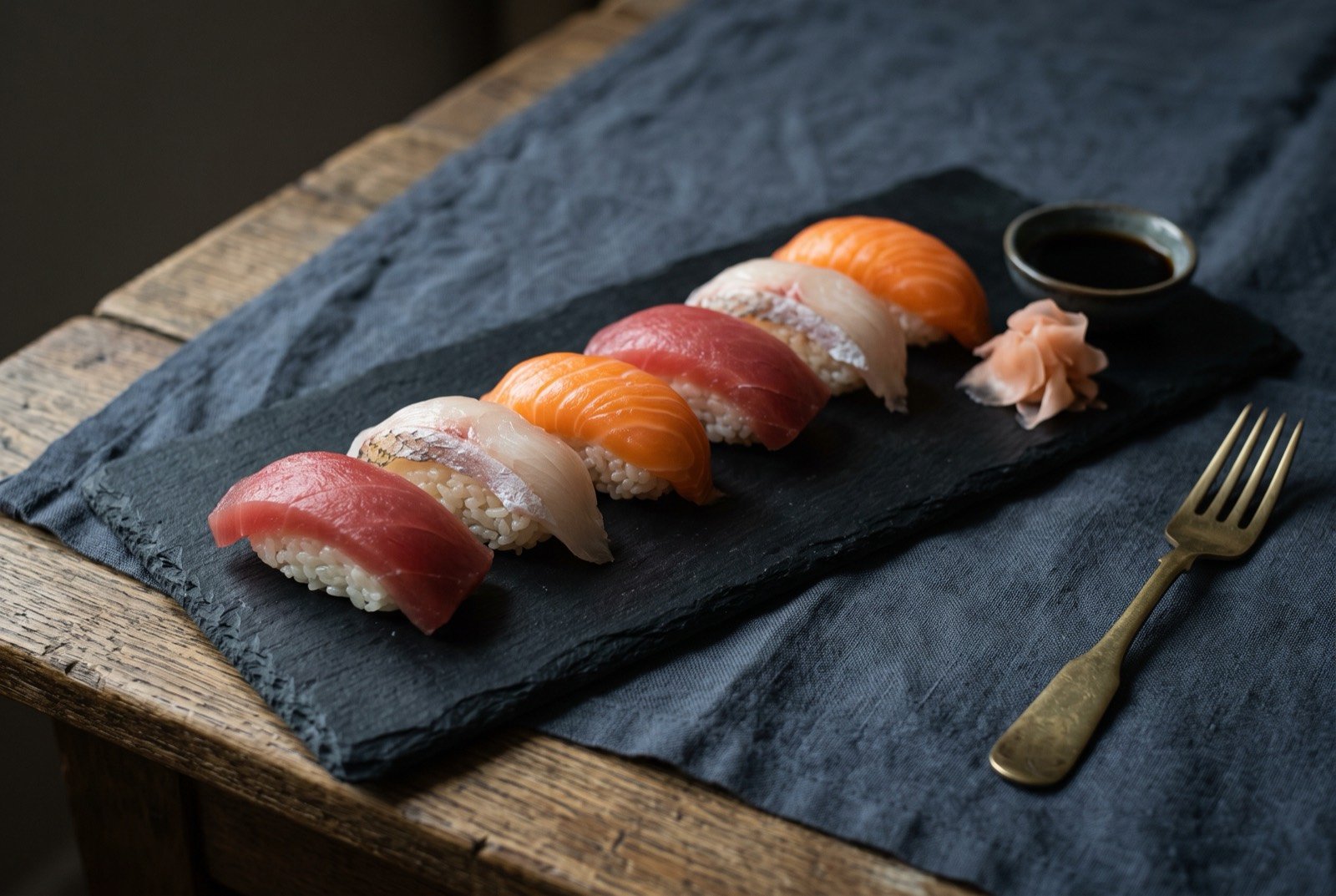
An illustration of the dish, not a photograph of it cooked.
- Time
- 1 hour
- Researched
- No outside sources linked
- Reviewed
- Not yet reviewed from inside the tradition
- Cooked
- Not yet cooked and reported
Nigiri began as fast, cheap street food sold from Edo Bay's own catch, priced at around eight mon a piece, and it did not become sushi's dominant national form until after the Second World War, when a rationed rice exchange system let citizens trade a small rice allowance for sushi at regulated shops and pushed the format nationwide for the first time. The techniques inside it, vinegared rice, shime curing of oily fish like kohada, zuke soy marinating of tuna, all began as preservation methods for a stall selling raw fish with no refrigeration, not as flavour development for its own sake, though the flavour effect is what modern kitchens now deliberately chase.
As tradition built it
Serves 4 as a light meal. About 1 hour, plus rice cooling time.
Ingredients
- 400 g short grain sushi rice, rinsed until the water runs clear
- 480 ml water
- 48 ml rice vinegar (roughly 1 part vinegar to 10 parts rice)
- 12 g sugar, home style, optional; the strict Edomae style uses none
- 10 g fine salt
- 400 g sashimi grade fish, a mix of tuna, sea bream, or salmon
- to taste wasabi, freshly grated if possible
- to taste koikuchi soy sauce, for dipping
Method
- Cook the rice in the measured water by absorption, then turn it out into a wide, shallow wooden tub while still hot.
- Warm the vinegar, sugar if using, and salt just enough to dissolve, then fold through the hot rice with a cutting motion, fanning as you go until the rice cools to roughly body temperature and takes on a glossy sheen (rung 2).
- Slice the fish on the bias into pieces roughly 8cm by 3cm.
- Wet your hands, take a portion of rice roughly the size of a large olive, and press it into an oval with light, even pressure, three or four presses only; overworking the rice compacts it and ruins the texture.
- Dab a little wasabi onto the underside of a fish slice, press it onto the rice, and shape the whole piece with a final light press.
- Serve immediately, at room temperature, with soy sauce for dipping fish side down.
What a modern chef changes
Aged vinegar and controlled ripening, not more fish
Rungs 2, 1 and 4
Method
- Age the vinegar. Sushi Yoshitake's own reported practice uses two different red, aged vinegars in his shari for a deeper, brown tinted rice and a more assertive, aged flavour; a home version can approximate this by blending a small proportion of aged red wine vinegar into standard rice vinegar rather than using rice vinegar alone. This detail is repeated widely in English language food writing about Yoshitake but could not be independently confirmed against a Japanese source, and is offered here as a documented restaurant idea, not a verified fact.
- Extract dashi at the rung 1 discipline for any accompanying soup course, holding kombu at 60°C rather than boiling it, and use the resulting clean glutamate base to make a light nikiri soy for brushing rather than dipping, a lighter finish than a full soy dip.
- Cure fattier cuts overnight using the same shime and zuke logic that built the dish originally, a light salt cure followed by a brief vinegar bath for white fish, a soy marinade for tuna, treating the historic preservation technique as a deliberate flavour choice rather than reviving it purely for authenticity's sake.