Korea and Japan · Volume 52, The Koikuchi Line, the Kombu Coast and the Kaiseki Counter
Dashimaki Tamago
Kyoto
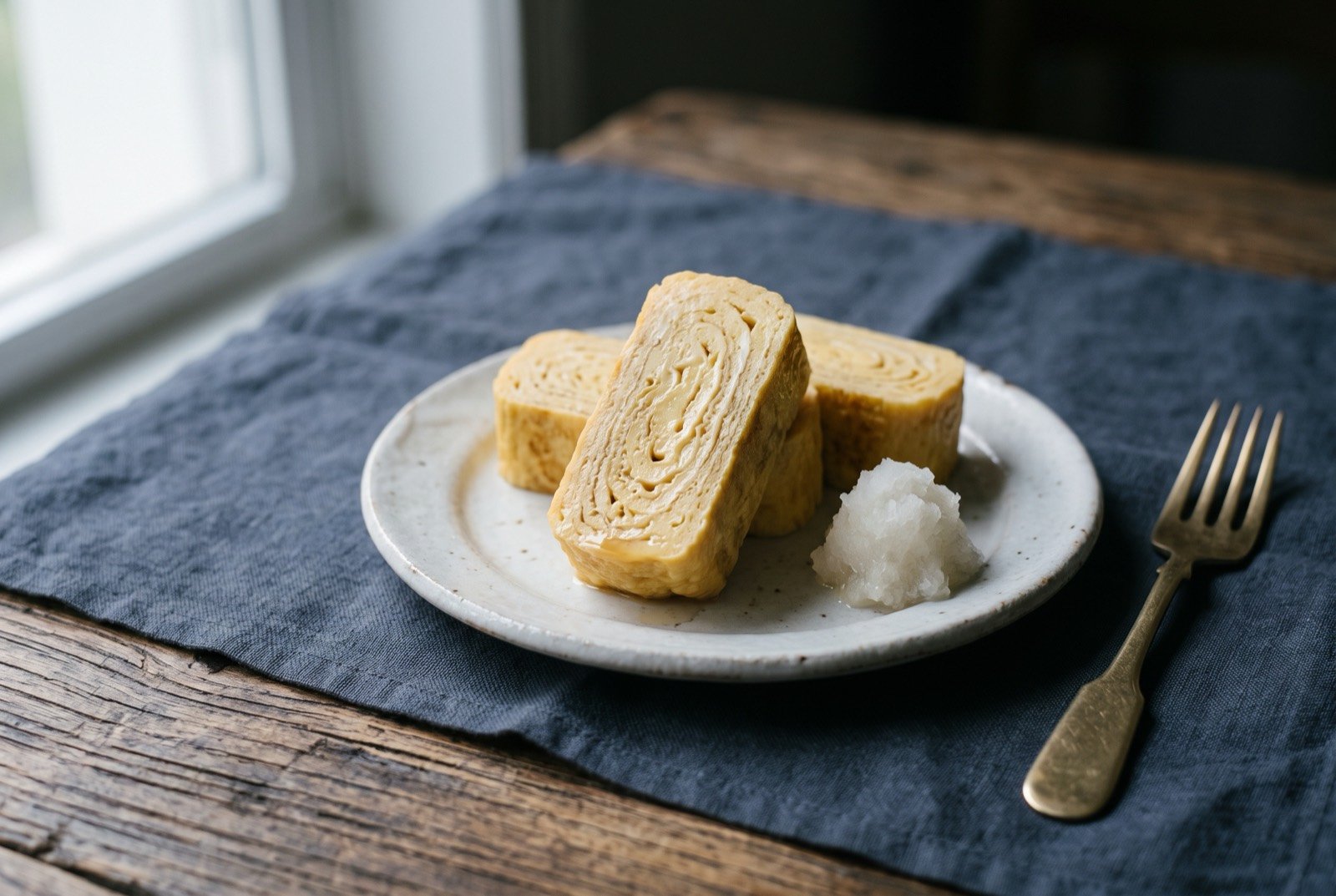
An illustration of the dish, not a photograph of it cooked.
- Time
- 20 minutes
- Researched
- No outside sources linked
- Reviewed
- Not yet reviewed from inside the tradition
- Cooked
- Not yet cooked and reported
Kanto's tamagoyaki is sweetened with sugar alongside koikuchi soy, a thicker, browned, more rectangular result cooked in a square azuma-gata pan; Kansai's dashimaki tamago omits sugar entirely, seasoning instead with usukuchi soy and mirin against a generous quantity of dashi, cooked in a longer, rectangular nishi-gata pan, lighter in colour and carried by the dashi rather than by sweetness, described directly in Japanese sources as Kansai "eating the dashi."
As tradition built it
Serves 4 as a side. About 20 minutes.
Ingredients
- 4 eggs
- 80 ml dashi
- 10 ml usukuchi soy sauce
- 5 ml mirin
- a pinch pinch of salt
- a little, for greasing neutral oil, for the pan
Method
- Whisk the eggs gently with the dashi, usukuchi, mirin and salt, avoiding introducing too much air.
- Heat a rectangular tamagoyaki pan over medium heat and oil lightly.
- Pour in a thin layer of the egg mixture, and as it just sets, roll it toward you with chopsticks.
- Oil the pan again, pour in the next layer, letting it run under the rolled egg, and repeat the roll.
- Continue until the mixture is used, building successive thin layers into one block.
- Rest briefly, then slice and serve.
What a modern chef changes
A precisely reduced dashi in place of a generous splash
Rung 1, applied to a dish where dashi genuinely is the whole point
Method
- Reduce a portion of the dashi by half before mixing it into the eggs, concentrating the umami without adding the extra liquid volume that can make a home version of this dish weep at the edges when sliced.
- Hold the pan at a genuinely gentle heat, testing with a drop of egg mixture that should set slowly rather than bubble instantly, since dashimaki's high dashi content makes it far more prone to overcooking at the edges than Kanto's firmer, sugar set tamagoyaki.
- Slice with a wet knife, wiped between cuts, for the clean, unbroken cross section a kaiseki tray presentation calls for.