Korea and Japan · Volume 52, The Koikuchi Line, the Kombu Coast and the Kaiseki Counter
Chawanmushi
Kyoto
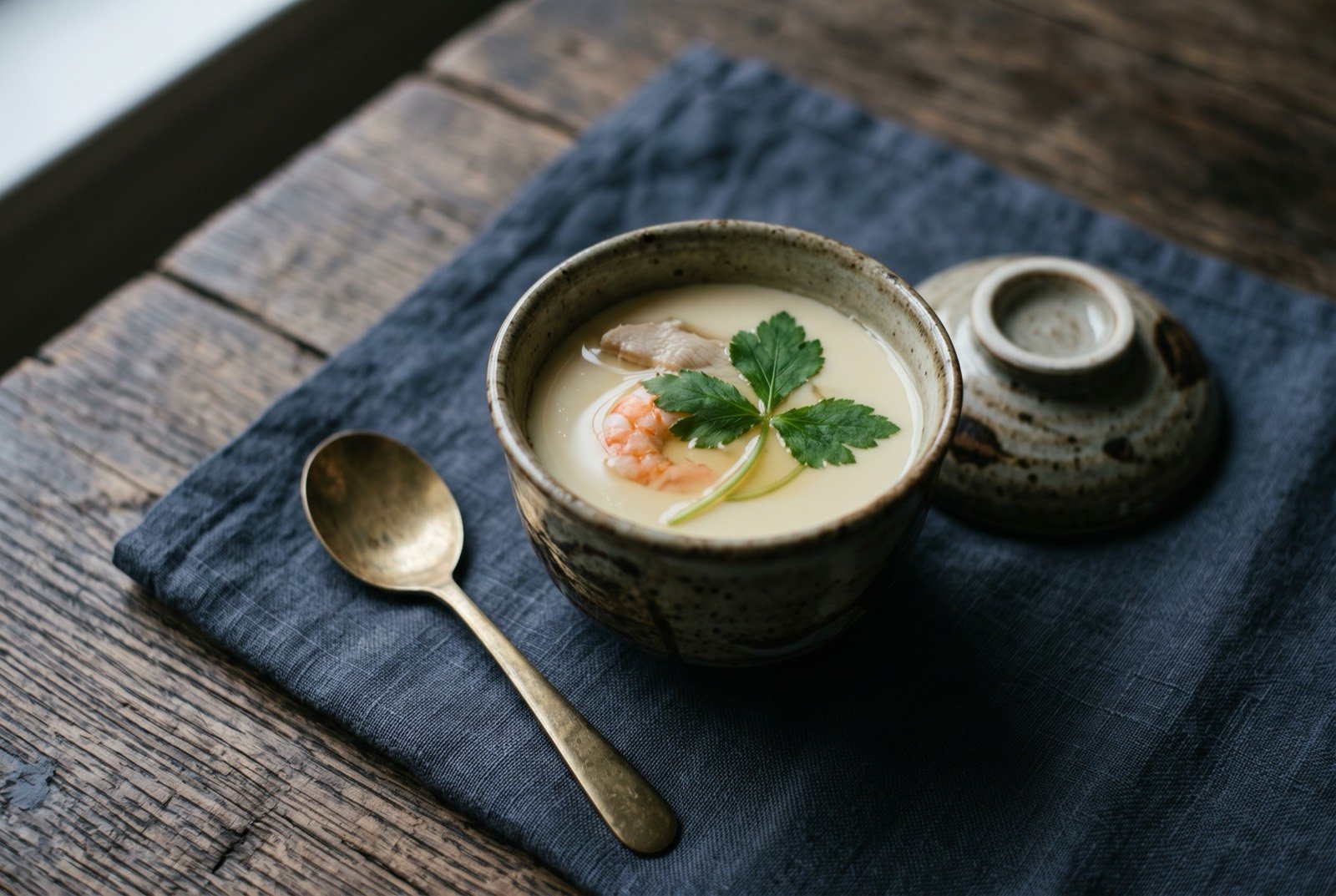
An illustration of the dish, not a photograph of it cooked.
- Time
- 40 minutes
- Researched
- No outside sources linked
- Reviewed
- Not yet reviewed from inside the tradition
- Cooked
- Not yet cooked and reported
Chawanmushi is where kaiseki's whole logic, dashi treated as the finished dish's actual flavour rather than its background, becomes legible in one small course. Kikunoi's own kombu practice, one hour at 60°C, and the wider principle that a clean, unbittered extraction is the entire foundation of the dish, apply here more directly than anywhere else in this chapter, since chawanmushi has almost nowhere else to hide a poor dashi.
As tradition built it
Serves 4. About 40 minutes.
Ingredients
- 4 eggs
- 600 ml dashi (roughly 1:3 egg to dashi by volume)
- 10 ml usukuchi soy sauce
- 10 ml mirin
- as available small pieces of chicken, shrimp, shiitake, and mitsuba, to garnish
Method
- Extract a clean dashi at 60°C (rung 1).
- Beat the eggs gently, without introducing air, then whisk in the cooled dashi, usukuchi and mirin.
- Strain the mixture through a fine sieve into individual cups, skimming any surface bubbles.
- Divide the chicken, shrimp, shiitake and mitsuba between the cups.
- Steam, lid ajar or with a cloth beneath it, at 80 to 90°C, roughly 20 minutes, until just set, an internal temperature of around 71°C (rung 5).
- Serve immediately, in the cup.
What a modern chef changes
A precision bath in place of a watched pot
Rung 5, taken to its logical conclusion with this reader's own kit
Method
- Set the custard in a sous vide bath at a fixed 85°C rather than a stovetop steamer, removing the guesswork rung 5 otherwise demands of a home cook without a professional steamer's stable heat.
- Extract a double strength dashi for a firmer, more concentrated custard that still sets without curdling at the rung 5 temperature, a genuine option this reader's own equipment makes easy that a traditional kitchen would not attempt.
- Finish with a single drop of yuzu oil rather than a garnish ingredient added before steaming, a light, aromatic top note that a Kyoto kitchen would recognise as in keeping with kaiseki's own restraint even where the specific garnish is this chapter's own choice.