Korea and Japan · Volume 52, The Koikuchi Line, the Kombu Coast and the Kaiseki Counter
Sukiyaki
Kansai and Kanto
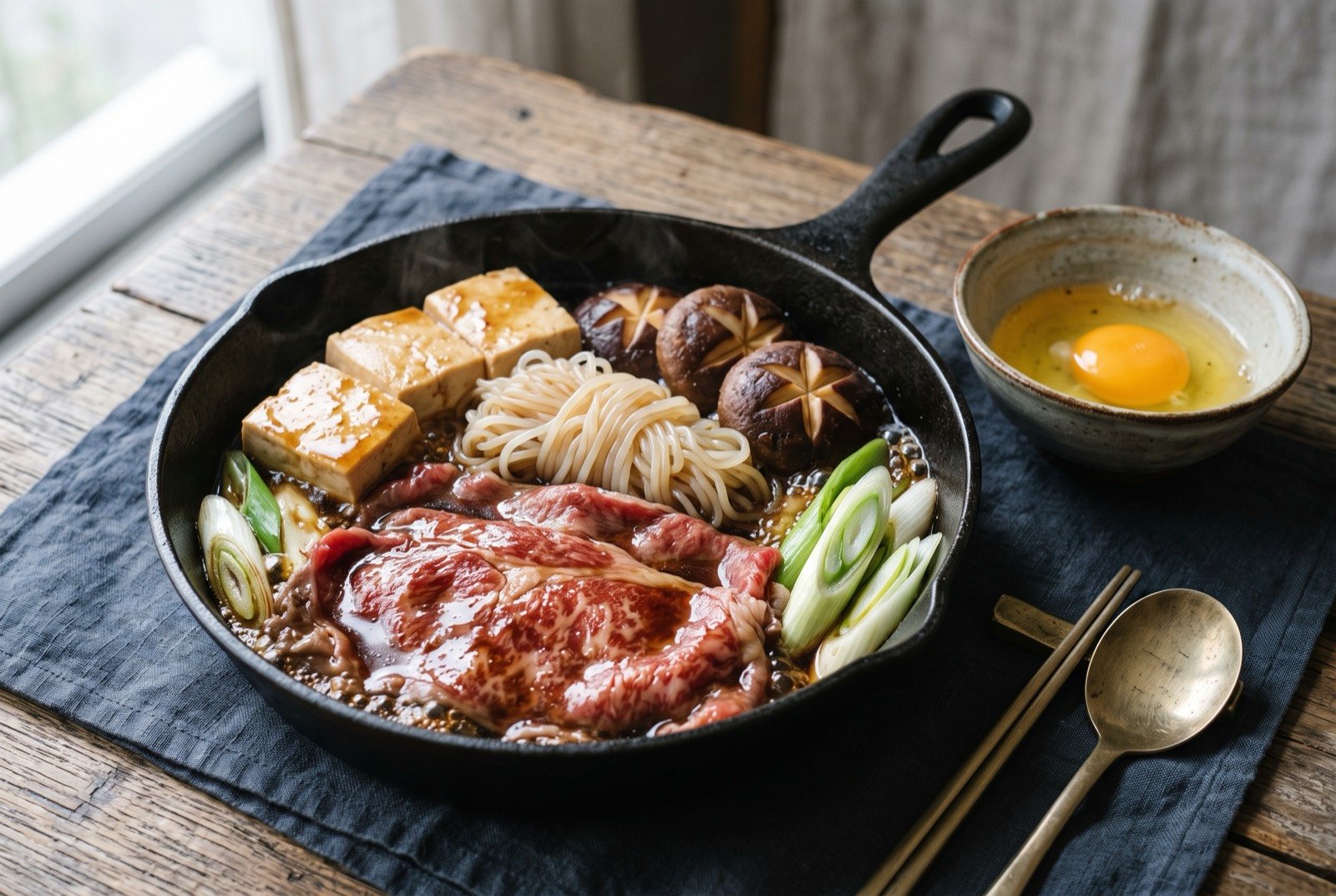
An illustration of the dish, not a photograph of it cooked.
- Time
- 30 minutes
- Researched
- No outside sources linked
- Reviewed
- Not yet reviewed from inside the tradition
- Cooked
- Not yet cooked and reported
Sukiyaki is credited with a Kansai, mid Edo period origin, "suki" naming a repurposed farm implement blade used as an improvised grill plate; the Kanto version instead descends from gyunabe, a specifically Meiji era beef hot pot devised to make raw beef's unfamiliar smell palatable to a population that had not eaten it for over a millennium. The two are not one dish with a regional accent. Kansai sears beef directly in rendered beef fat, then seasons it in the pan with sugar and soy sauce added in sequence; Kanto prepares a premixed warishita sauce, dashi, soy, mirin, sake and sugar, and simmers everything in it from the start.
As tradition built it
The Kansai method, since it is the older lineage
Serves 4. About 30 minutes.
Ingredients
- 500 g well marbled beef, sliced very thin
- 50 g beef fat, or a knob of butter
- 80 g sugar
- 120 ml koikuchi soy sauce
- 60 ml sake
- 1/4 head Chinese cabbage, 8 shiitake caps, 2 spring onions, 200 g tofu, 200 g shirataki noodles Chinese cabbage, shiitake, spring onion, tofu, shirataki noodles
- 1 per serving raw egg, for dipping
Method
- Render the beef fat in a heavy, flat pan over high heat.
- Sear a few slices of beef directly in the fat, just until coloured.
- Sprinkle sugar directly over the meat, then add soy sauce and sake, letting the mixture bubble and glaze the meat.
- Push the meat aside, add the cabbage, shiitake, spring onion, tofu and shirataki noodles to the same pan, and let them cook in the resulting juices, adding a little more sugar, soy and sake as the pan runs dry.
- Serve each piece dipped in raw beaten egg, the egg's own cooling, coating effect softening the pan's direct heat.
What a modern chef changes
Two regional methods run as a deliberate side by side course, not a compromise between them
Rung 1 and the chapter's own regional logic, not a numbered rung
Method
- Cook a small Kanto style pot alongside the Kansai pan, a premixed warishita built to the same soy, mirin, sake and sugar logic as rung 6's tare discipline, and serve both from the same table, letting a diner taste the actual mechanical difference between a seared, direct seasoned dish and a simmered, premixed one rather than reading about it.
- Extract the warishita's dashi component at rung 1's 60°C, since a poorly extracted dashi is the single most common reason a home Kanto sukiyaki tastes flat against its Kansai sibling.
- Serve the dipping egg pasteurised, briefly warmed in a water bath to a food safe temperature well short of setting, a direct, practical answer to raw egg safety concerns a British kitchen reasonably has that a Japanese one historically has not, named here as an adaptation for this reader's kitchen rather than a Japanese practice.