The Sinosphere · Volume 26, The Hung Oven, the Clear Stock and a Banquet That Never Quite Existed
Beijing Copper-Pot Lamb Hotpot
Beijing
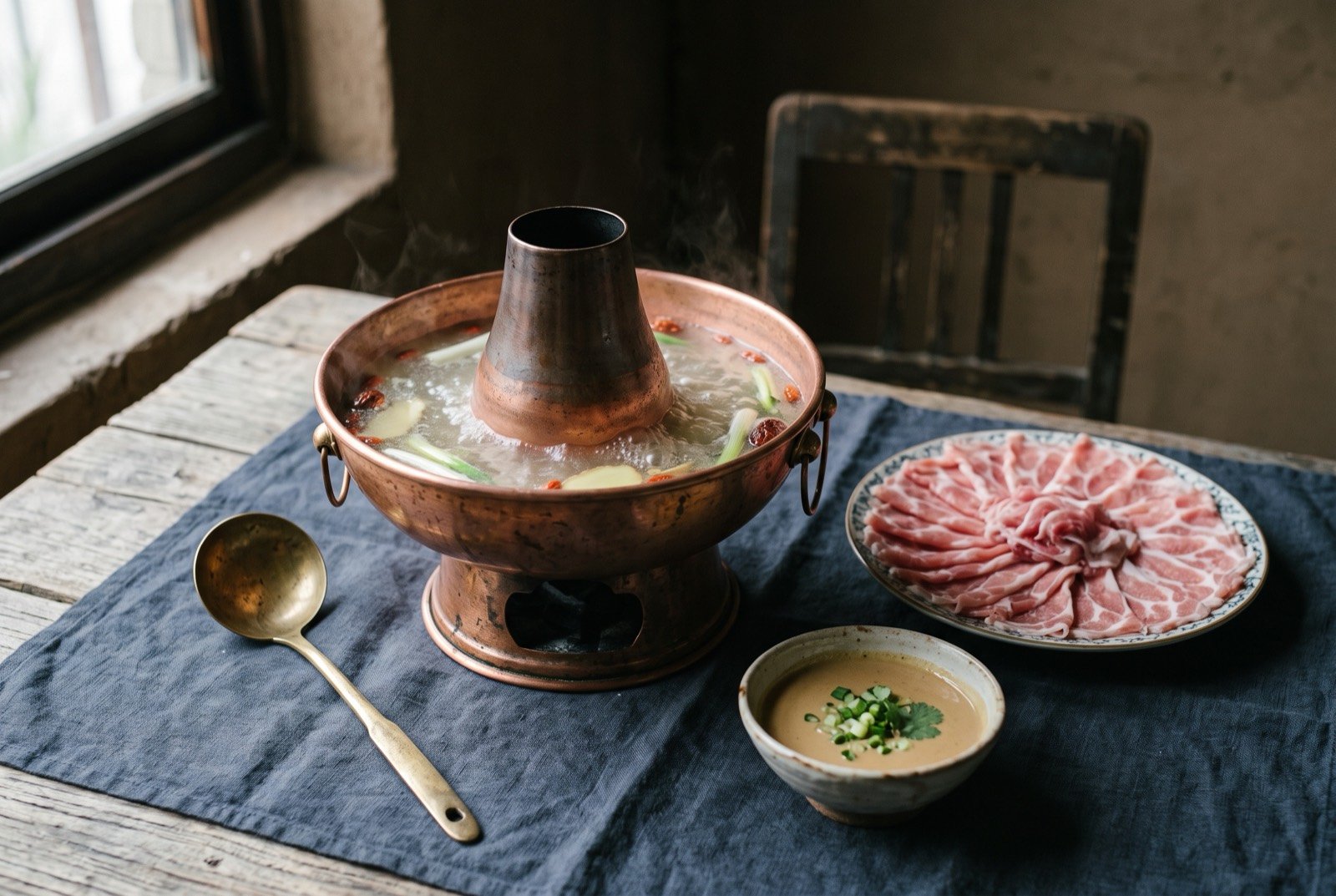
An illustration of the dish, not a photograph of it cooked.
- Time
- 1 hour
- Reviewed
- Not yet reviewed from inside the tradition
- Cooked
- Not yet cooked and reported
The dish's documented history runs in real layers: a steppe origin claim credits Liao and Jin nomadic peoples with a copper-pot boiled-meat custom; a popular Mongol-cavalry legend should be read as legend, "相传," not fact; the first solid textual anchor is Ming-dynasty, recording copper-pot hotpot inside the palace itself; and the 1785 Thousand Elders Banquet is recorded with 1,550 copper pots laid out, tying the dish directly to the same court-banquet history this chapter opened with. Donglaishun, founded 1903, holds the dish's most credentialed public lineage, its founder having paid to poach a master knife-cutter from a rival restaurant specifically for mutton-slicing thin enough that the porcelain pattern showed through.
As tradition built it
Serves 4 to 6. About 1 hour, plus slicing time.
Ingredients
- 800g mutton or lamb, hand-sliced paper-thin (shoulder or leg cuts)
- 2 litres water
- as needed a few slices of ginger, a few scallion segments
- 4 tbsp sesame paste (芝麻酱)
- 1 tbsp peanut butter
- 2 tbsp fermented tofu (腐乳), mashed
- 1 tbsp soy sauce
- to taste pickled garlic, chive flower paste, chilli oil, cooking wine, to taste
- to serve Chinese cabbage, glass noodles, tofu, to serve
Method
- Bring the water to the boil with the ginger and scallion for the plainest, most traditional broth.
- Mix the sesame paste and peanut butter roughly 8:2, then work in the fermented tofu, soy sauce, pickled garlic, chive flower paste, cooking wine and chilli oil to taste, following the traditional five-flavour structure of sweet, salty, sour, bitter and pungent.
- Bring the pot to the table over a burner.
- Cook the sliced mutton in small batches, a few seconds each, dipping immediately into the sauce.
- Finish the meal by simmering cabbage, noodles and tofu in the now richly flavoured broth.
What a modern chef changes
A sous vide precision on the sauce components, and a genuinely clear consommé alternative broth. Rung 4, offered as a deliberate contrast to the traditional broth's minimalism.
Rung 4
Method
- Build a genuine clear stock (rung 4) as an alternative broth option, offering the diner the traditional plain water alongside a proper raft-clarified consommé, letting the meal make the traditional argument, that the meat and sauce carry the flavour, by direct comparison rather than assertion.
- Toast and grind fresh sesame seeds in a spice grinder for the paste rather than using a shop-bought jar, a genuinely fresher, more aromatic base for the 8:2 ratio.
- Hold the dipping sauce's fermented components (腐乳, 韭菜花) at a controlled temperature rather than serving cold from the fridge, since their aromatics are more expressive slightly warmed, a small, checkable improvement.