The Sinosphere · Volume 28, The Pulled Noodle, the Vinegar Jar and the Corridor That Carried Islam East
Liangpi (凉皮)
Shaanxi
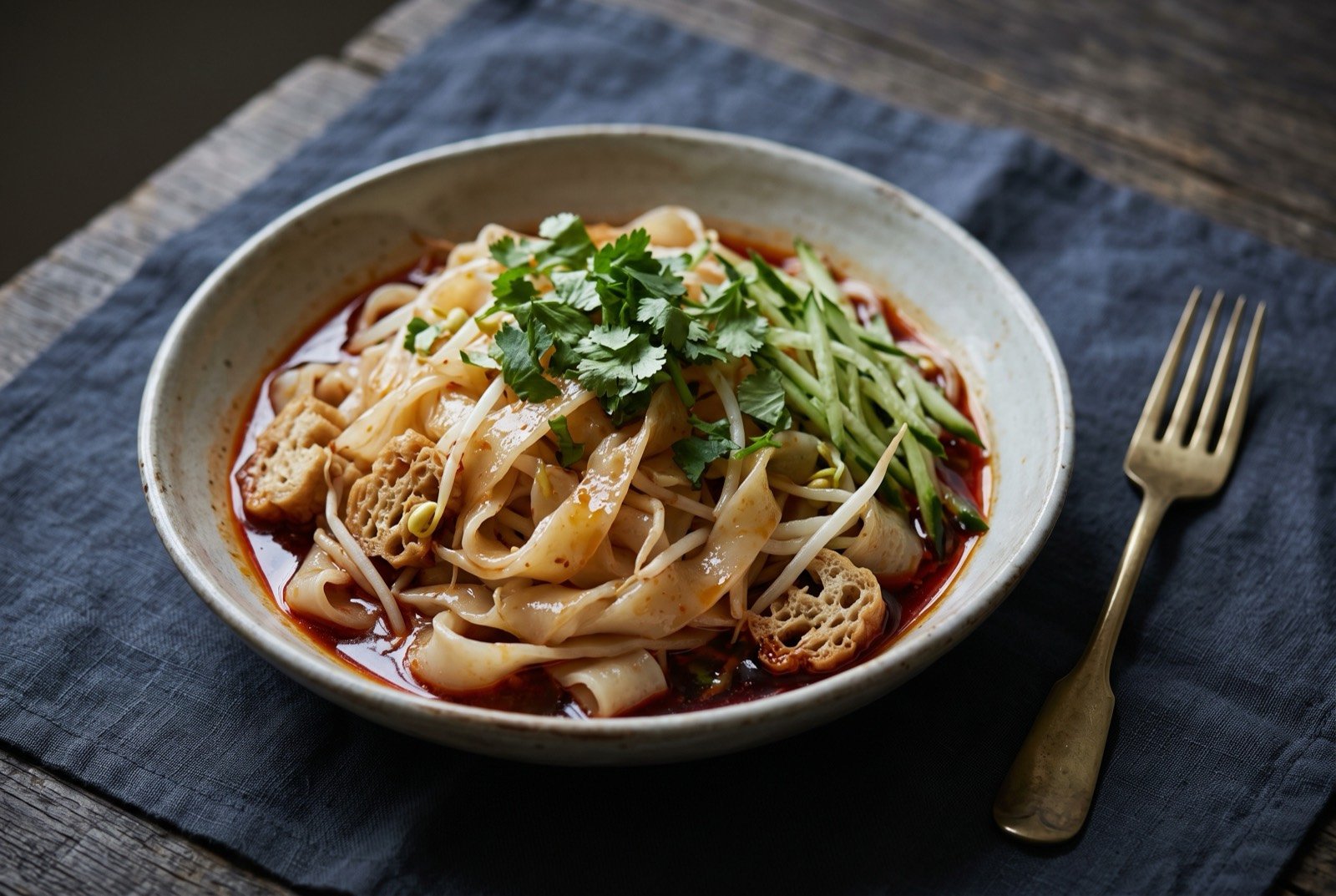
An illustration of the dish, not a photograph of it cooked.
- Time
- Not statedNo source states a time and the atlas has too few comparable dishes to estimate one.
- Researched
- No outside sources linked
- Reviewed
- Not yet reviewed from inside the tradition
- Cooked
- Not yet cooked and reported
Popularly assumed to be a mung-bean dish and mostly is not: the reference version is either rice-based (mipi) or made by washing wheat dough for its starch (mianpi), with mung bean starch appearing only as a minority texture-strengthening additive in some recipes, not the primary starch.
As tradition built it
Serves 4.
Ingredients
For Qinzhen-style mipi
- 100g rice to 150 to 200ml water, ground to a slurry aged rice, soaked overnight, stone-ground into a slurry
Or for mianpi
To dress
- to taste chilli oil
- to taste vinegar
- to taste garlic water
- to taste sesame paste, optional
- for garnish bean sprouts, cucumber and coriander
Method
- For mipi: soak aged rice overnight, stone-grind into a slurry, settle, then pour off the clear top liquid and steam into thin, chewy sheets.
- For mianpi: wash the wheat dough repeatedly in water to separate starch from gluten; settle and steam the starchy "flour water" flat in a shallow pan, and steam the washed-out gluten separately for 20 to 25 minutes, served as chewy strands within the dish.
- Slice the sheet into ribbons and dress with chilli oil, vinegar, garlic water and sometimes sesame paste.
- Serve with the steamed gluten pieces, bean sprouts, cucumber and coriander.
What a modern chef changes
A blended, chinois-strained slurry, and a crisped gluten contrast
Rungs 1 and 6
Method
- Refine the rice slurry in the high-power blender to a finer, more even consistency than stone-grinding typically achieves, then strain through the chinois before settling, producing a noticeably more translucent, glass-like finished sheet.
- Hold the steaming temperature precisely rather than judging by eye, giving genuinely consistent sheet thickness batch to batch.
- Dress with the same freshly blended, freshly bloomed chilli oil described above, not a bought jar. Rung 6.
- Tear a small portion of the steamed gluten into rough pieces and crisp briefly in the dehydrator before serving, a textural contrast, crisp against chewy, that a purely traditional plate does not offer but that changes nothing about what the dish fundamentally is.