The Sinosphere · Volume 28, The Pulled Noodle, the Vinegar Jar and the Corridor That Carried Islam East
Saozi noodles (岐山臊子面)
Qishan county, Baoji prefecture, Shaanxi
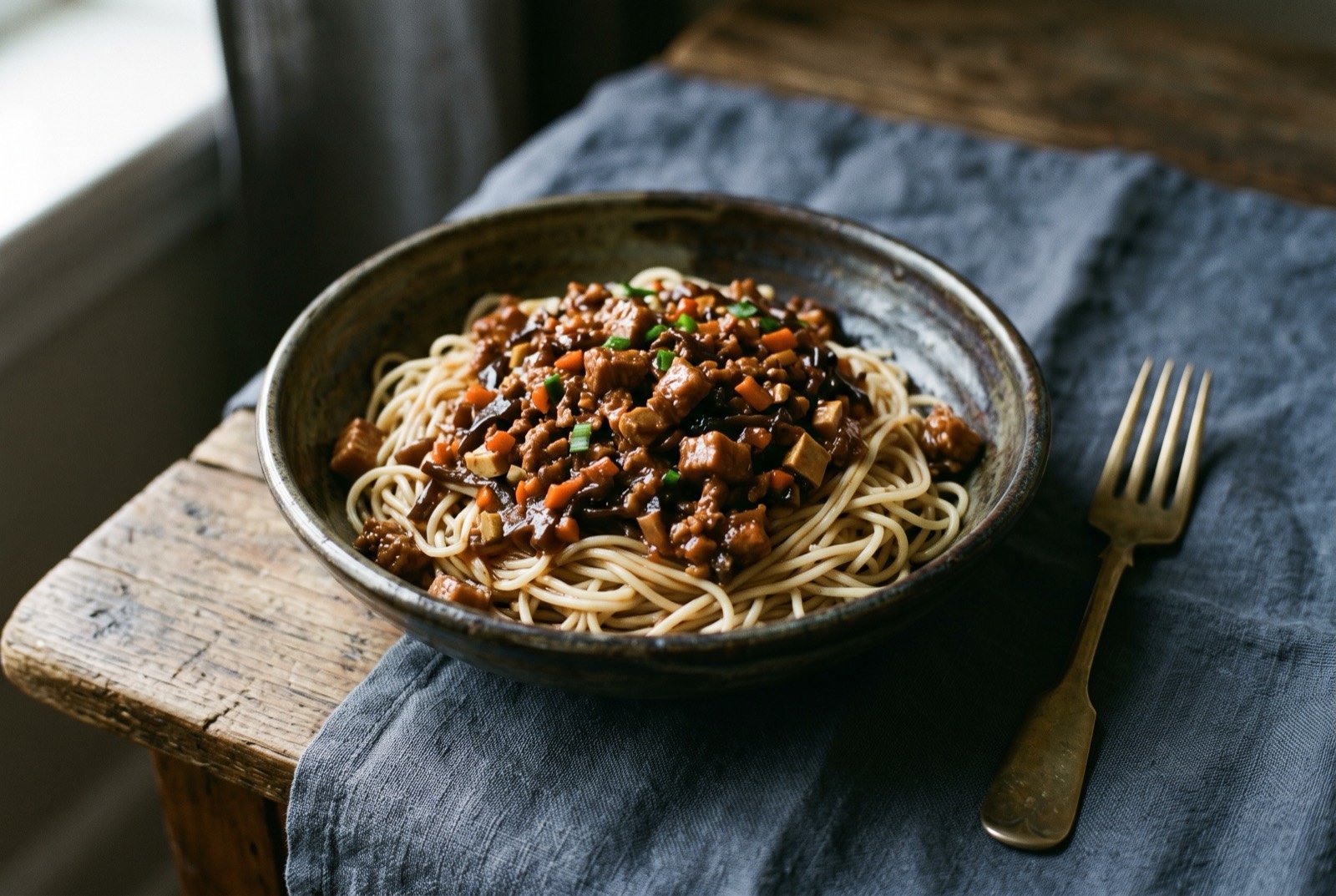
An illustration of the dish, not a photograph of it cooked.
- Time
- Not statedNo source states a time and the atlas has too few comparable dishes to estimate one.
- Researched
- No outside sources linked
- Reviewed
- Not yet reviewed from inside the tradition
- Cooked
- Not yet cooked and reported
Layered under a Zhou-dynasty foundation myth this chapter treats as myth, not history, plus a real documented lineage running through Song and Ming-era texts naming the "saozi" seasoned-mince topping specifically. The dish is defined by two paired formulas passed down as craft shorthand: the noodle thin, springy, glossy; the taste sour, spicy, fragrant, with a real, sourced regional gradient, less vinegar further west, more chilli further south.
As tradition built it
Serves 4.
Ingredients
An outline, not yet a recipe: the tradition's method with its ingredients named but not weighed. Quantities are being added from sources inside the tradition, lead dishes first.
For the saozi topping
- 500g thin-sliced pork
- ginger and salt to taste, a pinch spice powder, 1 tbsp fine and 1 tbsp coarse chilli powder, about 50g (3 tbsp) aged vinegar ginger, salt, spice powder, chilli powder and aged vinegar
To serve
- noodles
- stir-fried tofu, day-lily and wood ear
- for garnish egg-sheet diamonds and chopped garlic sprout, to garnish
Method
- Fry the thin-sliced pork with ginger, salt, spice powder, chilli powder and aged vinegar until well coloured and fragrant.
- Serve over noodles with the stir-fried tofu, day-lily and wood ear.
- Garnish with egg-sheet diamonds and chopped garlic sprout.
What a modern chef changes
Sous vide pork with a fast Maillard finish, and real Shanxi laochencu
Rung 1
Method
- Cook the pork in the sous vide bath first for perfectly even doneness, then into a hot pan only at the very end for a fast, high-heat Maillard finish with the ginger, chilli and vinegar, keeping the traditional flavour sequence but controlling the meat's texture far more tightly than an open pan-fry allows.
- Grind the spice mix fresh.
- Use genuine Shanxi laochencu rather than a generic bottle, chosen specifically because this dish's whole identity turns on the sour pillar of its flavour formula, and the difference between a proper aged vinegar and an ordinary one is, by the sourcing research's own ranking, the single biggest lever in this entire chapter.
- Give the day-lily and wood ear a brief pass through the dehydrator after their initial cook, crisping a portion of each for a textural garnish scattered over the finished bowl.