Korea and Japan · Volume 54, The Kingdom, the Battle and the Base
Goya Champuru
Okinawa
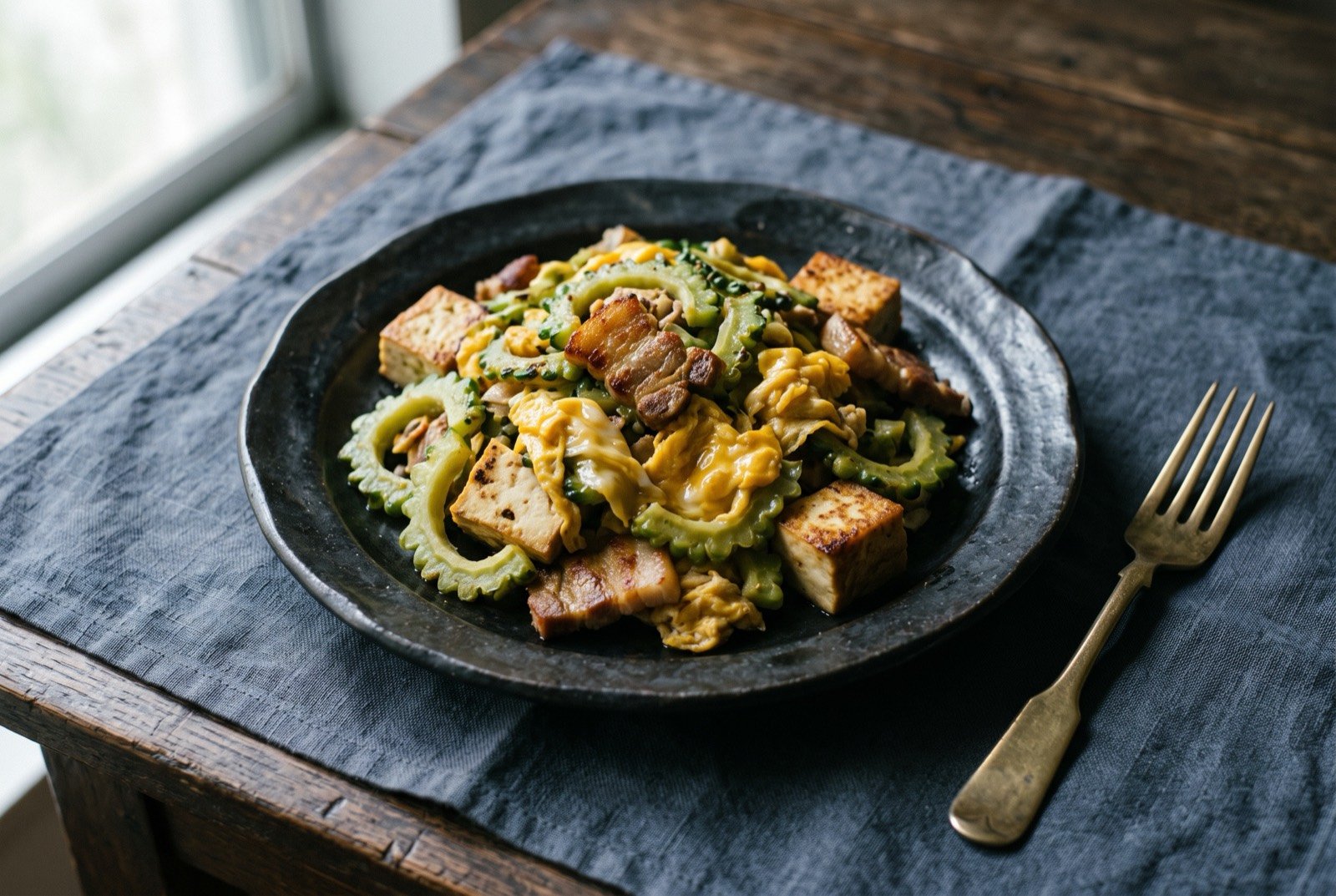
An illustration of the dish, not a photograph of it cooked.
- Time
- 20 minutes
- Reviewed
- Not yet reviewed from inside the tradition
- Cooked
- Not yet cooked and reported
Goya champuru is the dish that gives the whole chanpuru family its name and its defining rule: per the Ryukyu Cuisine Preservation Association's own director, "a dish without tofu cannot be called champuru." The Okinawa Prefectural framing places this specifically as a commoner dish, built on its own folk-medicine logic of nuchigusui, "medicine of life," distinct from the court-cuisine lineage of rafute and ashitibichi above.
As tradition built it
Serves 2 to 3. About 20 minutes.
Ingredients
- 300 g island tofu (or a firm, well-drained block tofu)
- 1 goya (bitter melon), halved, seeded, thinly sliced
- 150 g pork belly, thinly sliced
- 2 eggs, beaten
- 2 tbsp vegetable oil
- to taste salt
Method
- Pat the tofu dry and tear or cut into rough, thick pieces.
- Heat oil in a wok or wide pan until very hot, and fry the tofu, undisturbed for the first minute or two, until the underside is deeply reddish-brown, then turn and colour the other sides; this searing must happen alone, before anything else joins the pan, or the tofu steams rather than browns.
- Remove the tofu and set aside.
- In the same pan, fry the pork belly until crisp at the edges, then add the goya and stir-fry over high heat for 2 to 3 minutes, keeping it moving so it colours rather than stews.
- Return the tofu to the pan, season with salt, then pour the beaten egg over everything and stir briefly, just until it sets around the other ingredients rather than scrambling separately.
- Serve immediately, straight from the hot pan.
What a modern chef changes
The pork rendered sous vide before a hard sear, and the goya's bitterness precisely controlled
Rung 2
Method
- The pork belly is rendered sous vide at 65°C for 4 hours before being seared hard at the very end, rather than fried directly from raw (Rung 2, extended to the pork). This delivers evenly tender pork with a genuine crisp sear, a texture the quick direct fry of the tradition method cannot reliably achieve on a fattier cut.
- The goya is blanched for exactly 30 seconds in salted boiling water and shocked in iced water before it ever reaches the hot pan, rather than salted and squeezed by eye, giving the cook precise, repeatable control over how much bitterness survives into the finished dish rather than tradition's more variable salting method.
- A small amount of the tofu's frying oil is reserved, strained through a chinois, and used to finish the dish with a spoonful at the table, concentrating the tofu's own toasted flavour back into the final plate rather than letting it stay behind in the pan.
- A high-power blender is used to make a light, quick emulsified sauce from a little of the pork's rendered fat, rice vinegar and a touch of shikuwasa, spooned around the dish rather than through it, adding a bright, acidic counterpoint tradition does not include but which suits the dish's own contrast of bitter, savoury and rich elements.