Korea and Japan · Volume 54, The Kingdom, the Battle and the Base
Nakami-jiru
Okinawa
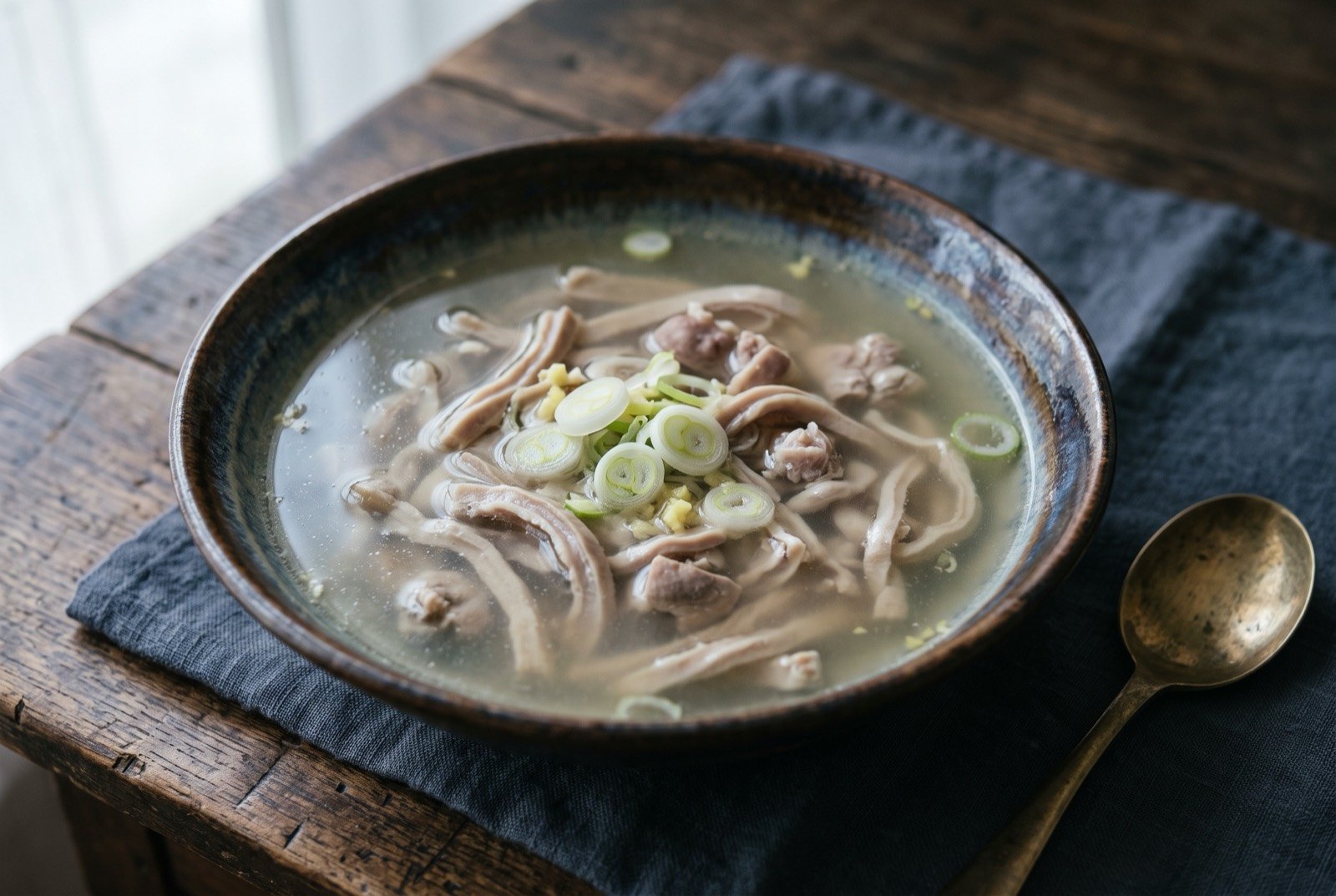
An illustration of the dish, not a photograph of it cooked.
- Time
- 2 hours
- Reviewed
- Not yet reviewed from inside the tradition
- Cooked
- Not yet cooked and reported
Nakami-jiru is one of the surviving named dishes of the kingdom's own court kitchen, made from pork small intestine, large intestine and stomach, and its whole technical point is texture rather than offal flavour: repeated washing and boiling with rice bran or wheat flour strips away fat and odour before the offal ever meets the clear broth it is served in.
As tradition built it
Serves 4. About 2 hours, mostly cleaning and pre-boiling.
Ingredients
- 500 g pork small intestine, large intestine and stomach, mixed
- 2 tbsp rice bran, or wheat flour
- 1 litre bonito and pork dashi
- 1 tsp salt, soy sauce to taste salt and light soy sauce, to taste
- for garnish spring onion, finely sliced, to finish
Method
- Wash the pork small intestine, large intestine and stomach thoroughly in several changes of cold water, then rub with the rice bran or flour, working it into every fold and crevice, and rinse again; repeat this washing and rubbing two or three times, since this repeated mechanical cleaning, not any later seasoning, is what removes the fat and smell the dish depends on being free of.
- Boil the cleaned offal for 5 minutes in fresh water, drain, and repeat once more.
- Slice into thin, bite-sized strips.
- Bring the dashi to a gentle simmer, add the cleaned offal, and simmer for 20 to 30 minutes until tender with a light, springy chew, not soft or falling apart.
- Season lightly with salt and a little soy sauce; the broth should stay clear and delicate.
- Finish with spring onion.
What a modern chef changes
The offal poached sous vide, and the broth clarified with a classic consommé raft
Rung 3
Method
- The cleaned offal is poached sous vide at 75°C for 3 hours rather than simmered directly in the broth (Rung 3, extended). This holds the offal at a precisely controlled temperature well below a rolling simmer, giving an even, consistently tender chew across every piece without any risk of the toughening a fluctuating stovetop simmer can cause.
- The broth is clarified using a classic consommé raft technique, egg white and minced lean pork whisked through the finished dashi and gently simmered until it draws the stock's own impurities to the surface, then strained through a chinois, giving a crystal-clear broth beyond what straining alone achieves, a genuine, named technique transfer that suits this dish's whole point better than any other in the chapter, since nakami-jiru's own tradition already prizes clarity and clean texture over richness.
- The bonito component of the dashi is shaved fresh from a whole block immediately before use, rather than using pre-shaved flakes, for a noticeably cleaner, less oxidised flavour in a broth this delicate.
- The finishing spring onion is dehydrated to a fine, crisp powder and dusted over the surface at the very last moment, rather than left as fresh slices, adding aromatic lift without disturbing the broth's own clarity.