Korea and Japan · Volume 54, The Kingdom, the Battle and the Base
Taco Rice
Okinawa
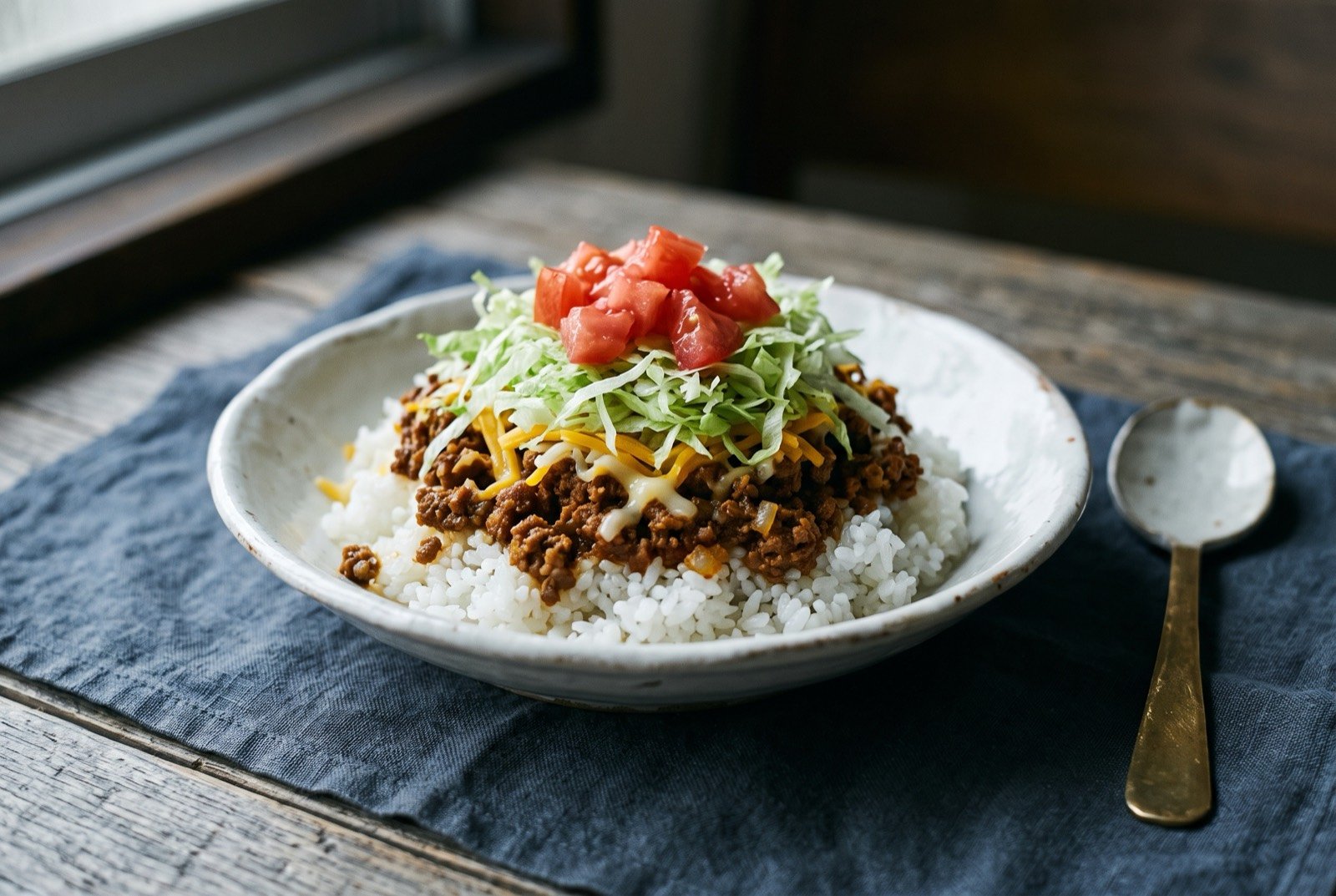
An illustration of the dish, not a photograph of it cooked.
- Time
- 30 minutes
- Reviewed
- Not yet reviewed from inside the tradition
- Cooked
- Not yet cooked and reported
Taco rice's popular founding story credits Gibo Shōzō's Parlor Senri, opened outside Camp Hansen's gate in 1984, but this chapter states the fuller picture directly: Okinawa Times reporting has confirmed, through direct testimony from the New York Restaurant's own second-generation owner, that a version without cheese or fresh vegetables was already being served as a staff meal in 1960s Koza, most likely one of several independent inventions at base-adjacent kitchens during the era's steakhouse boom, rather than a single 1984 breakthrough. This chapter names 1984 as the dish's commercial birthplace and popular myth, and the 1960s precedent as its real, better-documented root.
As tradition built it
Serves 4. About 30 minutes.
Ingredients
- 500 g minced beef
- 1 onion, finely diced
- 2 cloves garlic, minced
- 2 tsp chilli powder
- 1 tsp ground cumin
- 1 tsp smoked paprika
- to taste salt
- 4 portions cooked short-grain rice
- 100 g cheddar or a similar melting cheese, grated
- as available lettuce, shredded
- 2 tomatoes, diced
- to serve hot sauce, to serve
Method
- Fry the onion and garlic in a little oil until softened, add the minced beef, and cook over high heat, breaking it up, until well browned.
- Stir in the chilli powder, cumin, paprika and salt, and cook a further 2 to 3 minutes until fragrant.
- Divide the rice between bowls, top with the seasoned mince while still hot enough to soften the cheese, scatter over the cheese, then pile the lettuce and tomato on top.
- Serve with hot sauce alongside, to be added at the table.
What a modern chef changes
Agu or Mangalitsa mince seared hard, with a baked masa harina disc served as garnish
Four named variables
Method
- The beef is a coarse-ground blend of agu or Mangalitsa mince (see sourcing), seared hard in a very hot pan rather than simply fried through, giving a deeper, more textured crust than the tradition recipe's uniform browning, honouring the fattier, more distinctive pork this chapter recommends as agu's honest substitute even in a beef-based dish's spirit, if the reader wants to push the recipe further from its base ingredients.
- A quick fresh salsa, tomato, coriander and a little lime, is built in the high-power blender and used in place of plain diced tomato, adding brightness the raw diced version alone does not carry.
- A thin, crisp tortilla-style disc, made from masa harina and baked hard on a Big Green Egg pizza stone, is served alongside as a crumbled garnish rather than as the dish's base, a deliberate nod to Katsuta Masanobu's own criticism, quoted above, that taco rice skips the tortilla-making skill; this elevation does not disagree with him, it simply gives the reader a way to include that skill without changing the dish's own defining structure of meat over rice.
- The cheese is briefly melted under a very hot broiler or the Big Green Egg's direct heat just before serving, rather than left to soften passively from the rice's own heat, giving a genuine light char in places rather than an evenly melted layer.