Persia and the Caucasus · Volume 12, The South Caucasus and the Disputed Table
Basturma
Armenia
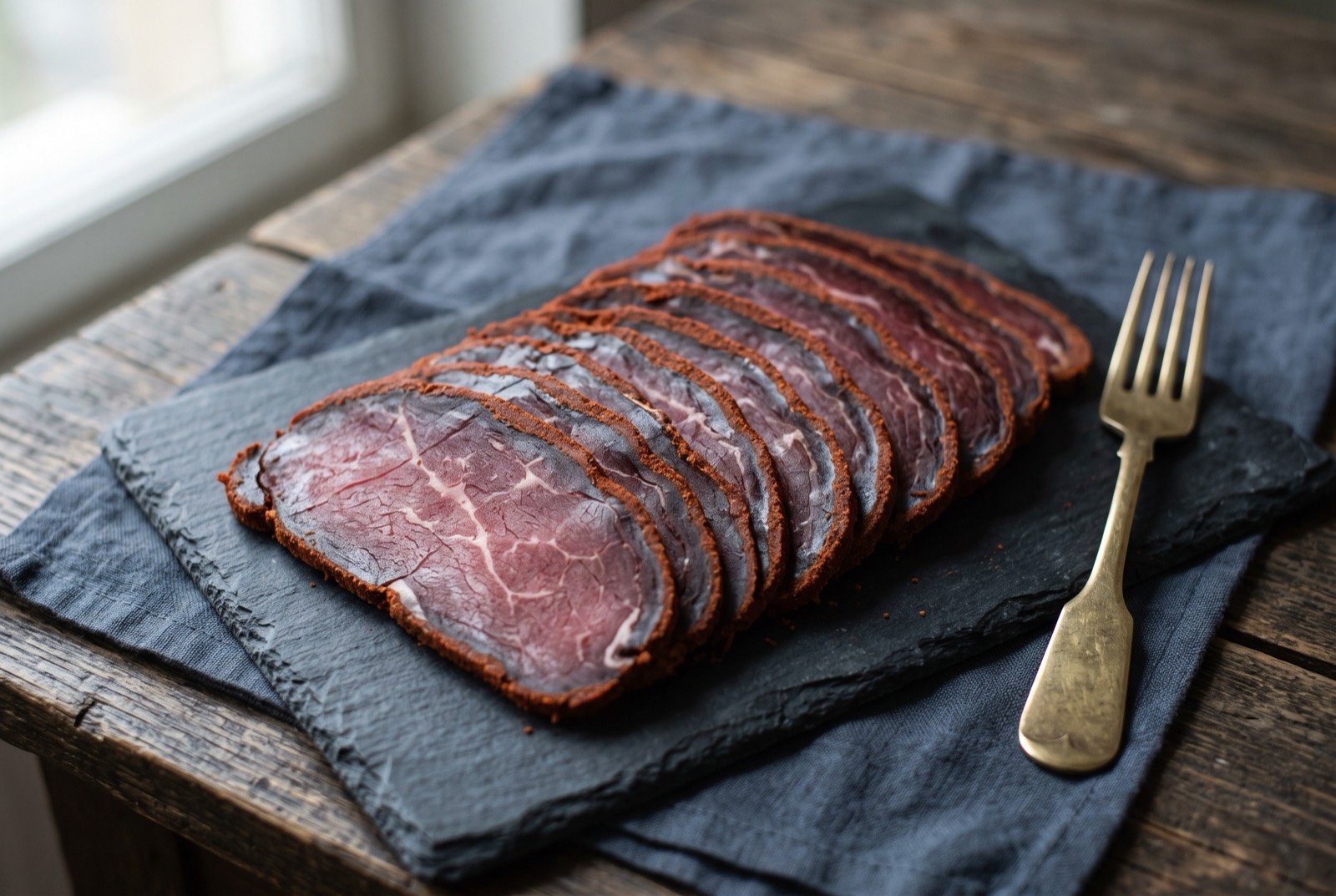
An illustration of the dish, not a photograph of it cooked.
- Time
- Not statedNo source states a time and the atlas has too few comparable dishes to estimate one.
- Researched
- 8 sources cited
- Reviewed
- Not yet reviewed from inside the tradition
- Cooked
- Not yet cooked and reported
See The Disputed Table above for the fuller history: a technique with deep Armenian textual attestation carrying a name that later Turkified, not a straightforward ownership dispute.
As tradition built it
Makes about 1 kg. Roughly a week to ten days, mostly curing time.
Ingredients
- 1 kg whole-muscle beef, such as eye of round
- about ½ cup salt, generous
- 4 tbsp fenugreek, ground
- 2 tbsp sweet or smoked paprika
- 3 cloves garlic, crushed
- 1 tsp cumin
- ½ tsp cayenne
- 1½ tsp black pepper
- 1 cup cold water
Method
- Cover the beef entirely in salt and cure in a cool space for 2 days.
- Rinse, wrap in cloth, and press under weight for a further 2 days.
- Hang to air-dry, 2 days to a week, depending on climate and the piece's size.
- Combine the ground fenugreek, paprika, garlic, cumin, cayenne and black pepper, thinning gradually with cold water to a thick, pancake-batter consistency.
- Spread the chaman paste in an even layer, roughly 1/8 inch thick, over the entire dried, pressed meat.
- Re-hang a further 2 to 3 days, or 3 to 5 days refrigerated, until the coat is firm and dry to the touch, then slice paper-thin.
Notes
The total drying time to reach finished basturma texture, beyond this initial sequence, is not clearly stated in any source consulted for this chapter and is very likely longer in practice for the wider basturma family; this chapter does not invent a figure.
What a modern chef changes
The reader's own dehydrator and spice grinder used exactly as intended.
Rung 3
Method
- Grind the fenugreek fresh in a dedicated spice grinder, rather than buying it pre-ground, which loses aromatic intensity within months; this is the single highest-leverage move available for this dish.
- Use a dehydrator at a controlled low temperature and humidity for the drying stages rather than open-air hanging, safer and more consistent in a British kitchen, and mechanically the same process.
- Mix the chaman paste in a blender for the same smooth, thick consistency the traditional hand-mixed paste aims for.