Persia and the Caucasus · Volume 12, The South Caucasus and the Disputed Table
Harisa
Armenia
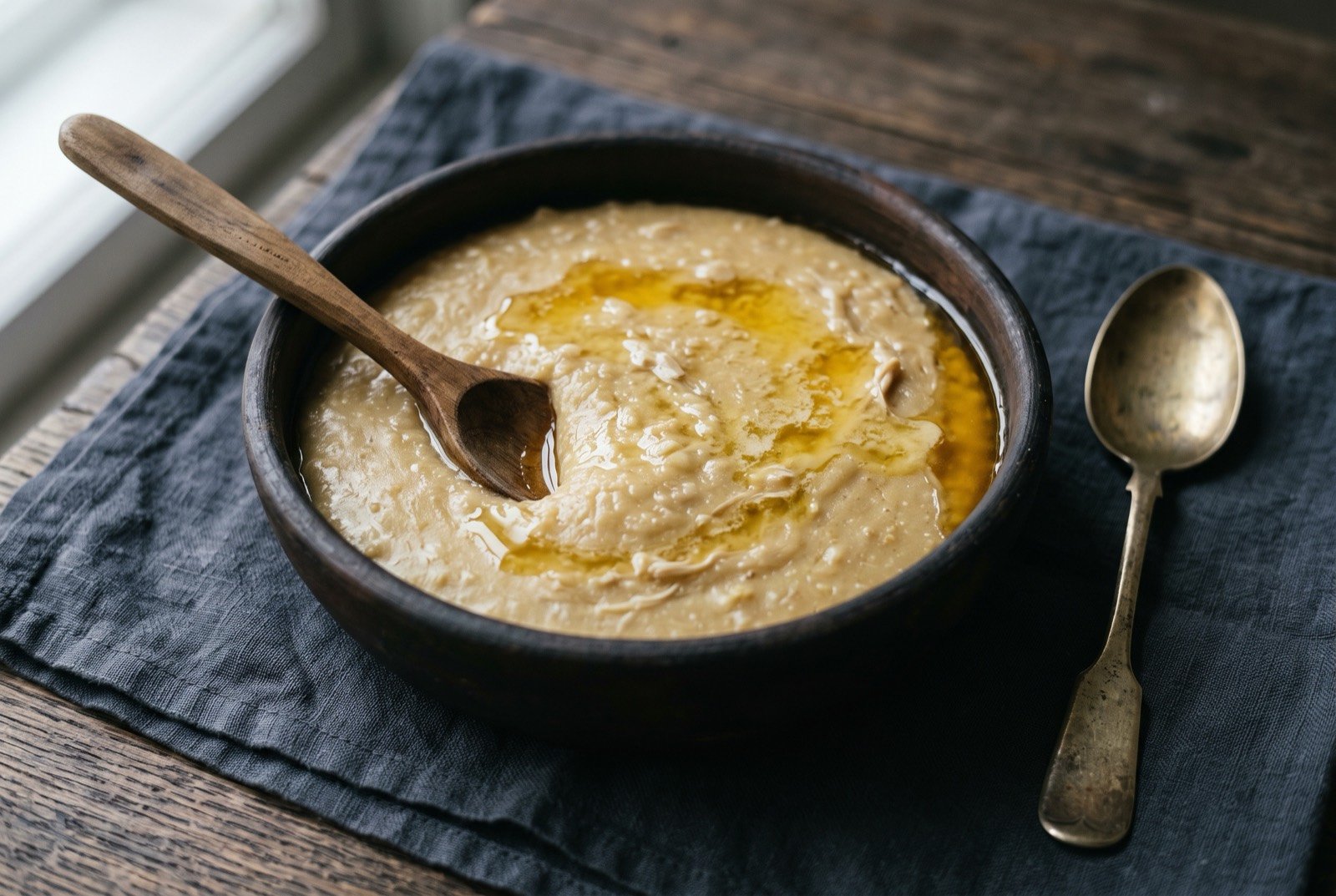
An illustration of the dish, not a photograph of it cooked.
- Time
- 3 hours
- Researched
- 8 sources cited
- Reviewed
- Not yet reviewed from inside the tradition
- Cooked
- Not yet cooked and reported
This dish has no relation whatsoever to North African harissa chilli paste beyond a coincidental shared name. Harisa is a porridge of hulled or cracked wheat cooked a very long time, traditionally overnight in a tonir over dying coals, with fatty meat, usually chicken or lamb, stirred continuously with a wooden implement until the wheat and meat break down into a single homogeneous, glutinous mass, served with melted butter poured over. Considered by several sources effectively a national dish, traditionally served at Easter.
As tradition built it
Serves 8. Several hours, traditionally overnight.
Ingredients
- 500 g hulled or cracked wheat
- 1 whole chicken, or a similar weight of fatty lamb
- to cover water, generous
- to taste salt
- a generous pour melted butter, to finish
Method
- Cover the wheat with water and soak several hours or overnight.
- Combine the soaked wheat with the whole chicken, or lamb, and enough fresh water to cover generously.
- Bring to a simmer and cook a very long time, traditionally overnight, stirring often, until the meat falls apart completely and the wheat breaks down into the liquid.
- Once the meat is fully tender, remove any bones, then beat the whole pot continuously with a wooden implement until wheat and meat form one smooth, glutinous mass.
- Salt to taste and serve with a generous pour of melted butter over the top.
Notes
No precise wheat-to-water-to-meat ratio or exact cooking time in hours was found with confidence in the sourcing behind this chapter; the method above is real and consistently described, but the figures are not tested quantities, and this chapter does not invent them.
What a modern chef changes
The meat's fall-apart tenderness taken as a target, not a side effect of an overnight fire.
Rung 5
Method
- Cook the meat separately first, low and slow, in the same spirit as khash's extended simmer, until it is fully tender and can be shredded by hand, before combining with the wheat.
- Cook the wheat separately to a soft, slightly broken texture, then combine the two and finish together on gentle heat, beating continuously, rather than running the whole pot for many hours at once.
- Finish with butter added off the heat, generously, the dish's real richness, rather than cooked in from the start.