Persia and the Caucasus · Volume 12, The South Caucasus and the Disputed Table
Qutab
Azerbaijan
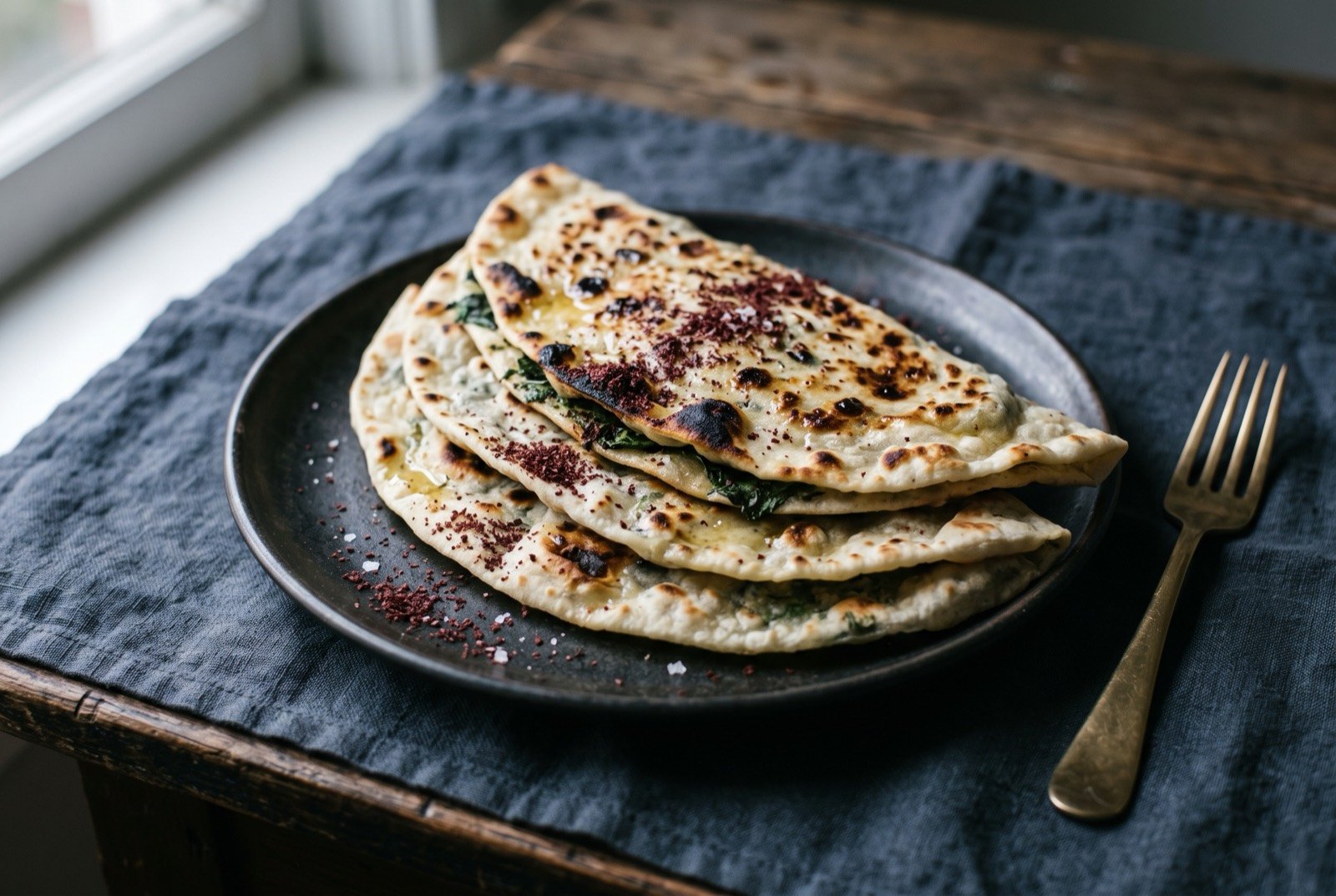
An illustration of the dish, not a photograph of it cooked.
- Time
- 30 minutes
- Researched
- 8 sources cited
- Reviewed
- Not yet reviewed from inside the tradition
- Cooked
- Not yet cooked and reported
A thin, herb-filled flatbread cooked dry on a hot griddle, one of the more approachable dishes in this chapter.
As tradition built it
Serves 4. About 30 minutes.
Ingredients
- 300 g flour
- enough to bind a soft dough water, for the dough
- 1 tsp oil, for the dough
- a pinch salt, for the dough
- a large handful spinach, finely chopped
- a large handful parsley, finely chopped
- a large handful coriander, finely chopped
- a large handful spring onion, finely chopped
- a large handful dill, finely chopped
- to taste sumac
- to taste salt
- a small knob, melted butter, to finish
Method
- Make a smooth, thin dough from the flour, water, oil and salt.
- Roll each portion out very thin.
- Spread the finely chopped spinach, parsley, coriander, spring onion and dill, seasoned with sumac and salt, over one half.
- Fold into a half-moon and pinch the edges shut.
- Cook on a dry, ungreased hot griddle, 1 to 2 minutes a side, until blistered and golden.
- Brush with melted butter and scatter with sumac the moment it comes off the heat.
What a modern chef changes
The dry, convex heat contact treated as the whole point.
Rung 8
Method
- Run a cast-iron or carbon-steel pan properly hot before the qutab goes on, and keep it completely dry throughout the cook; oil in the pan is the single most common way to lose the dish's specific texture.
- If a flat plancha attachment for the Big Green Egg is available, use it dry and hot for the closest domestic equivalent to a saj's convex surface.
- Butter and sumac go on only after the qutab is off the heat, never during cooking, so the butter stays a fresh finishing note rather than frying into the dough.