The Levant and Anatolia · Volume 05, The Kibbutz, the Camp and the Contested Table
Falafel
Tel Aviv
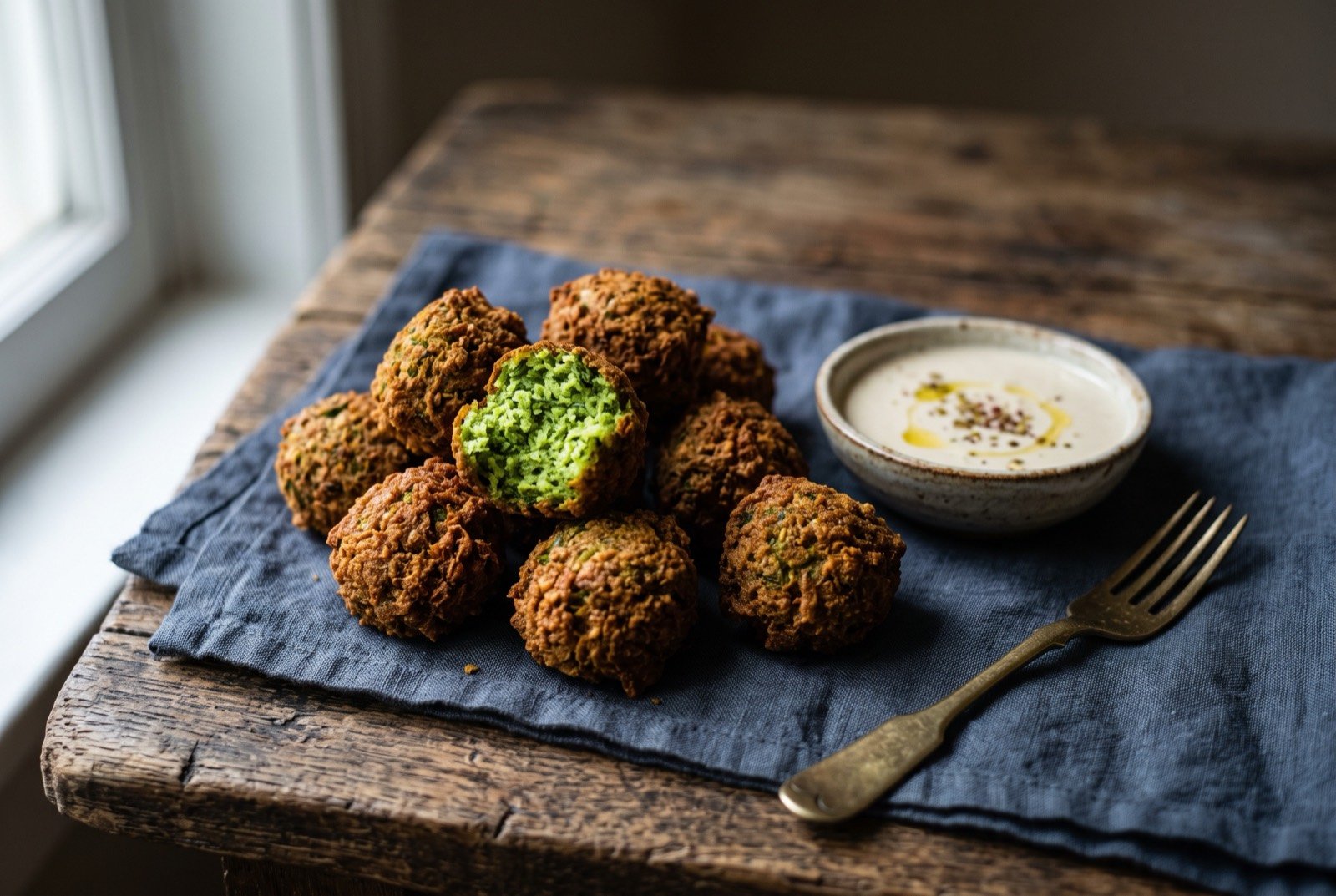
An illustration of the dish, not a photograph of it cooked.
- Time
- Hands on 30 minutes · Waiting 8 hours
- Researched
- No outside sources linked
- Reviewed
- Not yet reviewed from inside the tradition
- Cooked
- Not yet cooked and reported
Falafel was documented as a popular Tel Aviv street food by the late 1930s, meaning it predates 1948 statehood by a decade, a fact worth holding onto against any framing of it as a post-independence invention either way. Its deeper origin is genuinely disputed between Egyptian ta'ameya and the Levantine falafel eaten here, and this chapter cross-refers rather than adjudicates: the fava-bean ta'ameya of Egypt's Nile Delta is a documented and separately old dish in its own right, treated fully in this atlas's African volume on Egypt, where the Cairo cook Chez Nermine's version, split peeled fava beans, an enormous herb load of parsley, coriander and dill, and two leeks, is given the full tradition-and-elevation treatment. Israeli and wider Levantine falafel is made from chickpeas rather than fava, a genuinely different bean with a genuinely different starch behaviour, and this chapter does not claim one descends from the other. What is not in dispute is that falafel is now claimed, used and eaten across the whole region, and its ownership is one half of the debate this chapter takes seriously below, alongside hummus.
As tradition built it
Makes about 20. 30 minutes, plus an overnight soak.
Ingredients
- 500g dried chickpeas, soaked overnight, never cooked
- 1 onion, roughly chopped
- 4 garlic cloves
- 1 large bunch parsley
- 1 large bunch coriander
- 2 tsp ground cumin
- 1 tsp ground coriander
- ½ tsp baking powder
- 1 tsp salt, ¼ tsp black pepper salt, black pepper
- 1 litre oil, for deep-frying
Method
- Drain the soaked chickpeas thoroughly; do not cook them.
- Process with the onion, garlic, parsley and coriander to a coarse, not smooth, paste, stopping while it still has texture.
- Stir in the ground cumin, ground coriander, baking powder, salt and pepper by hand.
- Rest the mixture 30 minutes in the fridge.
- Heat oil to 177 to 190°C, checked with a probe. Scoop and drop the mixture without compacting it, fry 3 to 4 minutes until deeply golden, and do not overcrowd the pan, which drops the oil temperature and produces the soggy, oil-heavy result the dish is most often let down by.
What a modern chef changes
Protecting the chickpea's starch state, not adding flourish
Rung 4, with tehina built to Rung 3's aerated emulsion standard alongside it
Method
- The failure mode in almost every bad falafel is a starch-state error, not a seasoning one, so the elevation is about protecting what the tradition recipe already gets right rather than adding flourish.
- Grind the chickpeas in short pulses in a high-power blender rather than a food processor, watching the texture rather than a timer, since overworking releases too much starch and produces a gummy rather than airy crumb.
- Fry to order in small batches with a genuine deep-fry thermometer held in the oil throughout, not checked once at the start, since oil temperature drifts fast once food goes in.
- Serve with a small dish of tehina built as an aerated emulsion (Technique Ladder, rung 3) rather than a thin bottled sauce, and a quick-pickled cabbage, sharp with vinegar and a little sumac, which cuts the richness the way amba does for sabich.