North Africa · Volume 13, The Oldest Kitchen
Ta'ameya
Cairo, for breakfast
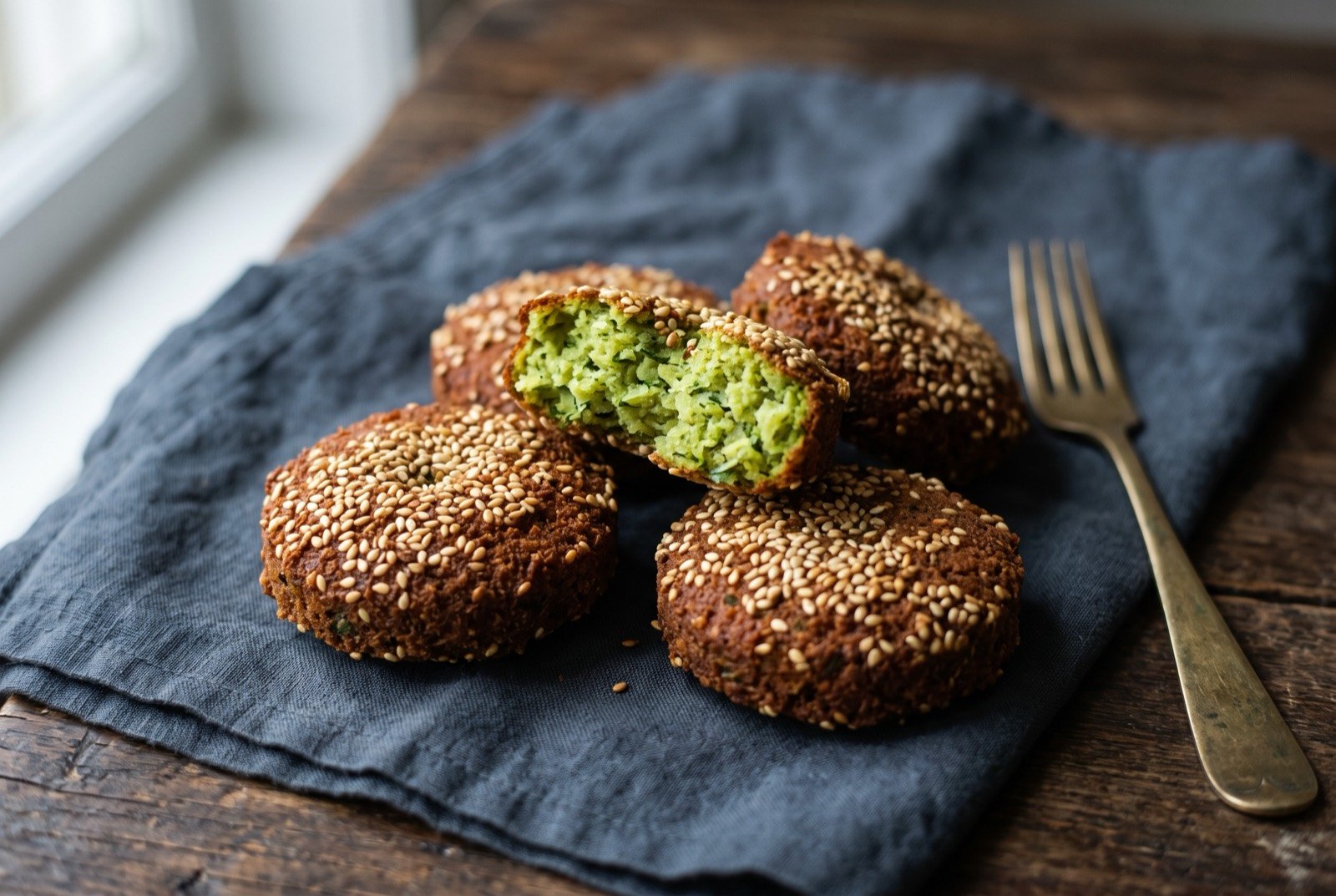
An illustration of the dish, not a photograph of it cooked.
- Time
- Hands on 30 minutes · Waiting 8 hours
- Reviewed
- Not yet reviewed from inside the tradition
- Cooked
- Not yet cooked and reported
Two things separate ta'ameya from Levantine falafel and neither is optional. The bean is split, peeled fava, never chickpea. And the herb load is enormous, 2 to 3 cups of mixed parsley, coriander and dill per 500 g of dry bean, plus two leeks. The target colour is stated precisely by Egyptian cooks as a vivid green, with a pistachio shade, and if the interior is beige the herb load was wrong.
As tradition built it
Makes about 20. 30 minutes, plus an overnight soak.
Ingredients
- 500 g split peeled dried fava beans
- 2 leeks, white and green, chopped
- 2 to 3 cups parsley, coriander and dill leaves only, no stems
- 4 to 5 spring onions
- 5 garlic cloves
- 2 tbsp ground cumin
- 2 tsp ground coriander
- 1.5 tsp sweet paprika
- 1 tsp baking powder, optional
- 2 to 3 tbsp sesame seeds, and oil for deep frying
Method
- Soak the split peeled dried fava beans overnight in cold water until a bean crushes between finger and thumb. Drain and rinse in a fine sieve. Do not cook them.
- Grind the beans with the leeks, spring onions, garlic cloves, parsley, coriander and dill.
- Add the ground cumin, ground coriander, sweet paprika and, if using, the baking powder, then beat in a stand mixer on medium for 3 to 5 minutes. This is aeration, not mixing, and it is the step that makes the dish.
- Form into patties about 1.5 cm thick, not spheres, and coat the outside in sesame seeds.
- Fry at 175°C until puffed and golden throughout. Serve in aish baladi with salad, torshi and tahini, alongside ful.
Notes
After Chez Nermine.
What a modern chef changes
A probe in the oil, a coarser grind, and a hand that does not squeeze
Rungs 4 and 6
Method
- Put a probe in the fryer and stay between 163 and 177°C. That is a fifteen degree window, and eyeballing it is how most home versions fail. Above it, a set crust over a raw core and bitter over browning. Below it, the patty drinks oil and becomes, in ThermoWorks' good phrase, a grease ball.
- Grind coarse and stop early. The instinct is to take the paste smooth. Resist it: the irregularity in the grind produces the shattering crust, and a smooth paste fries to a uniform, slightly rubbery shell.
- Do not compact. Rung 6, and the commonest failure after the bean itself. A falafel scoop, the aleb ta'ameya, exists to deposit an uncompacted patty. Hands pressing a ball together undo the three minutes of whipping you just did.
- If you use bicarbonate, know what it is for. It aerates, and it raises pH so browning runs faster, which lets you colour the outside at a temperature low enough for the raw interior to cook through.