North Africa · Volume 13, The Oldest Kitchen
Roz meammar
Daqahliya and the rural Delta
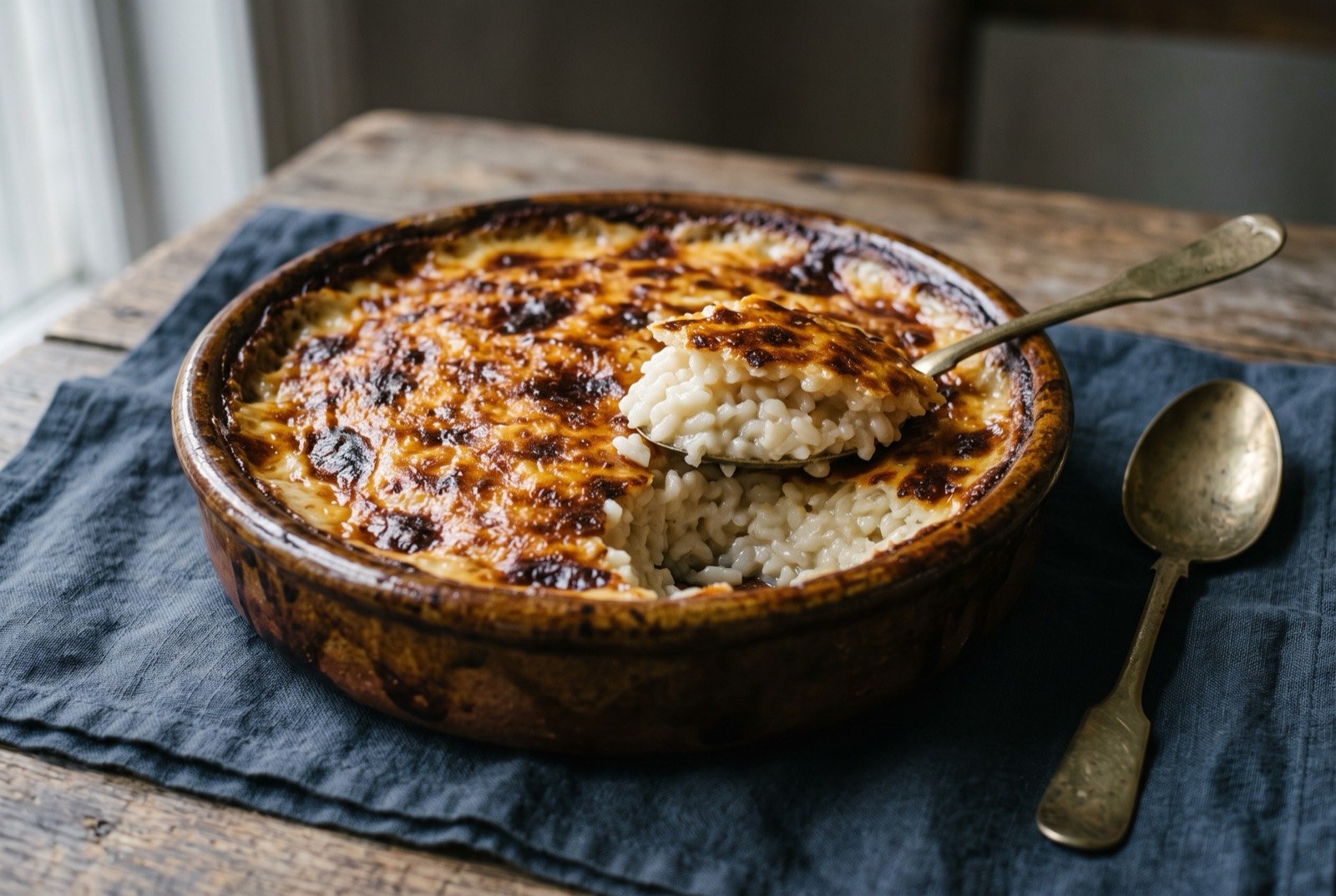
An illustration of the dish, not a photograph of it cooked.
- Time
- 45 minutes
- Reviewed
- Not yet reviewed from inside the tradition
- Cooked
- Not yet cooked and reported
Muammar means generous, wealthy, abundant. This is a savoury dish, served with roast meat or chicken as part of the main course, and every English language source that calls it a baked rice pudding is wrong. It comes from villages with their own buffalo and cattle, which is why it exists: a dish for people with more dairy than money.
As tradition built it
Serves 6. About 45 minutes.
Ingredients
An outline, not yet a recipe: the tradition's method with its ingredients named but not weighed. Quantities are being added from sources inside the tradition, lead dishes first.
- 2 cups Egyptian short grain rice
- 240 ml full cream milk
- 240 ml water
- 250 g fresh cream, eshta
- 1 tbsp salt
- samna baladi, optional
Method
- Blend the Egyptian short grain rice with the salt, then add the cold full cream milk and water.
- Put the fresh cream on top, unblended. Do not stir it in. It forms an insulating fat cap: under it the rice steams in milk, and above it the exposed cream proteins and lactose brown into the crust that defines the dish. Stir it in and you have made rice pudding.
- Bake uncovered at 200°C.
- Once the liquid has absorbed and the crust has browned, drop the heat and cover until done. About 45 minutes in total. Finish with samna baladi if using.
Notes
After Ahram Online.
The vessel is a beram, a wide shallow glazed clay dish, and traditionally it went to a communal clay oven fired with wood and straw. That straw smoke is a real flavour component and the main reason a home oven version tastes different rather than merely worse.
What a modern chef changes
The fat cap protected, smoke restored honestly, and savour under a soft dish
Rungs 6 and 1
Method
- Use the widest shallow dish you own and do not disturb the surface. Rung 6. The technique is a two zone bake separated by a layer of fat, and depth is the enemy: a deep dish gives a large steamed volume under a small crust. A shallow earthenware tagen is ideal, a wide cast iron dish is fine, a loaf tin is hopeless.
- Restore the smoke properly. Liquid smoke is not the answer. Two honest routes: run the dish on a Big Green Egg at 200°C with a small handful of untreated wheat straw or oak on the coals for the first fifteen minutes, before the cream sets; or put the smoke on the protein instead, which is what Khufu's does with its mu'ammar rice and smoked beef. A phenolic top note over a dish that is otherwise all lactone and starch stops something rich and soft reading as monotone.
- Make the milk work harder. Rung 1. Buffalo milk is what this is built on; where you cannot get it, replace a quarter of the water with a reduced light chicken stock. That sounds wrong for a dairy dish and is not, because the dish is savoury and currently gets all its savour from salt.
- Cover late, not early. Covering before the crust browns steams it off, and the crust is the dish.
Notes
Part Four