North Africa · Volume 13, The Oldest Kitchen
Kebda Iskandarani
Alexandria
Illustration
- Time
- Hands on 20 minutes · Waiting 8 hours
- Researched
- Researched from 135 sources in the brief
The most precisely specified dish in this volume, and every step has a reason. The milk soak draws out blood and the metallic amine notes. The vinegar lowers surface pH, which firms the protein and inhibits the greyish oxidation that makes badly cooked liver taste of iron. Batch cooking in a lot of very hot oil keeps the pan temperature high, so the strips sear rather than steam and weep. Seven minutes is a hard ceiling, and past it the liver goes granular and chalky.
As tradition built it
Serves 4. 20 minutes, plus an overnight soak and a 2 to 6 hour marinade.
Ingredients
- 700 g beef or veal liver
- 120 ml full fat milk, for the soak
- 30 to 60 g garlic, minced
- 1 tbsp ground coriander
- 1.5 tsp ground cumin
- 1 tsp salt
- 1 tsp black pepper
- 60 ml white distilled vinegar
- 120 ml vegetable oil, for frying
- 2 mild green peppers, julienned
- to taste lime juice
Method
- Freeze the beef or veal liver for 1 to 2 hours, then slice it into thin strips with a sharp knife. Partial freezing is the only way to get strips this thin.
- Soak the strips in the full fat milk overnight, refrigerated. Drain.
- Mix the marinade of garlic, ground coriander, ground cumin, salt and black pepper and white distilled vinegar, and reserve 1 tablespoon of it separately. Marinate the liver 2 to 6 hours.
- Get the vegetable oil very hot in a large skillet, and add the reserved tablespoon of marinade first, until fragrant.
- Cook the liver in batches. Leave it untouched for 2 minutes, then stir. It takes no more than 7 minutes to cook the liver through.
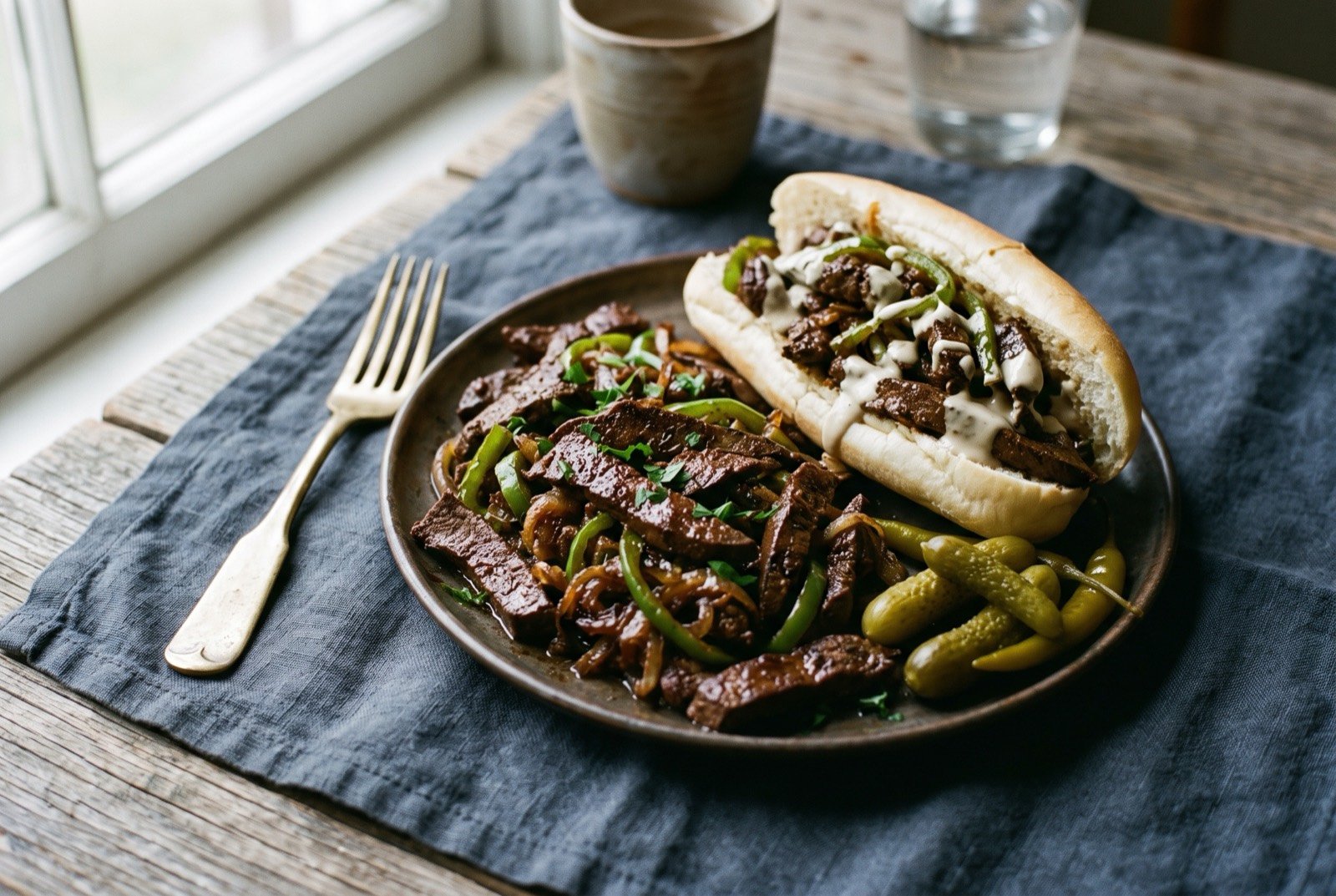
- Add the mild green peppers, finish with lime juice, and get it off the heat immediately. Serve piled hot into feeno, the soft Alexandrian roll whose name is the Italian fino, with tahini and pickles. Abu Gharib, established 1936, is the canonical house.
Notes
After Chez Nermine.
What a modern chef changes
A hotter, emptier pan, the marinade split three ways, and the acid finished cold
Rungs 5 and 3
Method
- Cook in smaller batches than you think you need, in a pan you have overheated on purpose. The whole dish is a pan temperature problem: liver dumped in at volume drops the oil below searing, and from that moment you are boiling it in its own liquor. Four batches of 175 g beats two of 350 g every time.
- Split the marinade three ways. Rung 3, and the same idea as bamia's split tasha. One part marinates, one part goes into the hot oil first to perfume the fat, and a third stays raw and cold to stir through off the heat at the end, so the garlic and coriander arrive twice, once mellow and once sharp.
- The lime goes on after the pan is off. Rung 5. Acid on a screaming pan flashes to steam and takes its aromatics with it.
- Rest the strips for ninety seconds before they go into the bread. Liver carries over hard because it is thin and dense. Take it off a shade before you want it.