North Africa · Volume 13, The Oldest Kitchen
Ful medames
Cairo and the Delta, and half the Arab world after that
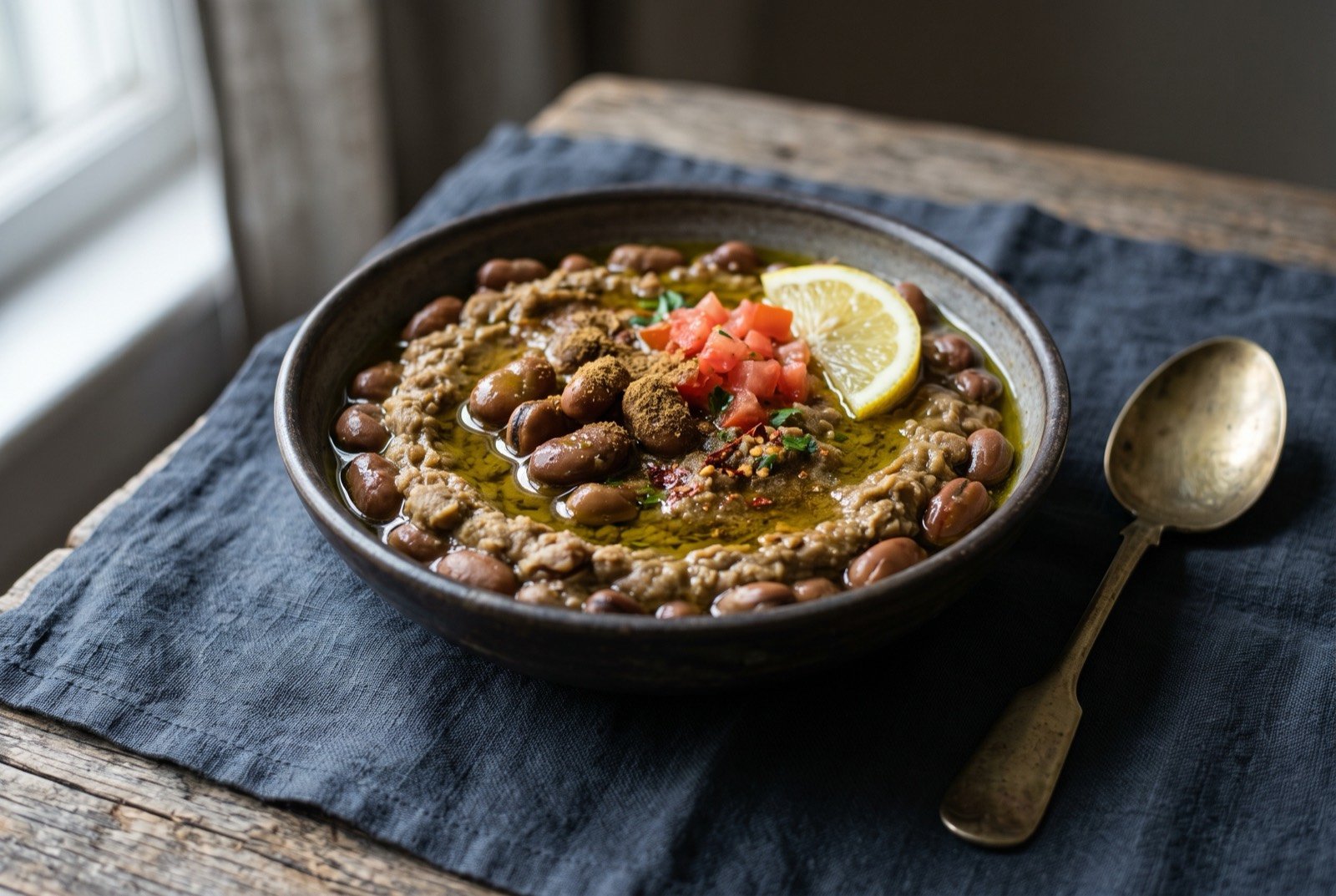
An illustration of the dish, not a photograph of it cooked.
- Time
- Hands on 7 hours · Waiting 8 hours
- Reviewed
- Not yet reviewed from inside the tradition
- Cooked
- Not yet cooked and reported
The vessel is the argument. The Arabic is qidra, in Egyptian usage damasa: bulbous with a narrow neck, which minimises evaporative and convective loss over a long unattended cook, so the pot can sit banked in a bread oven all night without boiling dry, while the wide belly gives a large bean bed relative to the opening. In medieval Cairo it went into the cooling oven of the neighbourhood furn after the night's baking, or into the furnace of a public bathhouse, which is where ful hammam gets its name. Bean cookery and bread baking shared one fire.
As tradition built it
Serves 8 to 10. 6 to 7 hours, plus an overnight soak.
Ingredients
- 1 kg small dried fava beans
- 1 tbsp bicarbonate of soda, for the soak
- 3 tbsp red lentils
- 3 tbsp Egyptian short grain rice
- 1 tbsp ground turmeric
- 1.5 tsp ground coriander
- 1 tbsp ground cumin
- 60 ml olive oil
- 5 garlic cloves
- 1 onion
- 1 tomato
- 1 lemon
Method
- Soak the beans overnight in plenty of cold water with the bicarbonate of soda, then rinse thoroughly.
- Put the small dried fava beans, red lentils, Egyptian short grain rice, ground turmeric, ground coriander and garlic cloves in the pot, cover generously with water, and cook as low as your equipment will go for 5 to 7 hours, checking hourly and topping up. A slow cooker on low is the honest modern damasa.
- Crush some of the beans against the side of the pot with a fork as they soften. Not all of them.
- Serve dressed at the table with olive oil, lemon juice, ground cumin and salt. Those four are the irreducible base of every version of this dish in every country that cooks it, with chopped onion and tomato alongside.
Notes
After Chez Nermine.
What a modern chef changes
A better bean, a settled argument, three textures on purpose, and nothing dressed until it is in front of someone
Rungs 4, 6 and 5
Method
- Get the bean right, and it may well be British. You want small brown fava, not the large flat Mediterranean type, which bursts its skin and goes to mush. Hodmedod's Maris Bead is explicitly sold and cooked as ful hammam, with a published method of a 5 to 6 hour soak in salted water, then 30 to 40 minutes in an open pan or 20 minutes under pressure. It works because the bean is fresh: old pulses will not soften however long you cook them, because their pectin cross links with age.
- Know that the soak is contested, and test it in your own water. Nermine soaks overnight with bicarbonate. Amira says overnight cold soaking makes the skin harder to soften, soaks two hours at most, and adds alkali mid cook. Both are Egyptian cooks and they flatly disagree, and water hardness may explain the whole thing. Cook two small pots side by side once and you will know.
- Crush deliberately, and keep the lentils and rice. Rung 6. A third of the beans crushed at the two thirds point, the rest whole, and the lentil and rice starch building a sauce that clings. Skip it and you have beans in water.
- Never hold it hot, and dress nothing until the bowl is on the table. Above 70°C the beans keep hydrolysing, grey and go pasty, and the three textures collapse into one. Lemon in the pot is lemon that has boiled off, which is Rung 5 at its simplest.