North Africa · Volume 13, The Oldest Kitchen
Bamia
Delta and Cairo
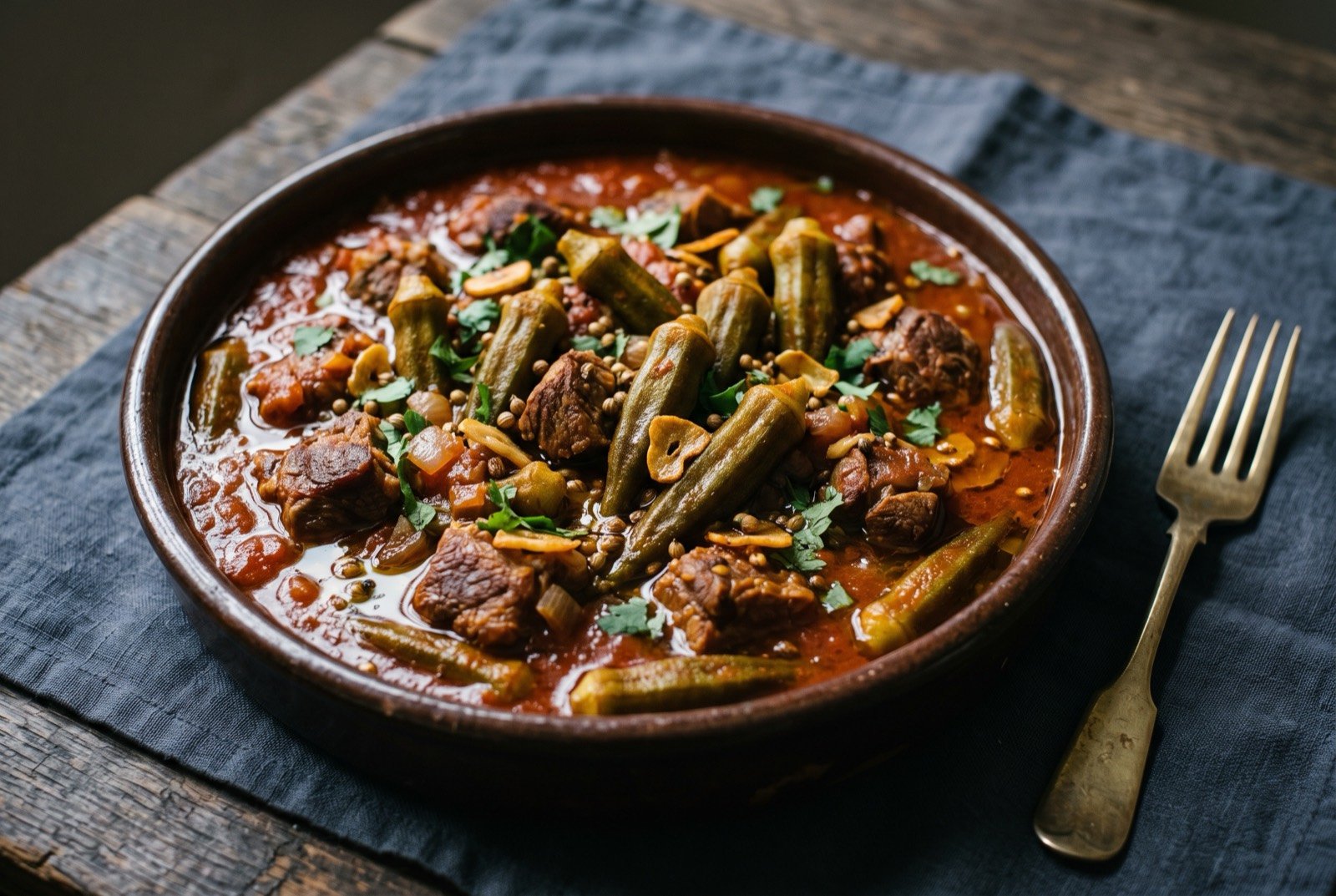
An illustration of the dish, not a photograph of it cooked.
- Time
- 1 hour
- Reviewed
- Not yet reviewed from inside the tradition
- Cooked
- Not yet cooked and reported
Okra draws exactly as jute mallow does, and Egypt's response is the opposite of West Africa's. Volume Four beats okra to maximise the draw; Egypt spends most of its effort suppressing it, and Egyptian cooks in the diaspora are candid that frozen baby okra is preferred precisely because it is less slimy than fresh. The rule for fresh okra is rarely followed: do not wash it until the moment of use, and cut it into larger chunks, because water on cut okra is what releases the mucilage.
As tradition built it
Serves 4. About 1 hour.
Ingredients
- 400 g frozen baby okra
- 450 g lamb or beef, cut for stewing
- 2 pieces mastic, cinnamon and 2 cardamom pods, for the meat
- 4 tbsp tomato paste
- 425 g tinned tomato sauce or passata
- 4 garlic cloves, minced
- 1 tsp ground coriander
- to taste fresh coriander leaf
- 3 tbsp olive oil
- to taste red chilli, if you want it
Method
- Boil the lamb or beef and skim it properly, then cook it on with the mastic, cinnamon and cardamom until tender. Grind the mastic with a little salt or sugar first or it will clump.
- Make the tasha: garlic cloves, ground coriander and fresh coriander leaf in olive oil, taken to golden and no further. Stir half of it into the pot and reserve the other half.
- Add the tomato paste and the tinned tomato sauce or passata, then the frozen baby okra, and simmer 20 minutes. Keep the heat low and stir a couple of times. Okra sticks and burns easily, and burnt okra ruins the pot.
- Add the cooked meat and simmer 10 minutes more.
- Make the reserved tasha fresh and spoon it over the individual bowls at the table.
Notes
After Amira's Pantry.
What a modern chef changes
The split tasha taken seriously, mucilage as a dial, and the finish moved to the oven
Rungs 2, 3 and 5
Method
- The split tasha is the transferable idea in this dish. Rung 3. Half cooked in gives the mellow polysulphides and the roasted depth; half fried fresh at the pass gives the volatile top note that twenty minutes of simmering has removed. Apply it to every tempered dish you cook.
- Decide how much draw you want and cook to that. Rung 2. Thick and slippery: cut the okra large, do not wash it, cook it briefly. Clean and firm: thaw it dry on paper and get it into the acidic tomato base quickly, because acid and heat both degrade the mucilage network. Egypt uses that degradation on purpose. Volume Four spent a whole rung avoiding it.
- Use stock, not water, for the meat stage. The tomato is carrying colour and acid, not savour, and if the meat liquor is thin the pot tastes of tinned tomato.
- Finish uncovered in a tagen at 200°C for twenty minutes. The Egyptian tagen is a round, straight sided, lidless glazed earthenware dish, nothing like a Moroccan tagine. It browns the surface while the base stays gentle, which is the texture difference between a home bamia and a good one.