The Mediterranean · Volume 03, The Aegean and the Contested Table
Flaounes and Pilavuna
Cyprus
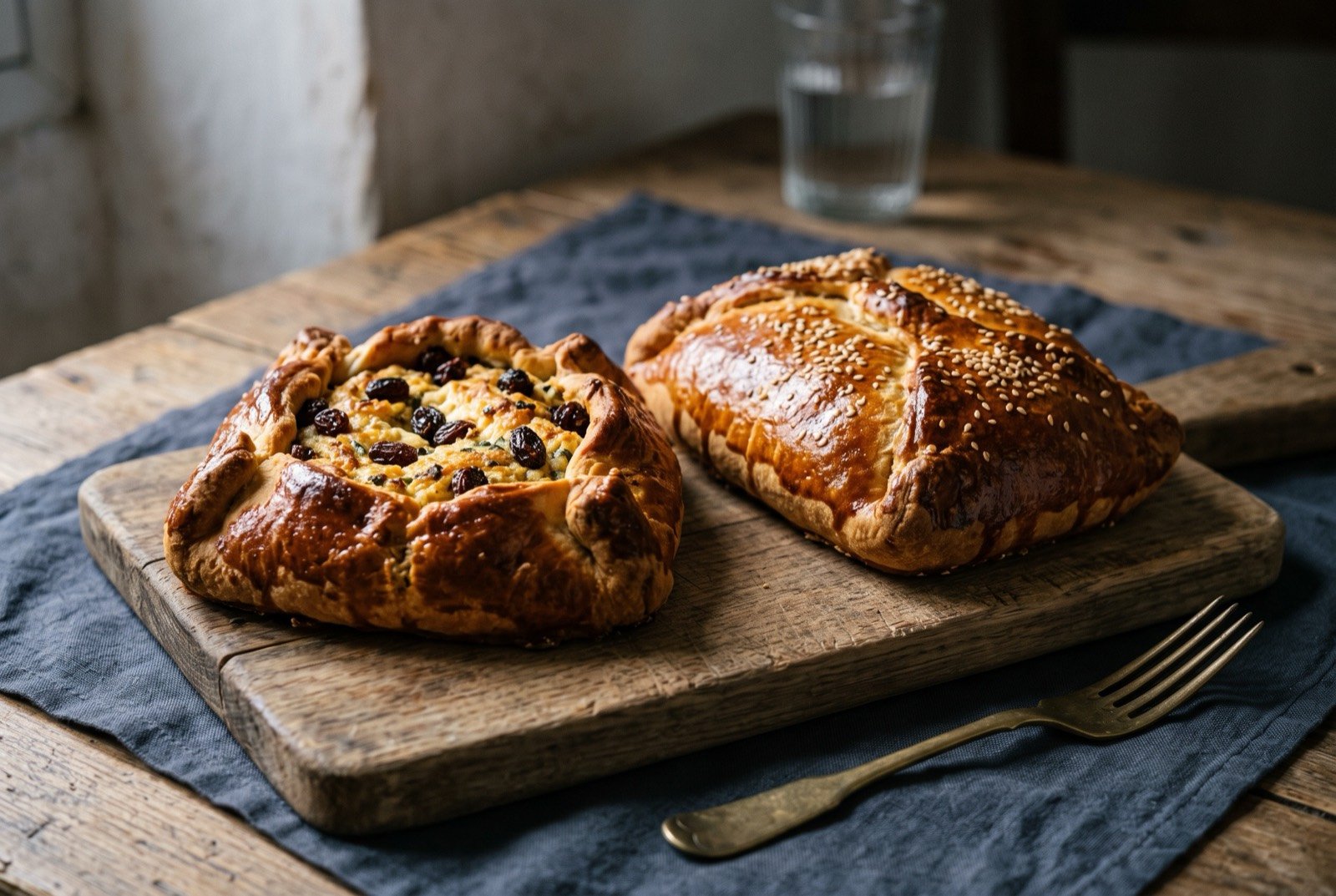
An illustration of the dish, not a photograph of it cooked.
- Time
- 3 hours
- Researched
- 11 sources cited
- Reviewed
- Not yet reviewed from inside the tradition
- Cooked
- Not yet cooked and reported
Greek Cypriot flaouna: a yeasted pastry filled with a blend of cheeses, specifically Paphos-region cheese, raisins and dried mint, aromatised with mahlep and mastic, made specifically on Holy Thursday for Orthodox Easter, taken to church to be blessed and eaten after the Resurrection service. Some Greek Cypriot sources believe it a Christian continuation of an older, pre-Christian sweet; this chapter treats that as popular or traditional belief, not archaeologically verified lineage. Turkish Cypriot pilavuna: despite the name resembling "pilav," contains no rice. A savoury pastry filled with unsalted hellim and lor, a fresh curd cheese close to Greek anari, plus grated talar cheese folded into beaten egg, with fresh mint, a raising agent and ground cinnamon, made specifically for weddings, circumcision ceremonies and religious holidays and served especially at breakfast and formal festive meals. Sources explicitly state this has been made by both Cypriot Turks and Greeks for centuries.
As tradition built it
Makes about 15. About 3 hours, mostly proving.
Ingredients
An outline, not yet a recipe: the tradition's method with its ingredients named but not weighed. Quantities are being added from sources inside the tradition, lead dishes first.
- 500 g strong flour
- 10 g fresh yeast
- milk, warm
- 400 g mixed hard cheese, grated
- 100 g raisins
- dried mint, ground mahlep, ground mastic
- 1 egg, beaten, for glazing
- for garnish sesame seeds
Method
- Make a soft, enriched dough with the flour, yeast and warm milk, knead well.
- Prove until doubled, about 1.5 hours.
- Combine the grated cheese, raisins, dried mint, mahlep and mastic.
- Roll out portions of dough, place a mound of filling on each, and fold the edges up to partially enclose it, leaving the filling visible at the centre, the traditional open shape.
- Prove again, about 30 minutes.
- Brush with beaten egg, scatter with sesame seeds.
- Bake around 190°C, 25 to 30 minutes, until deeply golden.
What a modern chef changes
The two traditions kept genuinely distinct, not blended into one compromise pastry
Rung 1
Method
- Do not merge the two fillings into a single "Cypriot cheese pastry." Make the flaouna's sweet, raisin-and-mint filling and the pilavuna's savoury hellim, lor and cinnamon filling as two separate, correctly attributed pastries, honouring the real, well-documented dual tradition rather than flattening it for convenience.
- Give the enriched dough its full proving time, the same fermentation discipline Rung 1 applies elsewhere in this chapter, for a properly open, tender crumb rather than a dense one.
- Source mahlep and mastic properly, ground fresh in a dedicated spice grinder where whole mahlep kernels can be found, since both are genuinely load-bearing aromatics in the flaouna specifically, not optional extras.