The Mediterranean · Volume 03, The Aegean and the Contested Table
Moussaka
Greece
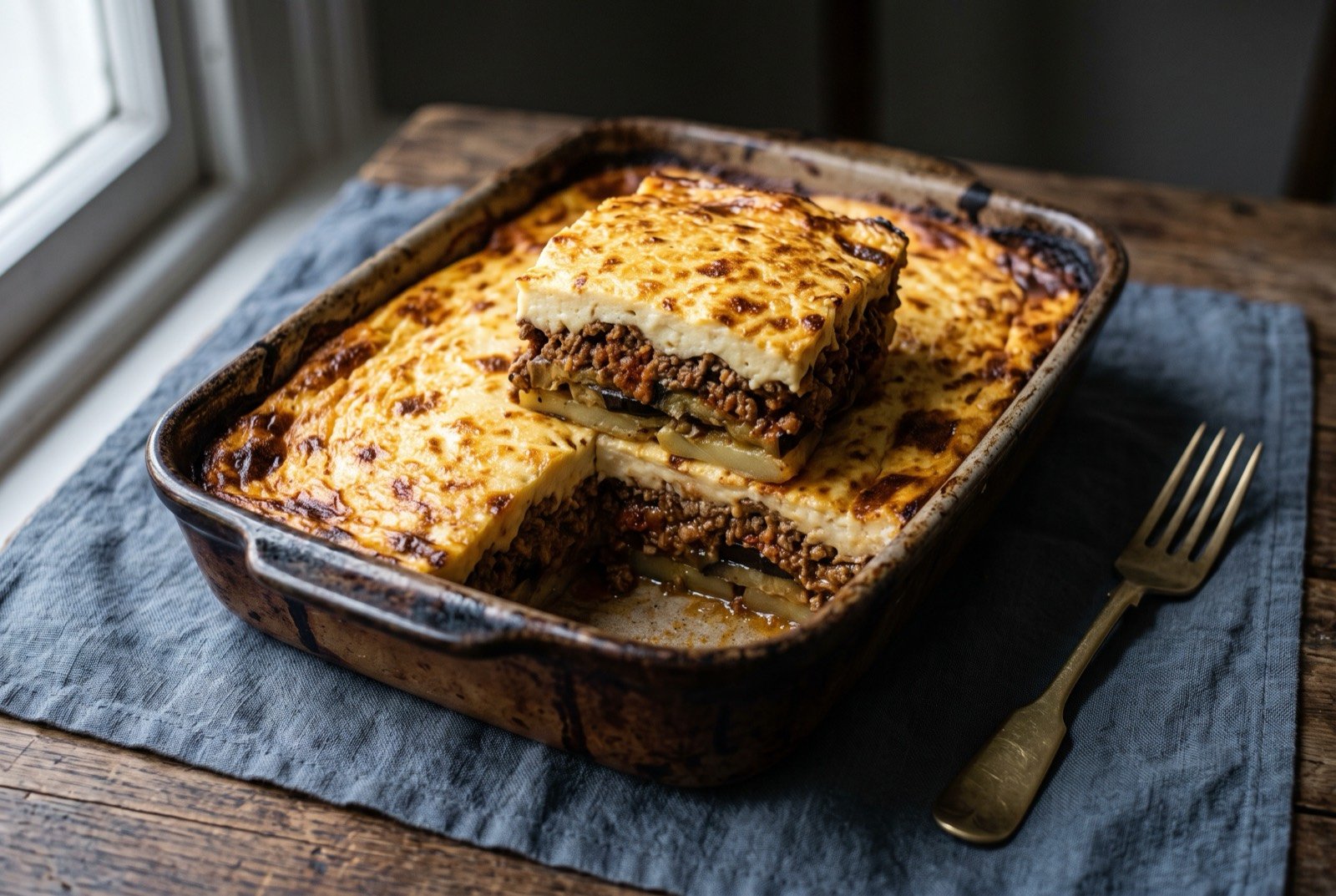
An illustration of the dish, not a photograph of it cooked.
- Time
- 2 hours
- Researched
- 11 sources cited
- Reviewed
- Not yet reviewed from inside the tradition
- Cooked
- Not yet cooked and reported
Moussaka as currently known is a twentieth-century creation, not an old dish. The Greek chef Nikolaos Tselementes enriched an already Eastern-derived dish called moussaka with French béchamel, publishing the recipe in 1910, a specific, well-attested claim; his name is literally the generic Greek word for a cookbook, "tselementes," because of how influential he was.
As tradition built it
Serves 8. About 2 hours.
Ingredients
- 1 kg aubergine, sliced
- 500 g potato, sliced
- 700 g minced lamb or beef
- 400 g tomato, crushed
- 1 onion, finely chopped, 2 cloves garlic, 1 cinnamon stick, salt to taste onion, garlic, cinnamon, salt
- 6 tbsp flour
- 8 tbsp butter
- 1.5 litres milk, added gradually
- 1 cup (kefalotyri and kefalograviera) grated cheese, salt, pepper, 1 beaten egg
Method
- Salt the aubergine slices and leave to draw out bitterness, 30 minutes, then pat dry and fry or grill until coloured.
- Fry the potato slices until just coloured.
- Brown the mince with onion, garlic, cinnamon and salt, add the tomato, simmer to a thick ragù.
- Make the béchamel: melt the butter, work in the flour to a roux, add milk gradually, whisking, until thick. Off the heat, stir in the cheese, salt, pepper and the beaten egg.
- Layer potato, then aubergine, then the meat ragù, in a large baking dish.
- Cover generously with the béchamel.
- Bake about 45 minutes until deeply golden on top.
Notes
The figures above rest on a single traditional-recipe source rather than a named chef or ethnographic authority, and are treated here as indicative rather than canonical.
What a modern chef changes
The béchamel treated as its own emulsion, and the aubergine's moisture controlled precisely
Rung 3
Method
- Salt and press the aubergine properly, weighted under a plate for a full 30 minutes rather than a token rinse, so the béchamel is not sitting on top of a watery vegetable layer.
- Strain a portion of full-fat yoghurt through a chinois, after Rung 3, and fold a spoonful through the finished béchamel off the heat, for a lighter, tangier top layer that still sets properly.
- Rest the assembled dish 15 minutes before baking, so the layers settle and the béchamel does not slide when the dish is cut.