The Mediterranean · Volume 03, The Aegean and the Contested Table
Spanakopita
Greece
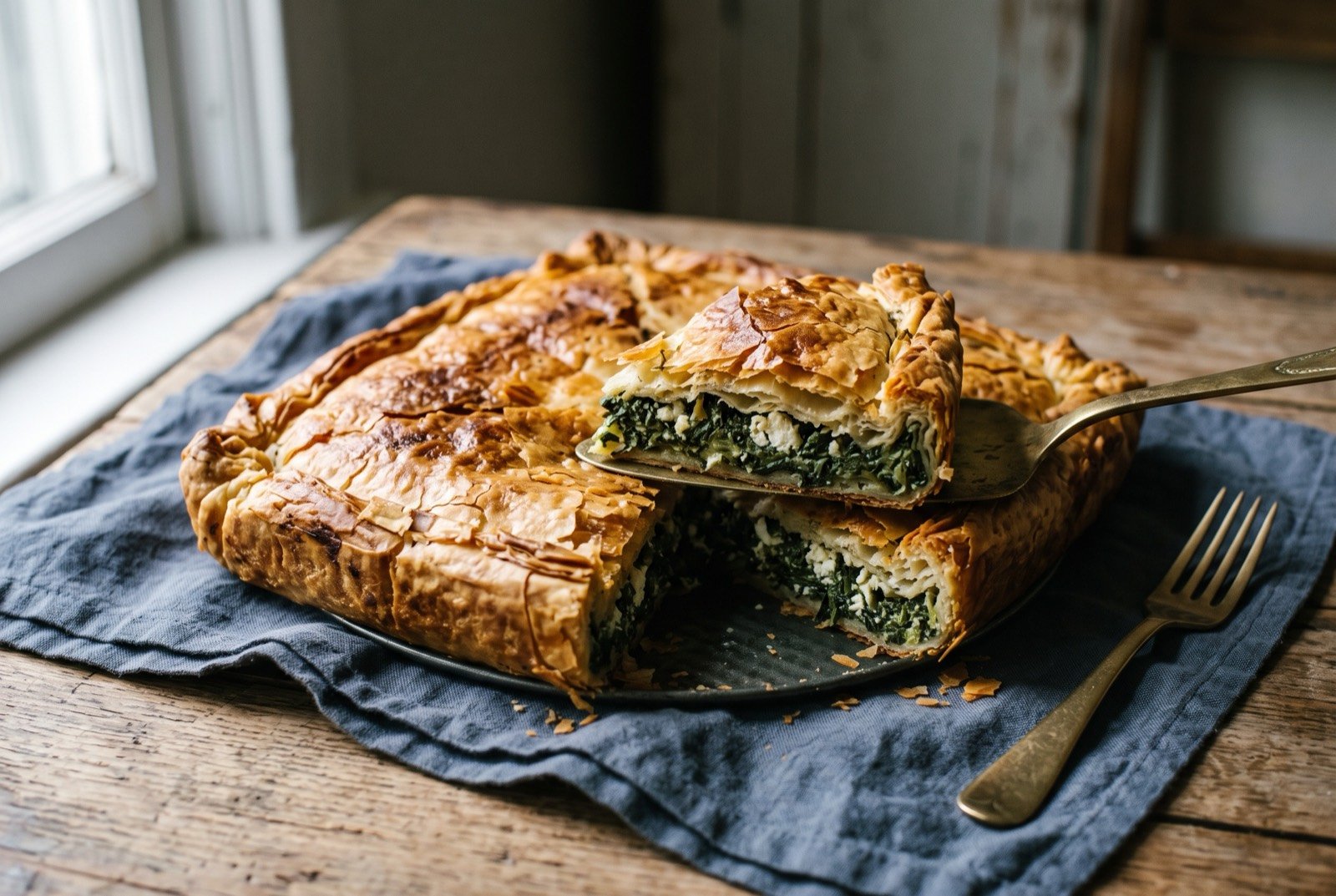
An illustration of the dish, not a photograph of it cooked.
- Time
- 1 hour 30
- Researched
- 11 sources cited
- Reviewed
- Not yet reviewed from inside the tradition
- Cooked
- Not yet cooked and reported
As tradition built it
Makes one large pie. About 1.5 hours.
Ingredients
An outline, not yet a recipe: the tradition's method with its ingredients named but not weighed. Quantities are being added from sources inside the tradition, lead dishes first.
- 500 g strong flour
- 100 ml olive oil
- 1 tbsp white vinegar
- 1 tsp salt
- 210 ml water
- 200 ml olive oil, for brushing between layers
- 1 kg spinach, washed
- leeks, onion, fresh dill
- 300 g feta, crumbled
- 1 egg
Method
- Mix the flour, oil, vinegar, salt and water to a smooth dough. Knead well, rest at least 30 minutes, covered.
- Divide into small balls, and stretch each by hand, over the backs of floured hands or a floured cloth, working from the centre outward, turning and pulling repeatedly, until thin enough to see through. Do not roll.
- Wilt the spinach and leeks, squeeze out excess liquid thoroughly, chop.
- Combine with dill, crumbled feta and the beaten egg.
- Layer half the stretched sheets in an oiled tin, brushing each with oil as it goes down.
- Spread the filling, top with the remaining sheets, again brushing each with oil.
- Bake about 45 minutes until deeply golden and shattering.
What a modern chef changes
The stretch respected as the real technique, and any surplus sheets dried rather than wasted
Rung 1
Method
- Give the dough its full rest, and do not shortcut the stretch. A rolled sheet, however thin, bakes denser because its gluten has been extended under tension in one pass rather than relaxed and re-stretched; this is the single biggest difference between a home-made pie that shatters and one that does not.
- Dry any surplus stretched sheets in a dehydrator for storage, standard practice for surplus filo, rather than compressing them back into a ball, which ruins the structure you have just built.
- Squeeze the spinach harder than feels necessary. A wet filling steams the surrounding filo from the inside and is the second most common cause of a soggy base.